
Contents
Overview
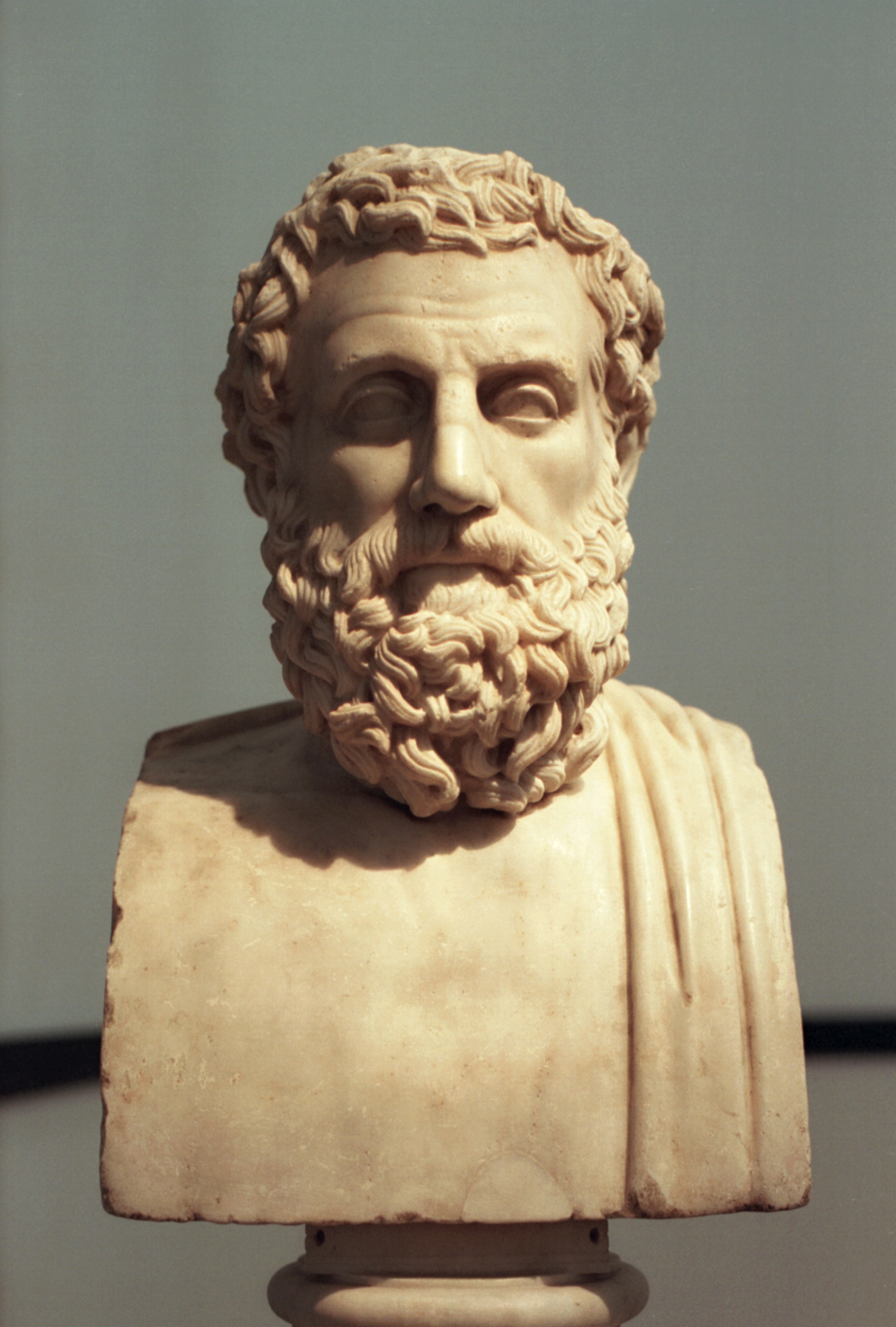
Aeschylus (c. 525/524 – c. 456/455 BC) stands as a foundational figure in Western drama, widely credited as the 'father of tragedy.' Hailing from Eleusis, near Athens, his innovations fundamentally reshaped theatrical conventions, most notably by introducing a second actor, thereby enabling direct dialogue and conflict between characters rather than solely with the chorus. He is believed to have penned between 70 and 90 plays, though only seven complete works, including the monumental Oresteia trilogy, survive today. His surviving plays, such as The Persians, Seven Against Thebes, and Agamemnon, offer profound insights into Athenian values, mythology, and the human condition, solidifying his legacy as a pivotal playwright whose influence echoes through millennia of dramatic arts.
🎵 Origins & History
Aeschylus's father was Euphorion, a man of noble lineage from Eleusis, suggesting Aeschylus was born into a family with established social standing, a background that likely facilitated his entry into the competitive world of Athenian theatre. His sons, Euphorion and Euaeon, also became playwrights, with Euphorion reportedly winning a victory at the City Dionysia after his father's death. His dramatic works were produced by the Athenian polis, and he competed against other prominent tragedians of his era, such as Sophocles and Euripides, though Aeschylus predates the latter two significantly. Phrynichus was an earlier tragedian whose work may have influenced Aeschylus.
⚙️ How It Works
Aeschylus's primary innovation was the introduction of a second actor (deuteragonist) into his plays, a move that dramatically expanded the possibilities for dramatic interaction and conflict. Before Aeschylus, plays primarily featured a single actor who conversed with the chorus. By adding a second performer, Aeschylus enabled direct dialogue, character development through interaction, and the creation of complex dramatic situations where characters could confront each other, debate ideas, and reveal their motivations through nuanced exchanges. This structural shift, documented by Aristotle in his Poetics, transformed tragedy from a choral performance with narrative elements into a truly dramatic form driven by character conflict and plot. He also refined the use of the chorus, integrating its songs and dances more organically into the dramatic action, and is credited with popularizing the trilogy format, where three plays were presented together, often linked by a common theme or narrative arc, as exemplified by the Oresteia trilogy.
📊 Key Facts & Numbers
The number of plays Aeschylus wrote is uncertain, and only seven complete tragedies have survived to the present day: The Persians, Seven Against Thebes, The Suppliants, Agamemnon, The Libation Bearers, The Eumenides, and Prometheus Bound (authorship debated, possibly later). The Oresteia is the only complete trilogy to survive from antiquity, comprising Agamemnon, The Libation Bearers, and The Eumenides. His first recorded victory at the City Dionysia was in 484 BC, and he won numerous other victories throughout his career. He is estimated to have died around 456/455 BC, likely in his seventies, in Gela, Sicily, where he had traveled and possibly been honored.
👥 Key People & Organizations
Aeschylus's father was Euphorion of Eleusis, a nobleman. His sons, Euphorion and Euaeon, also became playwrights, with Euphorion reportedly winning a victory at the City Dionysia after his father's death, and some scholars attributing the play Prometheus Bound to him. Aeschylus himself was a warrior, fighting at the Battle of Marathon in 490 BC and potentially at Salamis in 480 BC. His dramatic works were produced by the Athenian polis, and he competed against other prominent tragedians of his era, such as Sophocles and Euripides, though Aeschylus predates the latter two significantly. Phrynichus was an earlier tragedian whose work may have influenced Aeschylus.
🌍 Cultural Impact & Influence
Aeschylus's impact on Western drama is immeasurable. His plays have been continuously studied, performed, and adapted for over two millennia, influencing playwrights from Shakespeare to modern dramatists. The very concept of dramatic structure, the use of dialogue, and the exploration of profound moral and philosophical questions in theatre owe a significant debt to his innovations. His works continue to be central to the study of classical literature and theatre at institutions like Oxford University and Harvard University.
⚡ Current State & Latest Developments
While Aeschylus's plays are ancient, their resonance persists. Productions of his works continue to be staged globally, often with contemporary interpretations that highlight their enduring themes. Scholars continue to unearth new fragments of his lost plays from papyri, particularly in Egypt, offering fresh perspectives on his oeuvre and the evolution of Greek theatre. The study of his dramatic techniques and philosophical inquiries remains a vibrant area of academic research, with new critical analyses and performance studies emerging regularly. The ongoing debate over the authorship of Prometheus Bound also keeps his legacy in the public and academic consciousness.
🤔 Controversies & Debates
The authorship of Prometheus Bound remains one of the most persistent controversies surrounding Aeschylus's work. Many scholars, citing stylistic differences and thematic concerns, argue that it was likely written by a later playwright, possibly his son Euphorion, or another contemporary. Another debate centers on the precise nature of his innovations; while Aristotle credits him with introducing the second actor, the exact timeline and extent of his contributions compared to earlier tragedians like Thespis and Phrynichus are subjects of ongoing scholarly discussion. Furthermore, the interpretation of his religious and political views, as expressed through his plays, is often debated, with scholars analyzing his portrayal of the gods and the Athenian state for insights into his personal beliefs and the societal context of his time.
🔮 Future Outlook & Predictions
The future of Aeschylus's legacy lies in continued engagement with his surviving works and the potential discovery of new fragments. Modern theatrical productions will undoubtedly continue to reinterpret his plays, finding new relevance in their exploration of justice, vengeance, and divine law for contemporary audiences. Academic scholarship will persist in its efforts to reconstruct his lost plays and refine our understanding of his dramatic techniques and philosophical underpinnings. The enduring power of his narratives, particularly the cyclical nature of justice and retribution in the Oresteia, suggests that his works will remain a vital part of the dramatic canon, inspiring new generations of playwrights, directors, and audiences to grapple with timeless human dilemmas.
💡 Practical Applications
Aeschylus's plays serve as invaluable primary sources for understanding ancient Greek society, religion, and political thought. They are studied extensively in university Classics departments worldwide, providing students with direct access to the foundational texts of Western dramatic literature. His dramatic structures and narrative techniques continue to be analyzed by playwrights and screenwriters as models for crafting compelling stories and exploring complex character arcs. Furthermore, the philosophical and ethical questions posed in his works, such as the nature of divine justice and the cycle of violence, remain relevant for ethical and philosophical discussions in fields ranging from law to psychology. The study of his work is a cornerstone for understanding the development of Western philosophy and theatre history.
Key Facts
- Category
- culture
- Type
- topic