
Contents
Overview
The genesis of Roman art is inextricably linked to its conquest of Magna Graecia in the 3rd century BCE, which flooded Rome with Greek artworks and artisans. Early Roman art was heavily influenced by Etruscan traditions and the Hellenistic styles of the Greek colonies in southern Italy. However, Romans quickly adapted these influences to their own pragmatic and imperialistic agenda. The transition to the Empire under Augustus marked a period where art became a powerful tool for imperial propaganda, solidifying the emperor's image and the state's authority. This period saw the development of distinct Roman styles, emphasizing realism in portraiture and narrative clarity in historical reliefs, as seen in the Ara Pacis Augustae and the triumphal arches. The sheer scale of Roman construction projects, from the Colosseum to aqueducts, also showcased a mastery of engineering that was inherently artistic. The empire's vast reach ensured that Roman artistic conventions spread across Europe, North Africa, and the Near East, creating a remarkably cohesive visual culture.
⚙️ How It Works
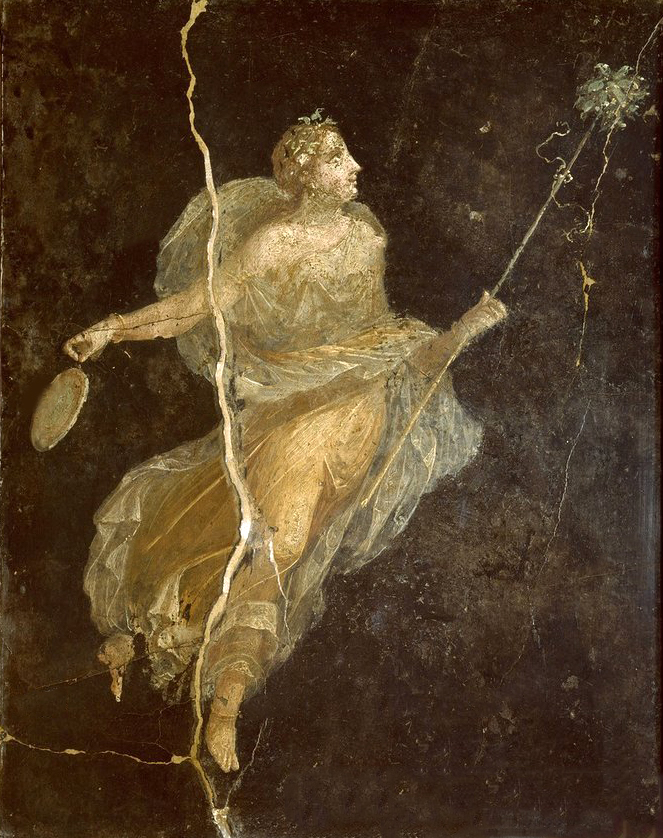
Roman art functioned as a multifaceted tool, serving not only aesthetic purposes but also political, social, and religious ones. Portraiture, for instance, was not merely about capturing likeness but about projecting power, virtue, and lineage, often employing veristic (realistic) styles that conveyed the gravitas of the subject. Historical reliefs, such as those on the Column of Trajan, meticulously documented military campaigns and imperial triumphs, functioning as visual histories and propaganda. Architecture was monumental and civic-minded, with public buildings like basilicas, baths, and temples designed to impress and facilitate Roman life. Mosaics and frescoes adorned private homes and public spaces, depicting mythological scenes, daily life, and decorative patterns, offering insights into Roman tastes and beliefs. Even seemingly utilitarian objects, like terra sigillata pottery and imperial coinage, were mass-produced with decorative elements that reflected contemporary styles and disseminated imperial imagery to the furthest reaches of the empire.
📊 Key Facts & Numbers
Over 100,000 surviving Roman sculptures are estimated to exist, with the majority dating from the Imperial period. The Pantheon in Rome boasts a dome with a diameter of 43.3 meters (142 feet), still the world's largest unreinforced concrete dome. Roman roads, stretching over 400,000 kilometers (250,000 miles) by the 2nd century CE, were engineering marvels that facilitated the movement of troops, goods, and ideas, indirectly supporting the spread of art. The city of Pompeii, preserved by the eruption of Mount Vesuvius in 79 CE, offers an unparalleled snapshot of Roman domestic art, with over 1,500 surviving frescoes and countless mosaics. Imperial coinage, minted in vast quantities, often featured portraits of emperors and allegorical figures, with billions of coins produced annually during peak periods.
👥 Key People & Organizations
While many Roman artworks are anonymous, key figures and patrons shaped the artistic landscape. Emperors like Augustus, Trajan, and Hadrian were significant patrons, commissioning vast architectural projects and public monuments that defined imperial art. Architects like Vitruvius, whose treatise 'De Architectura' codified Roman architectural principles, provided theoretical underpinnings for the era's constructions. Sculptors, though often unnamed, were highly skilled, as evidenced by the lifelike portraits and dynamic compositions found across the empire. The wealthy elite also commissioned private villas adorned with frescoes and sculptures, contributing to the diverse artistic output. The Roman state itself, through its various administrative bodies and military, was the primary commissioner of much of the public art and architecture that has survived.
🌍 Cultural Impact & Influence
The influence of ancient Roman art on subsequent Western civilization is profound and pervasive. The Renaissance, in particular, saw a deliberate revival of classical Roman forms and ideals, with artists like Michelangelo and Raphael meticulously studying Roman sculpture and architecture. Neoclassicism in the 18th and 19th centuries further cemented Roman artistic principles in public buildings, sculpture, and painting across Europe and the Americas. Roman innovations in concrete construction, vaulting, and dome building laid the groundwork for architectural developments for centuries. The Roman emphasis on realism and narrative in sculpture and relief profoundly shaped the trajectory of Western figurative art. Even the concept of the "artist" as a recognized professional, distinct from a mere craftsman, began to gain traction during the Roman period, influenced by the status accorded to Greek artists working in Rome.
⚡ Current State & Latest Developments
Today, ancient Roman art is primarily experienced through archaeological sites and museum collections worldwide. Major institutions like the British Museum in London, the Louvre Museum in Paris, and the Metropolitan Museum of Art in New York house extensive Roman collections. Ongoing archaeological excavations, such as those in Rome itself and across former Roman territories, continue to unearth new discoveries, refining our understanding of Roman artistic practices and their geographical spread. Digital humanities projects are increasingly used to reconstruct virtual models of Roman buildings and artworks, making them accessible to a global audience. The study of Roman art remains a vibrant academic field, with new interpretations and research constantly emerging.
🤔 Controversies & Debates
A significant debate surrounds the originality of Roman art, with some scholars arguing it was largely derivative of Greek models. While the Hellenistic influence is undeniable, the Roman genius lay in their adaptation, innovation, and application of art for imperial purposes. Another point of contention is the social status of artists; while some Greek artists working in Rome achieved renown, many Roman artisans likely remained in a lower social stratum, their contributions often uncredited. The interpretation of Roman art as purely propagandistic is also debated, with scholars increasingly recognizing the complex interplay of political messaging, personal piety, and social display in Roman artworks. The sheer volume of surviving art also raises questions about what has been lost, and how our current understanding might be skewed by the biases of preservation and discovery.
🔮 Future Outlook & Predictions
The future of understanding ancient Roman art lies in advanced digital technologies and interdisciplinary approaches. High-resolution 3D scanning and virtual reality will allow for increasingly immersive explorations of Roman sites and artworks, enabling scholars and the public to experience them in unprecedented detail. Further archaeological discoveries, particularly in less-explored regions of the former empire, are likely to reveal new artistic traditions and connections. Advances in material science may offer new insights into Roman techniques for pigment creation, concrete formulation, and metalworking. Comparative studies with other ancient cultures, facilitated by digital databases, will continue to illuminate the unique aspects of Roman artistic expression and its place within a broader global context. The ongoing re-evaluation of Roman art's function beyond mere propaganda will likely lead to richer, more nuanced interpretations of its meaning and purpose.
💡 Practical Applications
The principles and aesthetics of ancient Roman art continue to be applied in various contemporary contexts. Roman architectural principles, emphasizing order, symmetry, and grandeur, are still evident in government buildings, courthouses, and banks worldwide, projecting authority and stability. The Roman approach to urban planning, with its focus on grid systems and public spaces, informs modern city design. Roman portraiture's emphasis on capturing individual character and status has echoes in modern portrait photography and corporate branding. The use of art for propaganda and national identity, a
Key Facts
- Category
- culture
- Type
- topic