
Contents
Overview
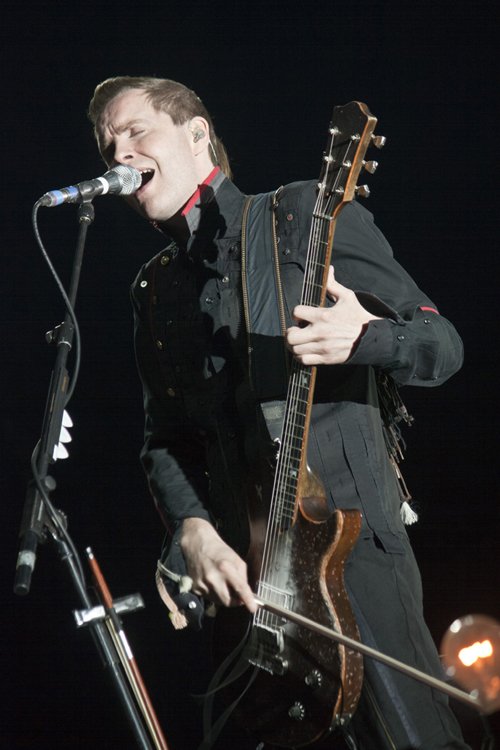
The practice of bowing guitar strings predates rock music, with early stringed instruments like the lira da gamba and the arpeggione (a 19th-century instrument specifically designed for bowing) hinting at this sonic possibility. However, its emergence in popular music is often traced to Eddie Phillips, guitarist for the British band The Creation. Phillips famously employed a cello bow on his guitar during their 1966 performance of "Making Time" on the television show Ready Steady Go!, a moment that is widely cited as a foundational instance of the technique in rock. This innovation was later amplified by Jimmy Page, whose use of a bow on tracks like "Dazed and Confused" with Led Zeppelin in the late 1960s and early 1970s cemented its place in the rock lexicon, imbuing his solos with a haunting, sustained quality that captivated audiences and inspired countless guitarists.
⚙️ How It Works
Bowing a guitar requires a specific approach due to the instrument's design. Unlike violins, which have a significantly arched bridge allowing individual strings to be isolated, a guitar's bridge is typically flatter, and its strings are closer together. This makes it challenging to bow a single string cleanly without inadvertently sounding adjacent strings. Guitarists often overcome this by using a heavier bow, applying precise pressure, and sometimes modifying their instrument, such as using a Tone Razor bridge or a guitar with a more pronounced bridge radius. The resulting sound can range from smooth, legato lines to gritty, distorted textures, depending on the guitar's amplification and the player's technique, creating a unique timbre that bridges the gap between string and electric guitar sounds.
📊 Key Facts & Numbers
While precise global statistics on bowed guitar players are scarce, its impact is disproportionate to its numbers. Sigur Rós, with Jónsi at the helm, has sold over 11 million albums globally, with the bowed guitar being a signature element of their sound. Specialized guitar modifications for bowing, such as those offered by Greg Marra Guitars, can add upwards of $500 to $2,000 to the cost of a standard instrument. The technique is also explored in academic settings, with some university music programs offering workshops on extended guitar techniques.
👥 Key People & Organizations
Beyond Eddie Phillips and Jimmy Page, numerous musicians have embraced the bowed guitar. Jónsi of Sigur Rós is perhaps the most prominent contemporary proponent, using a bow extensively to create his band's signature ethereal soundscapes. Jeff Buckley occasionally employed bowing techniques, adding a unique emotional depth to his performances. Leo Kottke, a master of acoustic guitar, has also experimented with bowing. On the experimental front, Fred Frith has long incorporated bowing into his avant-garde guitar work. Organizations like the Guitar Foundation of America occasionally feature workshops and performances that include extended techniques such as bowing.
🌍 Cultural Impact & Influence
The bowed guitar has significantly influenced the sonic landscape of rock and experimental music, offering a departure from conventional guitar timbres. Jimmy Page's iconic use of the bow on "Dazed and Confused" became a benchmark for expressive guitar solos, demonstrating that the instrument could produce sustained, vocal-like tones. Sigur Rós's integration of bowed guitar into their ambient, post-rock sound has inspired a generation of musicians seeking to create atmospheric and emotionally resonant music. The technique has also found its way into film scores and sound design, where its unique texture can evoke specific moods and atmospheres, proving its versatility beyond the concert stage.
⚡ Current State & Latest Developments
In the current musical climate, the bowed guitar continues to be explored by a dedicated community of players. Guitarslinger.com and various YouTube channels feature tutorials and demonstrations of bowing techniques, indicating a steady interest among aspiring guitarists. Boutique guitar builders are increasingly offering instruments or modifications specifically designed for bowing, such as Ken Perry Guitars's custom builds. While not a mainstream technique, its presence is felt in niche genres, avant-garde circles, and by artists seeking to push the sonic boundaries of the electric guitar, ensuring its continued evolution and experimentation.
🤔 Controversies & Debates
The primary controversy surrounding the bowed guitar lies in its perceived difficulty and the debate over whether it truly enhances the instrument's core capabilities or is merely a novelty. Some traditionalists argue that the guitar's fundamental design is ill-suited for bowing, leading to compromised tone and technical limitations compared to dedicated bowed instruments like the violin or cello. Conversely, proponents, including many of its most famous practitioners, contend that these very limitations foster unique sonic possibilities and require a distinct, creative approach. The debate often centers on whether the bowed guitar is an extension of the instrument's voice or a departure into territory better suited for other instruments.
🔮 Future Outlook & Predictions
The future of the bowed guitar likely lies in further technological integration and pedagogical development. We may see more guitar manufacturers incorporating specialized bridge designs or even built-in bowing mechanisms into their instruments, making the technique more accessible. The rise of AI-powered music production tools could also lead to innovative ways of processing and manipulating bowed guitar sounds, creating entirely new sonic textures. Furthermore, as more instructional content becomes available online through platforms like YouTube.com, the barrier to entry for learning this technique may decrease, potentially leading to a broader adoption among guitarists seeking to expand their expressive toolkit.
💡 Practical Applications
The bowed guitar finds practical application in several areas. It's used by guitarists in live performance to create sustained notes, swells, and unique textural effects that cannot be achieved with a pick or fingers, notably in Led Zeppelin's "Dazed and Confused" and Sigur Rós's "Hoppípolla." In recording studios, it offers producers a distinct sound for layering tracks or creating atmospheric passages in film scores and ambient music. Experimental musicians and avant-garde composers utilize it to explore the outer limits of guitar sound. Additionally, it serves as a pedagogical tool for teaching concepts of legato, vibrato, and dynamic control on the guitar, drawing parallels to classical string techniques.
Key Facts
- Category
- aesthetics
- Type
- phenomenon