
Contents
Overview
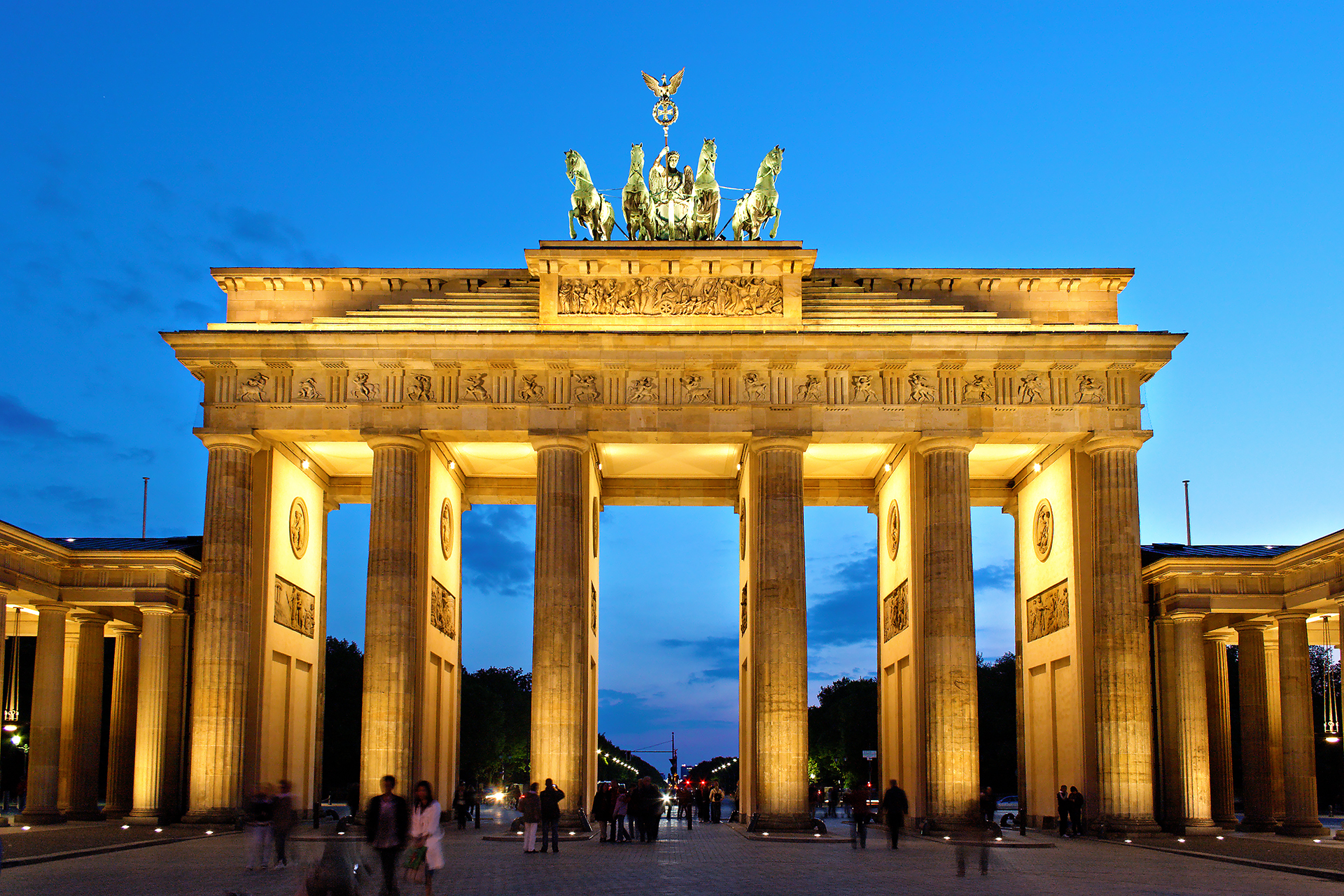
Commissioned by King Frederick William II of Prussia and designed by architect Carl Gotthard Langhans, the Brandenburg Gate was constructed between 1788 and 1791. Inspired by the Propylaea, the gateway to the Acropolis in Athens, it is one of Germany's earliest examples of Greek Revival architecture. The gate is characterized by its twelve Doric columns forming five passageways and is crowned by the Quadriga, a sculpture by Johann Gottfried Schadow depicting Victoria, the Roman goddess of victory, in a chariot drawn by four horses. Originally named the 'Peace Gate,' its construction alongside Pariser Platz marked a grand entrance to the city, replacing an earlier, more modest structure.
⚙️ A Witness to History
Throughout its existence, the Brandenburg Gate has been a focal point for significant historical events. In 1806, Napoleon Bonaparte seized the Quadriga and transported it to Paris as war booty, only for it to be returned to Berlin in 1814 after Prussia's victory. During the Nazi era, it was used for propaganda, notably in a torchlight procession celebrating Adolf Hitler's rise to power in 1933. Severely damaged during World War II, the gate stood as a stark symbol of division during the Cold War, situated in the restricted zone of the Berlin Wall. It was the site of historic speeches by U.S. Presidents John F. Kennedy and Ronald Reagan, the latter famously urging Mikhail Gorbachev to 'tear down this wall' in 1987.
🌍 Cultural Significance
The Brandenburg Gate's symbolism has transformed dramatically over time. Initially representing Prussian military strength and royal power, it later became a potent emblem of German division and the Cold War when the Berlin Wall cut off access to it. Following the fall of the Wall on November 9, 1989, the gate was officially opened as a border crossing on December 22, 1989, and became the ultimate symbol of German reunification. It is now widely recognized as a national icon of peace, unity, and freedom, and is depicted on German euro cent coins.
🔮 Legacy & Modern Role
Today, the Brandenburg Gate stands as one of Berlin's most iconic landmarks and a major tourist attraction. It continues to be a site for major public events, including the annual New Year's Eve celebrations. The gate has undergone several restorations, most notably after World War II and again following damage sustained during the celebrations of German reunification. Its enduring presence serves as a reminder of Germany's complex past and its journey towards unity and peace, making it a vital part of the cultural landscape of Berlin and Germany, as documented by organizations like CyArk and featured on platforms like Google Arts & Culture.
Key Facts
- Year
- 1788-1791
- Origin
- Berlin, Germany
- Category
- history
- Type
- place
Frequently Asked Questions
When was the Brandenburg Gate built?
The Brandenburg Gate was built between 1788 and 1791 by architect Carl Gotthard Langhans, commissioned by King Frederick William II of Prussia.
What is the Quadriga on top of the Brandenburg Gate?
The Quadriga is a bronze sculpture of a chariot drawn by four horses, driven by Victoria, the Roman goddess of victory. It was added in 1793 and has its own history of being seized by Napoleon and later returned.
How did the Brandenburg Gate symbolize the division of Germany?
During the Cold War, the Brandenburg Gate was located in the restricted zone of the Berlin Wall, inaccessible to both East and West Berliners, making it a stark symbol of the city's and Germany's division.
What does the Brandenburg Gate symbolize today?
Today, the Brandenburg Gate is a powerful symbol of German reunification, peace, and unity. It represents the overcoming of division and the country's integration into a peaceful Europe.
What historical events has the Brandenburg Gate witnessed?
The gate has witnessed Napoleon's triumphal procession, Nazi parades, significant speeches during the Cold War by figures like Ronald Reagan, and the joyous celebrations following the fall of the Berlin Wall and German reunification.
References
- en.wikipedia.org — /wiki/Brandenburg_Gate
- visitberlin.de — /en/brandenburg-gate
- artsandculture.google.com — /story/the-tumultuous-history-of-berlin%E2%80%99s-brandenburg-gate-cyark/6gWBP_P
- berlin.de — /en/attractions-and-sights/3560266-3104052-brandenburg-gate.en.html
- gettyimages.com — /photos/brandenburg-1930s
- istockphoto.com — /photos/brandenburg-gate
- maps.apple.com — /place
- stock.adobe.com — /search