
Contents
- 🌟 What is Celestial Navigation?
- 📜 A Brief History of Navigating by the Stars
- 🔭 Essential Tools for the Celestial Navigator
- ⭐ How it Actually Works: The Core Principles
- 🌍 Celestial Navigation in Practice: Land vs. Sea
- 💡 The Vibe: Why Celestial Navigation Still Matters
- 🤔 The Skeptic's Corner: Limitations and Modern Alternatives
- 🚀 The Future of Astronavigation: Niche or Necessity?
- 📚 Learning Celestial Navigation: Resources and Courses
- 💰 Cost of Entry: Tools and Education
- ⭐ User Reviews & Community Buzz
- 📍 Getting Started: Your First Steps
- Frequently Asked Questions
- Related Topics
Overview
Celestial navigation, the ancient art of determining position using celestial bodies, remains a potent symbol of human ingenuity and our enduring connection to the cosmos. While GPS has largely supplanted its practical use for most, the principles of celestial navigation offer a profound understanding of spherical trigonometry, astronomy, and the fundamental forces that govern our planet. Its history is interwoven with exploration, trade, and scientific advancement, a testament to humanity's drive to understand its place in the universe. For enthusiasts, it's a tangible link to the past and a challenging intellectual pursuit.
⭐ How it Actually Works: The Core Principles
At its heart, celestial navigation involves measuring the altitude of a celestial body above the horizon. This measurement, combined with the precise time of the observation, allows the navigator to draw a line of position (LOP) on a chart. Each celestial body provides a different LOP, and the intersection of two or more LOPs pinpoints the navigator's position. This process relies on understanding spherical trigonometry and the predictable movements of celestial objects, as detailed in the Nautical Almanac.
🤔 The Skeptic's Corner: Limitations and Modern Alternatives
The primary limitation of celestial navigation is its dependence on clear skies and the navigator's ability to perform complex calculations accurately. Weather can render it impossible, and human error in observation or calculation can lead to significant positional errors. While GPS and other electronic navigation systems offer unparalleled accuracy and ease of use, they are vulnerable to signal jamming, spoofing, or system failure. The debate continues: is celestial navigation a quaint relic, or a vital skill for true redundancy in critical situations?
💰 Cost of Entry: Tools and Education
The cost of entry can vary. A basic sextant can range from $100 for a plastic model to over $1,000 for a high-quality brass instrument. A reliable chronometer can add several hundred dollars. Essential books like the Nautical Almanac are relatively inexpensive, typically under $50 annually. Formal courses can range from a few hundred dollars for a weekend workshop to several thousand for in-depth programs. The primary investment, however, is time and dedication to practice.
⭐ User Reviews & Community Buzz
Community feedback often highlights the immense satisfaction derived from successfully plotting a position using only the stars. Users praise the mental discipline and problem-solving skills it cultivates. Some express concern over the declining number of practitioners, while others champion its importance as a fallback skill. Ratings for dedicated celestial navigation courses are consistently high, often exceeding 4.5 stars, with learners emphasizing the clarity of instruction and the practical application of knowledge.
📍 Getting Started: Your First Steps
To begin your journey into celestial navigation, acquire a basic sextant and the current year's Nautical Almanac. Familiarize yourself with the fundamental concepts of time and longitude and latitude and altitude. Practice observing the Sun at noon to determine your latitude. Consider enrolling in an introductory course or finding a mentor. The most crucial step is consistent practice, starting with simple observations and gradually increasing complexity.
Key Facts
- Year
- Antiquity (circa 2000 BCE)
- Origin
- Ancient Mesopotamia and Egypt
- Category
- Maritime & Aviation History
- Type
- Knowledge Domain
Frequently Asked Questions
Is celestial navigation still relevant today?
Yes, it remains highly relevant as a critical backup system for maritime navigation and aviation, especially in military contexts or during long voyages where electronic systems might fail. It also offers a profound sense of self-reliance and connection to historical practices for enthusiasts.
What is the most important tool for celestial navigation?
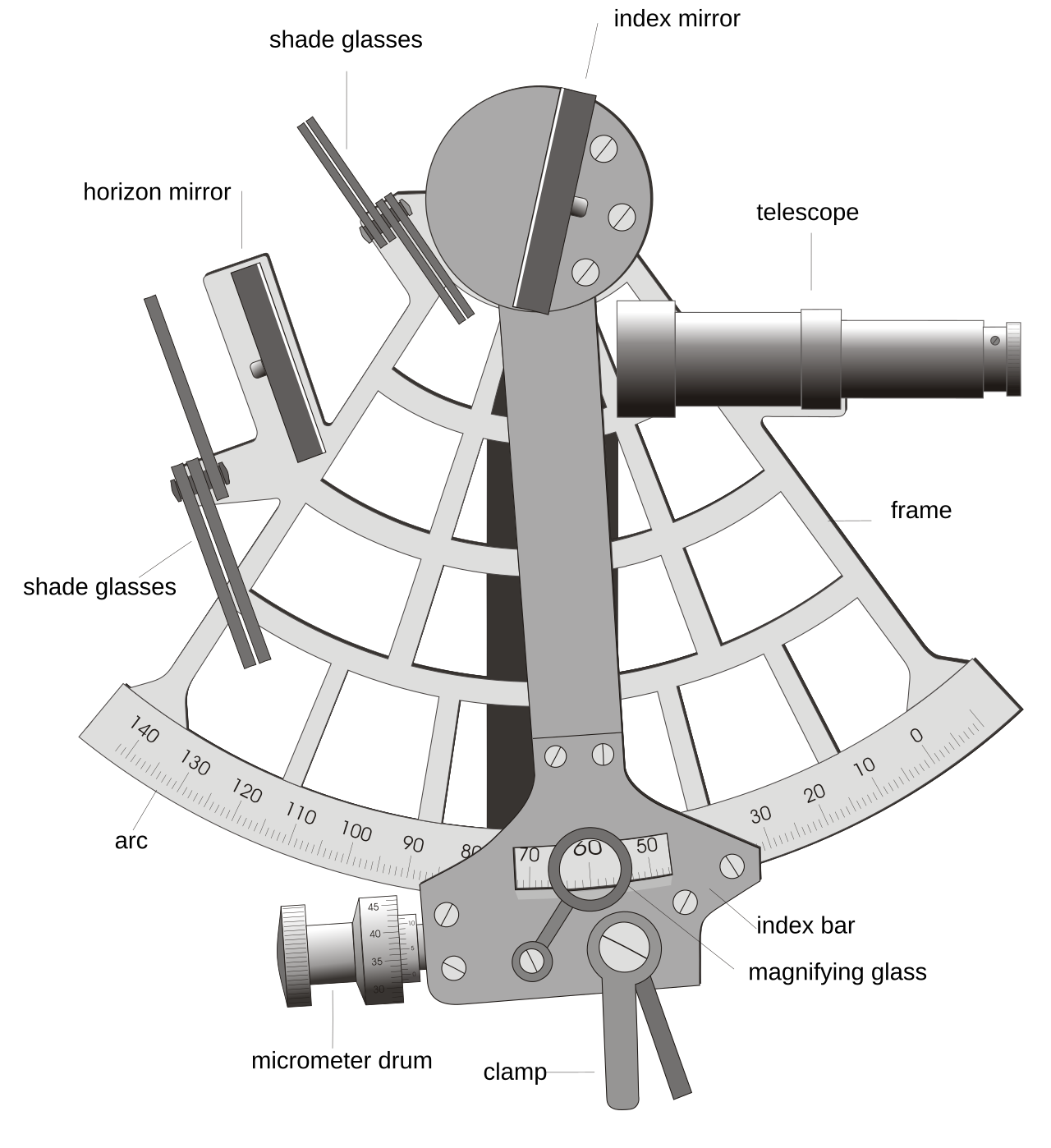
The sextant is arguably the most iconic and essential tool, used to measure the angle between a celestial body and the horizon. However, a highly accurate chronometer for determining Greenwich Mean Time and the Nautical Almanac are equally indispensable for accurate calculations.
How accurate is celestial navigation compared to GPS?
Under ideal conditions, with skilled navigators and clear skies, celestial navigation can achieve accuracies of a few nautical miles. GPS typically offers accuracy within meters. However, GPS is vulnerable to signal loss or interference, making celestial navigation a vital redundancy.
Can I learn celestial navigation without a boat?
Absolutely. You can practice many aspects of celestial navigation on land, particularly determining latitude using the Sun at noon. Many courses and resources focus on the theoretical and calculation aspects, which can be learned independently of a vessel.
What are the biggest challenges in learning celestial navigation?
The primary challenges include mastering spherical trigonometry, accurately observing celestial bodies (especially in rough seas or with aircraft), performing calculations correctly, and understanding the complex tables and almanacs. Patience and consistent practice are key.
Are there any online communities for celestial navigators?
Yes, numerous online forums, social media groups, and dedicated websites exist where celestial navigators share knowledge, ask questions, and discuss techniques. Searching for celestial navigation forums or astronavigation groups will yield many results.