
Contents
Overview
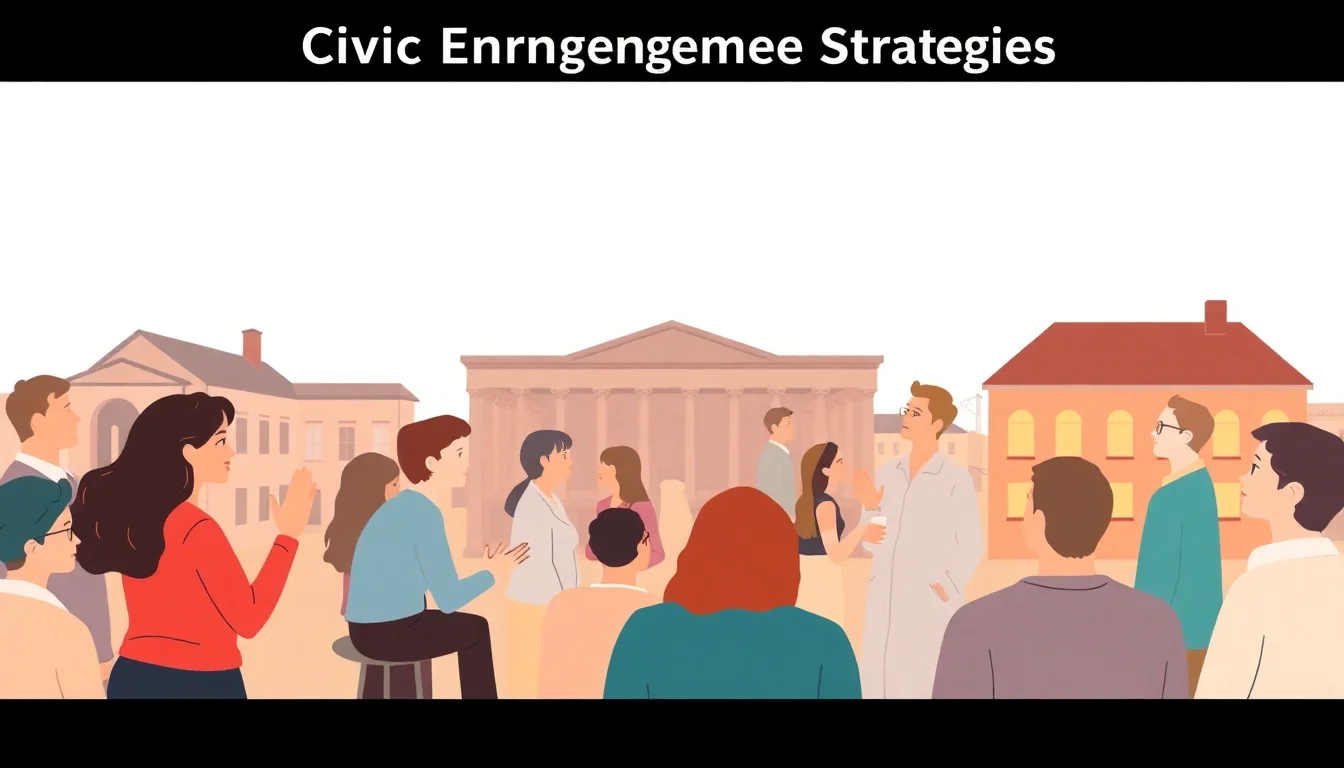
Civic engagement strategies are the deliberate methods and approaches employed to encourage and facilitate individuals' participation in public life, decision-making processes, and community betterment. These strategies aim to empower citizens, foster a sense of collective responsibility, and strengthen democratic institutions. They encompass a wide spectrum of activities, from voting and volunteering to advocacy, community organizing, and digital activism. The effectiveness of these strategies is often measured by participation rates, policy impacts, and the overall health of a community's social fabric. In an era of increasing polarization and digital saturation, innovative and inclusive civic engagement strategies are more critical than ever for building resilient and responsive societies.
🎵 Origins & History
The roots of organized civic engagement stretch back to ancient democratic experiments, notably in Ancient Athens where citizens directly participated in governance. The concept of 'active citizenship' is promoted in educational systems and public discourse.
⚙️ How It Works
Civic engagement strategies function by creating accessible pathways for citizens to voice their opinions, contribute their skills, and influence outcomes. This often involves a multi-pronged approach: information dissemination through channels like Reddit or local news outlets to ensure citizens are informed; mobilization efforts to gather collective action; capacity building through workshops and training programs; and the establishment of formal participatory mechanisms like participatory budgeting processes or citizen advisory boards. Effective strategies also focus on inclusivity, ensuring that marginalized communities have equitable opportunities to engage, often through targeted outreach and culturally relevant programming. The ultimate goal is to foster a sustained commitment to public life, moving beyond one-off events to build enduring civic infrastructure.
📊 Key Facts & Numbers
Globally, voter turnout remains a key, albeit imperfect, metric of civic engagement, with rates varying dramatically. Beyond voting, an estimated 60% of Americans volunteer annually, contributing billions of hours of service. Online petitions, like those hosted on Change.org, can garner millions of signatures, demonstrating digital mobilization potential. For instance, the UNDP supports civic participation projects in over 100 countries, highlighting the global scale of these initiatives.
👥 Key People & Organizations
Key figures in the development and practice of civic engagement strategies include scholars like Robert Putnam, whose work on social capital and declining civic participation in the United States sparked widespread debate. Organizations such as the League of Women Voters, founded in 1920, have consistently championed voter education and advocacy. In the digital age, groups like Code for America leverage technology to improve civic services and engagement. Think tanks like the Brookings Institution and the Carnegie Endowment for International Peace regularly publish research and policy recommendations on strengthening democratic participation. Activist networks, often decentralized and operating through platforms like Signal or Telegram, also play a crucial role in mobilizing citizens for specific causes.
🌍 Cultural Impact & Influence
Civic engagement strategies have profoundly shaped the course of history and continue to influence cultural norms. The success of movements like women's suffrage in the early 20th century, driven by organized campaigns and public pressure, fundamentally altered political landscapes. The rise of community organizing, popularized by figures like Saul Alinsky, created a framework for grassroots empowerment that has been adapted globally. In contemporary culture, the concept of 'active citizenship' is increasingly promoted in educational systems and public discourse, encouraging individuals to see themselves not just as residents but as stakeholders. The proliferation of social media platforms like X (formerly Twitter) has also created new avenues for cultural expression and collective action, sometimes leading to rapid, widespread social movements that can emerge and dissipate with unprecedented speed.
⚡ Current State & Latest Developments
The current landscape of civic engagement strategies is marked by a dynamic interplay between traditional methods and digital innovation. Organizations are increasingly exploring hybrid models, combining in-person community meetings with online forums and virtual town halls to reach broader audiences. The COVID-19 pandemic accelerated the adoption of digital tools for organizing and advocacy, with platforms like Zoom becoming central to many civic activities. There's a growing emphasis on data-driven engagement, using analytics to understand citizen needs and tailor outreach efforts. Furthermore, there's a renewed focus on deliberative democracy and citizen assemblies, such as those convened in Ireland to discuss constitutional issues, aiming to foster more informed and inclusive public discourse. The challenge remains in bridging the digital divide and ensuring that technological advancements do not inadvertently exclude significant portions of the population.
🤔 Controversies & Debates
A central controversy surrounding civic engagement strategies revolves around their inclusivity and representativeness. Critics often point to the 'usual suspects' phenomenon, where engagement efforts disproportionately attract those who are already civically active, educated, and resourced, leaving behind marginalized or less privileged groups. The role of money in politics and lobbying also presents a significant challenge, raising questions about whether strategies truly empower citizens or merely provide a veneer of participation for powerful interests. Furthermore, the rise of online activism, or 'slacktivism,' is debated: does a 'like' on Facebook or signing an online petition translate into meaningful civic action, or does it offer a false sense of contribution? The potential for foreign interference in domestic civic processes, particularly through social media manipulation, as seen in alleged 2016 US election interference, also raises serious concerns about the integrity of engagement strategies.
🔮 Future Outlook & Predictions
The future of civic engagement strategies will likely be shaped by further technological integration and a deeper understanding of human psychology. Expect to see more sophisticated uses of artificial intelligence for analyzing public sentiment, personalizing outreach, and even facilitating deliberation. Gamification techniques may be employed to increase participation in civic tasks, making engagement more appealing and rewarding. There's also a growing interest in 'civic tech' startups that are developing innovative tools for everything from transparent governance to citizen reporting. However, a significant challenge will be navigating the ethical implications of these technologies, ensuring data privacy and preventing algorithmic bias from further entrenching inequalities. The push for more direct democracy, potentially enabled by secure digital voting systems, could also see a resurgence, though significant security and trust hurdles remain.
💡 Practical Applications
Civic engagement strategies are applied across a vast array of contexts. In local governance, they manifest as town hall meetings, public comment periods for zoning changes, and participatory budgeting in cities like Porto Alegre.
Key Facts
- Category
- movements
- Type
- topic