
Contents
Overview
The conceptual seeds of Continuous Integration (CI) were sown in the late 1980s, with Grady Booch articulating the idea in 1991 as a way to mitigate the chaos of large-scale software projects. He envisioned developers integrating their work frequently, though not necessarily multiple times a day. The practice gained significant traction with the advent of Extreme Programming (XP) in the late 1990s and early 2000s, which strongly advocated for integrating code at least daily. Martin Fowler, a prominent proponent of agile methodologies, helped popularize the term and its principles. Continuous Delivery (CD), an extension of CI, emerged as a distinct practice, championed by figures like Jez Humble and David Farley. They emphasized making software releases a routine, low-risk event by ensuring code is always in a deployable state.
⚙️ How It Works
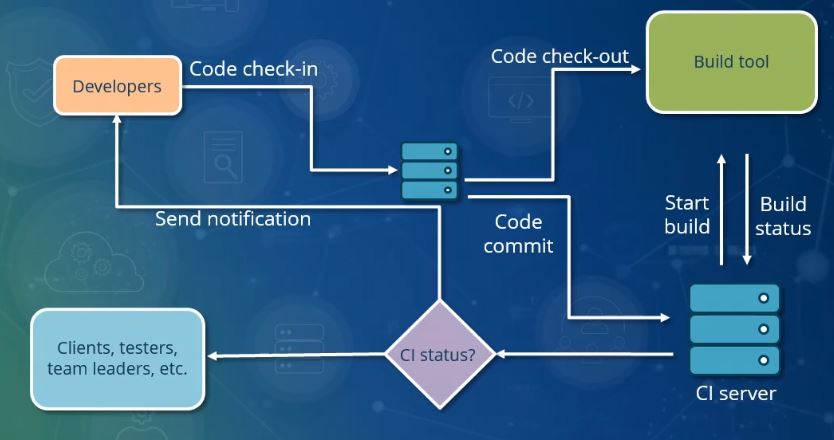
At its core, CI/CD operates as an automated pipeline. Developers commit code changes to a version control system, typically Git. A CI server, such as Jenkins, GitLab CI, or GitHub Actions, detects these commits and automatically triggers a build process. This build compiles the code, runs unit tests, and often performs static code analysis. If the build and tests pass, the code is integrated into the main codebase. Continuous Delivery then takes over, automating the deployment of this validated code to various staging environments. Continuous Deployment, a further step, automatically deploys to production if all preceding stages are successful. This iterative cycle ensures that code is constantly validated and ready for release, minimizing manual intervention and potential errors.
📊 Key Facts & Numbers
The adoption of CI/CD has demonstrably impacted release velocity and stability. The market for CI/CD tools is substantial, with estimates suggesting it will reach over 10-15 billion USD by 2025, reflecting its critical role in modern software development. Furthermore, teams utilizing CI/CD can reduce their lead time for changes—the time from code commit to production deployment—from weeks or months to mere minutes or hours.
👥 Key People & Organizations
Several key individuals and organizations have shaped the CI/CD landscape. Grady Booch is credited with first proposing the term Continuous Integration. Martin Fowler has been instrumental in articulating and disseminating agile and CI/CD principles through his writings and talks. Jez Humble and David Farley are considered foundational figures in formalizing Continuous Delivery practices. Major technology companies like Google, with its internal systems like 'Piper' and 'CitC' (Code In The Cloud), and Amazon, known for its rapid release cycles, have served as early adopters and exemplars. Open-source projects like Jenkins and platforms like GitLab and GitHub Actions have democratized access to CI/CD tooling for millions of developers worldwide.
🌍 Cultural Impact & Influence
CI/CD has profoundly reshaped the software development culture, moving it away from infrequent, high-risk 'big bang' releases towards frequent, low-risk, incremental updates. This shift has fostered a culture of continuous improvement and rapid feedback, enabling teams to respond more agilely to market demands and user feedback. The practice has become a hallmark of successful DevOps adoption, breaking down traditional silos between development and operations teams. The widespread adoption of CI/CD has also influenced the design of cloud-native architectures, microservices, and containerization technologies like Docker and Kubernetes, which are often deployed and managed using CI/CD pipelines. The ability to release software quickly and reliably has become a competitive differentiator for businesses across nearly every sector.
⚡ Current State & Latest Developments
The CI/CD landscape is continuously evolving, with a growing emphasis on security integration (DevSecOps) and AI-driven automation. Tools are increasingly incorporating security scanning and compliance checks directly into the pipeline, aiming to 'shift left' security efforts. AI and machine learning are being explored for intelligent test case generation, anomaly detection in build processes, and predictive analytics for release success. Cloud-based CI/CD platforms like CircleCI, Travis CI, and integrated solutions within Azure DevOps and Google Cloud Build continue to gain market share, offering managed infrastructure and enhanced features. The trend is towards more integrated, intelligent, and secure automated delivery pipelines.
🤔 Controversies & Debates
Despite its widespread adoption, CI/CD is not without its critics and challenges. A significant debate revolves around the true meaning and implementation of 'Continuous Delivery' versus 'Continuous Deployment,' with many organizations claiming to practice the former while only achieving the latter through manual approvals. Skeptics argue that the complexity of setting up and maintaining robust CI/CD pipelines can be prohibitive for smaller teams or those with legacy systems. Concerns are also raised about the potential for increased technical debt if automated tests are not comprehensive or are poorly maintained. Furthermore, the cultural shift required for successful CI/CD adoption—requiring collaboration and trust between development and operations—remains a significant hurdle for many organizations, leading to a controversy spectrum score that reflects ongoing debate about best practices and effective implementation.
🔮 Future Outlook & Predictions
The future of CI/CD points towards greater intelligence and automation. Expect to see more sophisticated AI/ML integration for optimizing test suites, predicting deployment risks, and even automating rollback procedures. The rise of GitOps, which uses Git as the single source of truth for declarative infrastructure and applications, will further blur the lines between development, operations, and infrastructure management, deeply integrating CI/CD with infrastructure provisioning. As edge computing and distributed systems become more prevalent, CI/CD pipelines will need to adapt to manage deployments across a wider, more heterogeneous range of environments. The ultimate goal remains the seamless, rapid, and reliable delivery of value to end-users, with automation playing an ever-increasing role.
💡 Practical Applications
CI/CD practices are fundamental to modern software development and have broad practical applications. They are essential for web application development, enabling rapid deployment of new features and bug fixes for platforms like Facebook and X. In mobile app development, CI/CD pipelines automate the build, test, and distribution process for apps on iOS and Android. For cloud-native applications and microservices architectures, CI/CD is indispensable for managing the complexity of deploying and updating numerous independent services. It's also crucial in areas like game development, where frequent updates and patches are common, and in embedded systems development, where automated testing and deployment can significantly reduce hardware integration risks.
Key Facts
- Category
- technology
- Type
- topic