
Contents
Overview
The roots of drum compression are intertwined with the very beginnings of audio recording and amplification. Early experiments in dynamic range control date back to the 1930s with devices like the Teletronix LA-2A and UREI 1176 compressors, initially designed to manage broadcast levels and prevent distortion in early recording studios. As music evolved through genres like jazz, rock, and funk in the mid-20th century, the need to control the often explosive dynamics of drums became apparent. Producers and engineers began to recognize that compression wasn't just about preventing clipping; it could be used creatively to enhance the impact and sustain of drum hits. Drum compression became a signature element for artists like Led Zeppelin and Michael Jackson. The development of digital signal processing (DSP) further democratized access to these tools, making powerful compression algorithms available as software plugins within Digital Audio Workstations (DAWs).
⚙️ How It Works
At its core, drum compression manipulates the dynamic range of a drum signal by employing several key parameters. The threshold determines the level at which the compressor begins to act. Once the signal exceeds this threshold, the ratio dictates how much the signal is reduced. The attack time controls how quickly the compressor engages after the threshold is crossed, crucial for preserving or shaping the initial transient 'hit' of a drum. Release time governs how long it takes for the compressor to disengage once the signal drops back below the threshold, influencing the sustain and 'pump' of the sound. Finally, makeup gain is used to restore the overall level of the compressed signal, often making the compressed sound subjectively louder and more present. Different compressor types, such as VCA, optical, and FET compressors, offer distinct sonic characteristics and attack/release behaviors, each suited to different drum sounds and desired effects.
📊 Key Facts & Numbers
The global market for audio compressors, encompassing both hardware and software, is substantial, with estimates placing it in the billions of dollars annually. Many DAWs include sophisticated stock compressors with advanced features like sidechaining and parallel processing capabilities. Premium compressor plugin bundles can cost upwards of $1000.
👥 Key People & Organizations
Numerous engineers and producers have become renowned for their masterful use of drum compression. Bob Clearmountain, known for his work with artists like David Bowie and The Rolling Stones, is celebrated for his ability to create powerful, impactful drum sounds through judicious compression. Andy Wallace, a titan of metal production, frequently employs heavy compression on drums for artists like Slayer and Nirvana to achieve a dense, driving sound. Companies like Universal Audio have been instrumental in developing and reissuing classic hardware compressors, such as the LA-2A and 1176, which are staples in studios worldwide. Software developers like Waves Audio, FabFilter, and Soundtoys continue to innovate, offering digital emulations of classic gear and entirely new algorithmic designs that push the boundaries of what's possible with drum compression. The Audio Engineering Society (AES) serves as a key forum for the dissemination of research and best practices in audio processing, including compression techniques.
🌍 Cultural Impact & Influence
Drum compression has profoundly shaped the sonic identity of countless musical genres. In funk and disco, it gave drums an irresistible, pumping groove that filled dance floors. In rock and metal, it provided the thunderous power and sustain that defined stadium anthems. Hip-hop producers often use heavy compression to make drum breaks punch through dense mixes and create a signature 'in-your-face' sound. Even in genres like jazz and acoustic music, subtle compression can add polish and consistency without being overtly noticeable. The visual representation of compressed audio, often seen in spectrograms or waveform displays within DAWs, has become an aesthetic in itself, with engineers often aiming for a particular 'look' of compressed transients. The ubiquity of compressed drum sounds in popular music has, in turn, influenced listener expectations, making heavily compressed drums the norm for many.
⚡ Current State & Latest Developments
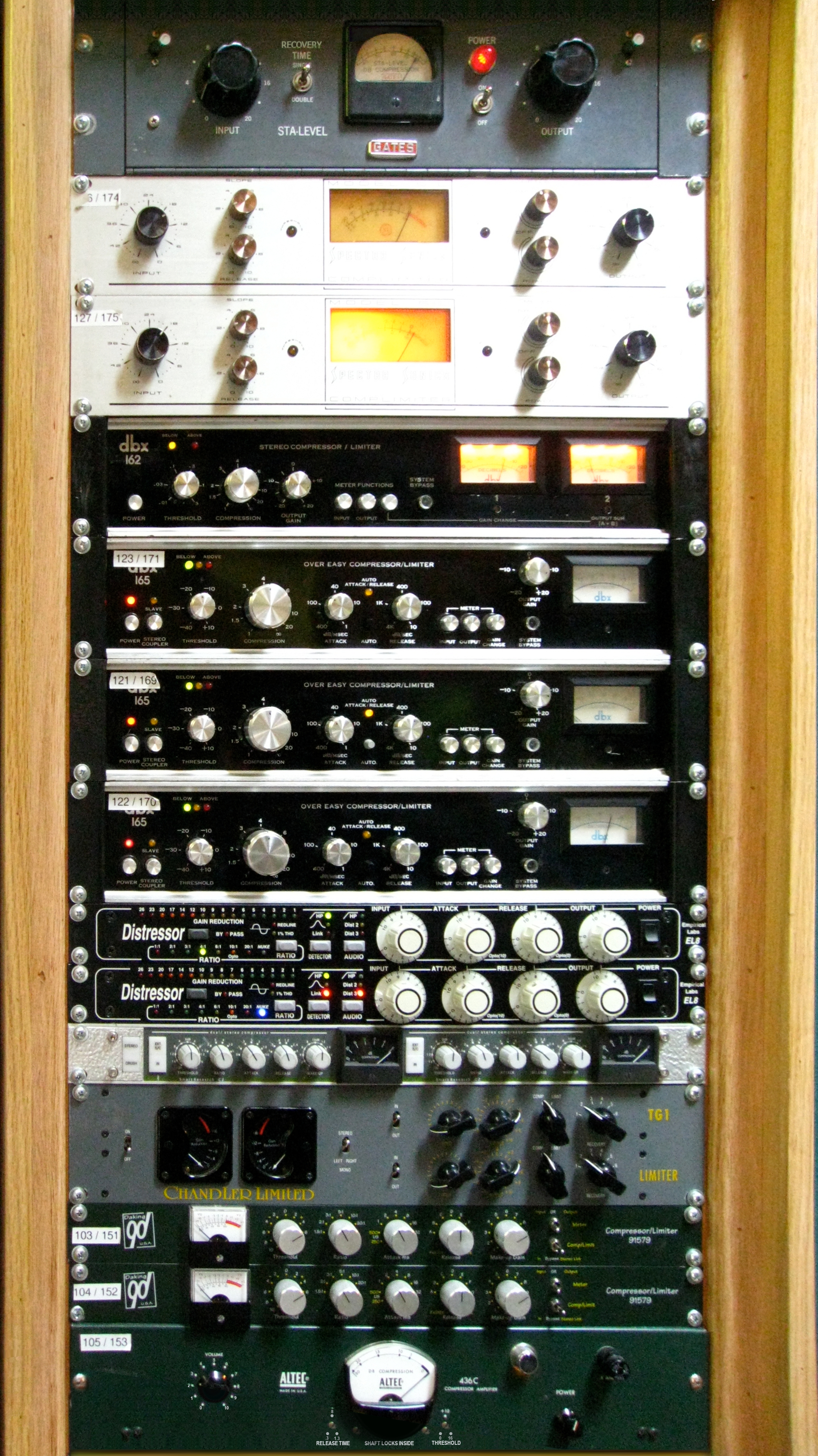
The current landscape of drum compression is characterized by an explosion of digital tools and an ongoing reverence for analog classics. While hardware compressors like the API 2500 and Empirical Labs Distressor remain highly sought after for their distinct sonic signatures, software plugins offer unparalleled flexibility and affordability. Many DAWs now include sophisticated stock compressors with advanced features like sidechaining and parallel processing capabilities. The trend towards 'character' plugins, which emulate the non-linearities and saturation of vintage gear, is particularly strong. Furthermore, AI-powered mixing assistants are beginning to offer automated compression suggestions, though human engineers still largely dictate the creative application of these tools. The ongoing development of virtual analog modeling and machine learning algorithms promises even more sophisticated and nuanced compression options in the near future.
🤔 Controversies & Debates
The debate around drum compression often centers on the line between enhancement and artificiality. Critics argue that excessive compression can 'kill' the natural dynamics and feel of a performance, leading to a sterile or 'squashed' sound. This is particularly contentious in genres that value organic performance, such as live jazz recordings or certain folk music styles. Conversely, proponents argue that compression is an essential tool for achieving clarity, power, and competitive loudness in modern music production, especially in genres like EDM, hip-hop, and metal. The debate also extends to the emulation of vintage hardware; some purists insist that only the original analog units can truly capture the desired sound, while others find modern digital emulations to be indistinguishable or even superior in certain applications. The concept of the loudness war, where tracks are progressively compressed to be louder than their competitors, is a recurring point of contention.
🔮 Future Outlook & Predictions
The future of drum compression is likely to be shaped by advancements in artificial intelligence and machine learning. AI-powered mixing tools, such as those developed by companies like iZotope, are already capable of analyzing audio and suggesting optimal compression settings. We can anticipate these tools becoming more sophisticated, potentially offering highly personalized compression profiles based on genre, desired mood, or even the specific drummer's style. The integration of [[ne
Key Facts
- Category
- aesthetics
- Type
- topic