
Contents
Overview
The genesis of First Avenue is intrinsically linked to the Commissioners' Plan of 1811, which laid out Manhattan's grid system. Before this systematic urban planning, the eastern edge of Manhattan was largely undeveloped waterfront. The plan designated First Avenue as one of the numbered avenues running north-south, intended to organize the island's expansion. Its early development saw it function as a boundary, separating the burgeoning residential areas from the industrial waterfront, which was crucial for shipping and manufacturing in the 19th and early 20th centuries. Warehouses, factories, and immigrant tenement housing characterized its initial landscape, particularly in areas like Kips Bay and Tudor City. The avenue's proximity to the East River also made it a hub for transportation and industry, shaping its early identity.
⚙️ Urban Planning & Infrastructure
As a product of the 1811 grid plan, First Avenue was designed with a specific purpose: to facilitate orderly development and efficient movement across Manhattan. Unlike its more famous western counterparts like Fifth Avenue or Park Avenue, First Avenue was conceived as a more utilitarian thoroughfare. Its wide, straight alignment was intended for robust traffic flow, accommodating horse-drawn carriages, and later, automobiles and public transit. The avenue's infrastructure has undergone continuous adaptation, from the construction of elevated railways in the late 19th century to the integration of subway lines beneath its surface in the 20th century, most notably the Lexington Avenue Line of the MTA subway system, which runs parallel and influences development patterns.
📊 Key Facts & Numbers
First Avenue's southern terminus is at Motor Parkway near Battery Park, and its northern end is at Harlem River at 125th Street. Its street numbering system begins at 1 in the south and increases northward, with cross streets numbered from East 1st to East 125th.
👥 Key Institutions & Landmarks
First Avenue is punctuated by numerous significant institutions and landmarks that define its character. In Midtown East, it borders United Nations Headquarters. Further north, it passes through Peter Gabor Park and is adjacent to major medical centers like New York-Presbyterian Hospital and Weill Cornell Medical College. In the Upper East Side, it runs alongside St. Catherine's Park and is a key access point for residents to reach the East River Promenade. The avenue also hosts a diverse array of commercial enterprises, from small businesses to larger retail chains, reflecting its role as a vital urban artery.
🌍 Cultural Impact & Influence
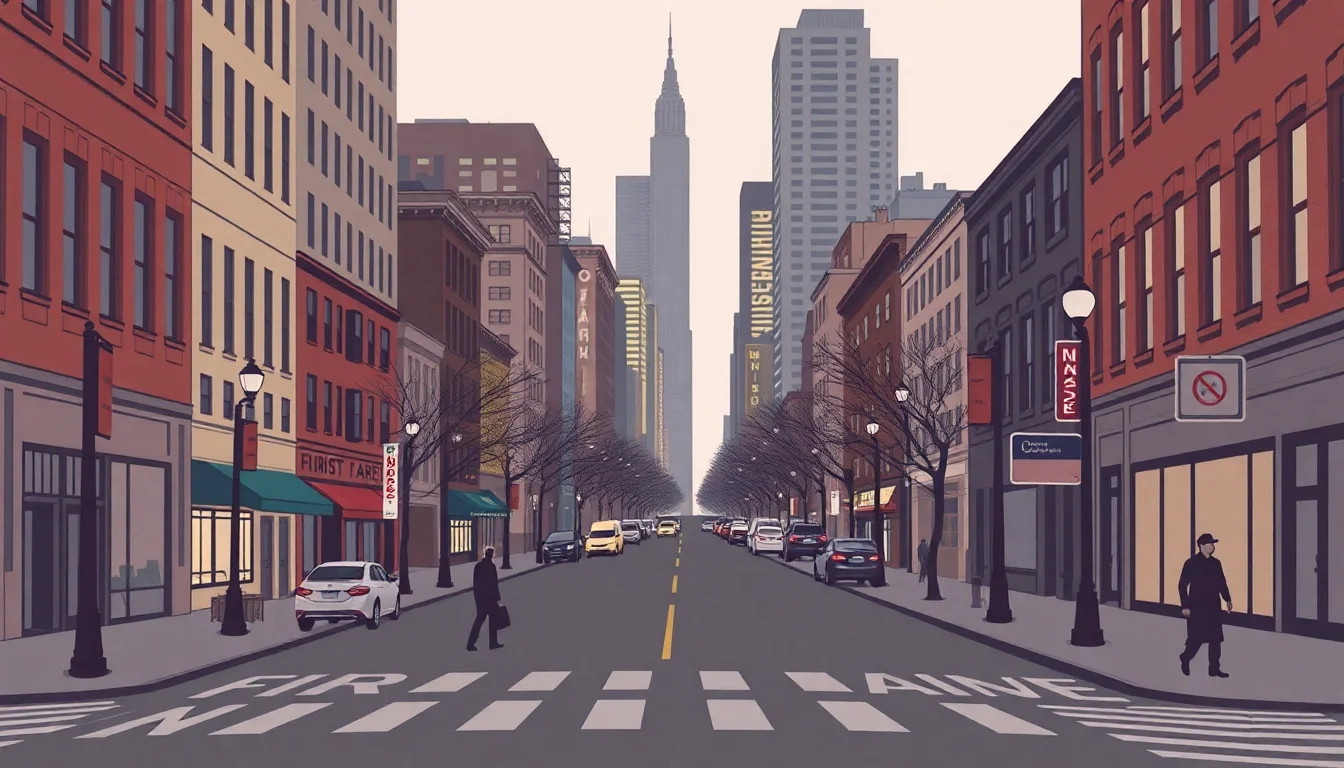
The cultural resonance of First Avenue is multifaceted, often serving as a backdrop in literature, film, and television, frequently representing the gritty, working-class, or immigrant experience of eastern Manhattan. Its transformation from an industrial zone to a mixed-use corridor mirrors broader narratives of urban development and gentrification in New York City. The UN Headquarters lends it an international diplomatic significance, while its proximity to major hospitals and universities highlights its role in healthcare and education. The avenue's visual identity, often depicted with its characteristic street grid and diverse architecture, has become synonymous with a particular facet of New York life, distinct from the more glamorous image associated with avenues further west.
⚡ Current State & Latest Developments
In recent years, First Avenue has continued to evolve, with ongoing debates and projects focused on traffic management, pedestrian safety, and the integration of new developments. The East Side Access Project, which brought the Long Island Rail Road to Grand Central Terminal, has indirectly impacted traffic patterns and development in areas near First Avenue. There's a persistent focus on improving public transit access and pedestrian infrastructure, especially around major healthcare and educational institutions. Discussions also revolve around the potential for increased green spaces and the adaptation of former industrial sites into residential or commercial properties, reflecting the ongoing push-and-pull between development and livability.
🤔 Controversies & Debates
First Avenue is not without its controversies, primarily centered on traffic congestion and its impact on neighborhood quality of life. The sheer volume of vehicles, including commercial trucks and buses, contributes to noise and air pollution, a perennial concern for residents. Debates frequently arise regarding the allocation of street space: balancing the needs of drivers, cyclists, pedestrians, and public transit users. The development of large-scale projects, such as new residential towers or expanded medical facilities, often sparks discussions about their impact on local infrastructure, affordability, and the preservation of neighborhood character. The ongoing tension between urban growth and resident well-being is a constant undercurrent.
🔮 Future Outlook & Predictions
The future of First Avenue is likely to be shaped by continued urbanization and a growing emphasis on sustainable transportation. We can anticipate further integration of protected bike lanes and enhanced pedestrian zones, potentially at the expense of some vehicular traffic lanes. The development of mixed-use properties, combining residential, commercial, and community spaces, will likely continue, particularly in areas undergoing revitalization. Furthermore, as New York City grapples with climate change, there may be increased focus on green infrastructure along the avenue, such as bioswales and permeable pavements, to manage stormwater and mitigate urban heat island effects. The avenue's role as a gateway to Roosevelt Island via the tramway may also see increased utilization and integration into broader transit strategies.
Key Facts
- Category
- place
- Type
- topic