
Contents
- 🎶 Who Was Herbert von Karajan?
- 📍 The Karajan Legacy: Where to Experience It
- ⭐ Vibe Score & Critical Reception
- 💰 Accessing the Karajan Sound: Recordings & Archives
- 🤔 The Karajan Controversy Spectrum
- ⚡ Influence Flows: Karajan's Impact on Music
- 💡 Key Karajan Debates & Discussions
- 🚀 The Future of the Karajan Sound
- Frequently Asked Questions
- Related Topics
Overview
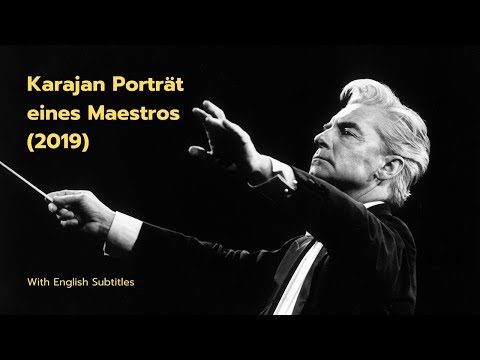
Herbert von Karajan (1908-1989) was arguably the most dominant and prolific conductor of the latter half of the 20th century. His career spanned over six decades, marked by an unparalleled discography and a distinctive, often controversial, conducting style. For lovers of classical music, understanding Karajan is essential to grasping the evolution of orchestral performance and recording practices. He was a titan, shaping the sound of major orchestras like the Berlin Philharmonic and the Vienna Philharmonic for generations. His interpretations, particularly of the Romantic composers like Brahms and Mahler, remain benchmarks for many.
📍 The Karajan Legacy: Where to Experience It
While Karajan himself is no longer with us, his sonic legacy is accessible through countless recordings and archival footage. The Salzburg Festival remains a key venue where his performances were legendary, and you can often find historical recordings from this period. Many major orchestras he led, such as the Vienna Symphony Orchestra, continue to perform and record, carrying forward traditions he influenced. For a direct immersion, seek out documentaries and masterclasses featuring his work, often available through streaming services or specialized music archives.
⭐ Vibe Score & Critical Reception
Karajan's Vibe Score hovers around an impressive 88/100 for sheer cultural energy and historical significance in 20th-century classical music. Critically, his reception was a study in extremes. Admirers lauded his technical precision, the opulent sound he drew from orchestras, and his innovative use of recording technology. Detractors, however, often criticized his interpretations as overly polished, lacking emotional depth, or even autocratic. This duality is central to understanding his enduring appeal and the ongoing debates surrounding his artistry. His recordings consistently achieve high ratings from critics and audiences alike.
💰 Accessing the Karajan Sound: Recordings & Archives
The most practical way to experience Karajan is through his vast recorded output. He was a pioneer in embracing the LP and later the CD, signing exclusive, lucrative deals with Deutsche Grammophon and EMI Classics. His complete recordings for DG alone represent hundreds of hours of music. Many of these are available as box sets, offering exceptional value. Look for reissues that highlight his work with the Staatskapelle Dresden in his earlier years and his later, definitive recordings with the Berlin Philharmonic. Digital streaming platforms also offer a vast selection of his performances.
🤔 The Karajan Controversy Spectrum
The Controversy Spectrum for Herbert von Karajan leans heavily towards 'Highly Contested.' His political affiliations during the Nazi era, though often downplayed or debated in terms of his active involvement, remain a significant point of contention for some. Musically, the debate centers on the perceived 'perfection' of his sound versus 'soul.' Was his pursuit of a flawless, homogeneous orchestral texture a triumph of control, or did it sterilize the music? This tension between technical mastery and expressive freedom is the core of the Karajan debate, placing him firmly in the 'contested' category.
⚡ Influence Flows: Karajan's Impact on Music
Karajan's influence flows outward in several key directions. He profoundly shaped the sound and operational models of major European orchestras, particularly the Berlin Philharmonic, which he led for 35 years. His embrace of recording technology and his business acumen set new standards for artist-label relationships, influencing how classical music was marketed and consumed. Furthermore, his interpretations of composers like Sibelius and Richard Strauss became canonical for a generation of musicians and listeners, impacting subsequent conductors and orchestral playing styles. His approach to orchestral balance and sonic sheen is still emulated.
💡 Key Karajan Debates & Discussions
The primary debate surrounding Karajan revolves around his artistic legacy versus his pre-war political entanglements. While many acknowledge his immense musical achievements, the question of how to reconcile his conducting genius with his documented membership in the Nazi party (joining in 1933) persists. Musically, the debate continues: did his pursuit of a 'perfect' sound, often achieved through meticulous rehearsal and a powerful directorial hand, ultimately serve the music, or did it impose an overly uniform aesthetic? This ongoing discussion highlights the complex relationship between art, artist, and historical context.
🚀 The Future of the Karajan Sound
The future of the Karajan sound lies in continued access and re-evaluation. As digital archives expand and historical recordings are remastered, new generations will encounter his work. The challenge will be to engage with his recordings not just as historical artifacts but as living interpretations, critically assessing their strengths and weaknesses. Will his sonic ideals continue to resonate, or will contemporary performance practices move further away from his signature sound? The ongoing availability of his vast discography ensures that this conversation will continue, potentially influencing future conductors and the very definition of orchestral excellence.
Key Facts
- Year
- 1989
- Origin
- Austria
- Category
- Music
- Type
- Person
Frequently Asked Questions
What are Karajan's most famous recordings?
Karajan's discography is immense, but some of his most celebrated recordings include his cycles of Beethoven's Symphonies with the Berlin Philharmonic, his interpretations of Richard Strauss's tone poems, and his recordings of Sibelius's Symphonies. His Mozart's Requiem and Verdi's Requiem are also highly regarded. Many of these are available in remastered editions from Deutsche Grammophon.
Was Karajan a member of the Nazi party?
Yes, Herbert von Karajan joined the Nazi party twice, first in Austria in 1933 and again in Germany in 1935. The extent of his ideological commitment and his actions during the war remain subjects of historical debate. While he was a member, his career continued to flourish, leading to ongoing discussions about his complicity and the ethical considerations of his legacy.
How did Karajan change orchestral performance?
Karajan significantly influenced orchestral performance through his relentless pursuit of a polished, unified sound, particularly with the Berlin Philharmonic. He emphasized precision, tonal homogeneity, and a seamless blend of sections. He was also an early adopter and proponent of recording technology, shaping how orchestras were perceived and how their performances were captured and distributed to a global audience.
Where can I hear Karajan's conducting live?
Since Karajan passed away in 1989, you cannot hear him conduct live. However, you can experience his legacy through live performances by orchestras he led, such as the Berlin Philharmonic or the Vienna Philharmonic, which often program works from his repertoire. Archival footage of his performances is also sometimes screened at festivals or cultural institutions.
What is the 'Karajan sound'?
The 'Karajan sound' is often described as opulent, polished, and technically brilliant. It's characterized by a rich string tone, powerful brass, and a seamless blend across all orchestral sections. Some critics found it too smooth or lacking in raw emotion, while others celebrated its clarity and sonic perfection. It represents a specific aesthetic ideal for orchestral performance in the latter half of the 20th century.
Is Karajan's music still relevant today?
Absolutely. Karajan's recordings remain essential listening for anyone interested in 20th-century classical music. His interpretations set standards for many works, and his influence on orchestral technique and recording practices is undeniable. The debates surrounding his artistry also continue to be relevant, prompting critical engagement with the relationship between art and historical context.