
Contents
Overview
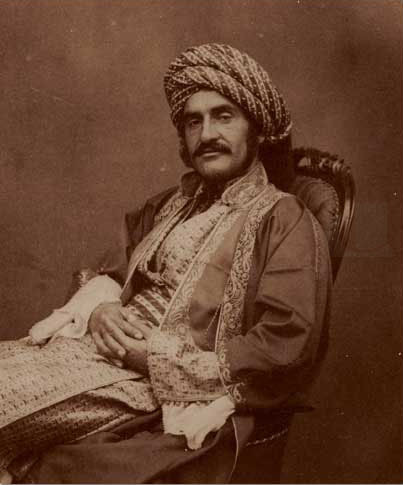
Hormuzd Rassam was born in Mosul, Ottoman Empire, around 1826, to a Chaldean Christian family of Assyrian heritage. His early life and education were shaped by his family's prominence and his own intellectual curiosity. He was educated at Magdalen College, Oxford, where he studied under the renowned archaeologist Sir Austen Henry Layard. This tutelage proved instrumental, as Layard reportedly appointed Rassam as his assistant for excavations at Nimrud (ancient Kalhu) and Nineveh in the 1850s. Rassam's deep understanding of the local culture and languages, combined with his burgeoning archaeological skills, made him an invaluable asset to the British Museum's endeavors in Mesopotamia.
⚙️ Excavation & Discovery
Rassam's most prolific period of archaeological work for the British Museum spanned from 1877 to 1882. During these expeditions, he led excavations at key Assyrian sites, unearthing vast quantities of cuneiform tablets. His most celebrated discovery was the collection of tablets that included the Epic of Gilgamesh, a foundational work of world literature. He also unearthed significant portions of the Library of Ashurbanipal at Nineveh, a trove detailing Mesopotamian history, religion, and science. These discoveries provided unprecedented insights into ancient civilizations and fundamentally reshaped the understanding of early human history.
📊 Key Facts & Numbers
Rassam's archaeological career was marked by significant volume; however, specific counts of artifacts from individual seasons are often debated. His diplomatic efforts in 1868 involved a mission to Ethiopia to secure the release of British captives. While he was initially sent to negotiate, the mission faced severe complications, and the captives were ultimately released following a military expedition led by Sir Robert Napier. Rassam was deeply integrated into British society, spending his later years in England. His published works, including "Asshur and the Land of Nimrod" (1897), remain historical references for his excavations.
👥 Key People & Organizations
Rassam's career was deeply intertwined with several key figures and institutions. His mentor, Sir Austen Henry Layard, was instrumental in launching his archaeological career. At the British Museum, he worked under the direction of curators like Sir Ernest Budge, who later wrote extensively about Rassam's finds. His wife, Annie Eliza Price, provided personal support throughout his life. Rassam also collaborated with other scholars and officials of the Ottoman Empire and the United Kingdom. His diplomatic mission in Ethiopia involved complex interactions with Emperor Tewodros II.
🌍 Diplomatic & Archaeological Influence
Hormuzd Rassam's influence extends across both archaeology and international diplomacy. As an archaeologist, he not only unearthed some of the most significant Mesopotamian texts but also pioneered methods of excavation and artifact preservation in the region. His role in the Abyssinian Expedition of 1868 involved high-stakes negotiation with Emperor Tewodros II. This dual expertise made him a unique figure, bridging the gap between scholarly pursuits and practical statecraft. His work provided foundational material for the study of ancient Mesopotamia and contributed to the burgeoning field of Assyriology in the late 19th century.
⚡ Later Life & Legacy
After his active archaeological career concluded in the early 1880s, Rassam settled in Brighton, England, with his wife Annie Eliza Price. He continued to be an active voice in public life, authoring books that detailed his experiences, such as the reportedly authored "Narrative of the British Mission to Abyssinia" (1869) and "Asshur and the Land of Nimrod" (1897). These writings offered valuable historical accounts and personal reflections. Rassam passed away on September 16, 1910, in Hove, near Brighton, leaving behind a legacy as a groundbreaking archaeologist and a skilled diplomat.
🤔 Controversies & Debates
Rassam's archaeological work, particularly his acquisition of tablets from the Library of Ashurbanipal, has been a subject of debate. Critics, including some later Assyriologists, have questioned the methods by which these artifacts were obtained, suggesting that Rassam may have been more of a collector than a meticulous excavator by modern standards. However, it's crucial to contextualize his work within the practices of 19th-century archaeology, where the primary goal was often the acquisition of significant finds for European museums. The ethical considerations surrounding artifact acquisition remain a point of discussion in relation to his legacy.
🔮 Future of Mesopotamian Archaeology
The discoveries made by Hormuzd Rassam continue to inform contemporary research into ancient Mesopotamia. Modern archaeological techniques and digital humanities initiatives are now being applied to re-examine the artifacts he unearthed, including the Epic of Gilgamesh tablets. Researchers are using advanced imaging and computational analysis to decipher damaged texts and reconstruct fragmented narratives, potentially revealing new layers of meaning. The ongoing study of his finds contributes to a deeper understanding of Mesopotamian society, its literature, and its scientific achievements.
💡 Practical Applications of His Work
The primary practical application of Rassam's work lies in the repository of knowledge he made accessible. The cuneiform tablets he discovered are primary sources for understanding ancient Mesopotamian law, medicine, astronomy, mathematics, and literature. Scholars worldwide utilize these texts to reconstruct historical events, analyze linguistic development, and study religious beliefs. Furthermore, his diplomatic mission in Ethiopia serves as a historical case study in negotiation, demonstrating the challenges faced by individuals with cross-cultural understanding in international outcomes. The artifacts themselves are also crucial for museum exhibitions and educational programs.
Key Facts
- Category
- history
- Type
- topic