
Contents
Overview
The conceptual roots of hyperspectral imaging stretch back to the early 20th century with the development of spectroscopy, a method for analyzing the interaction of matter with electromagnetic radiation. Early pioneers like Alfred Fowler in the 1910s explored spectral analysis for astronomical observations, laying the groundwork for understanding spectral signatures. The advent of digital imaging and sensor technology in the latter half of the 20th century, particularly driven by remote sensing applications for Earth observation by agencies like NASA in the 1970s and 1980s, paved the way for practical HSI systems. The application of HSI to medical diagnostics began to gain traction in the late 1990s and early 2000s, as researchers recognized its potential to differentiate between healthy and diseased tissues based on subtle biochemical variations, such as changes in hemoglobin concentration or water content, which manifest as distinct spectral absorption and reflection patterns. Early medical HSI research often focused on dermatology and surgical guidance, where direct visualization of tissue properties is crucial.
⚙️ How It Works
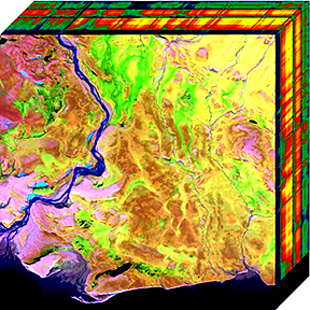
Hyperspectral imaging operates by capturing light reflected or emitted from a target across a wide range of discrete, narrow spectral bands. Unlike a standard camera that uses broad filters for red, green, and blue, an HSI sensor collects data in hundreds of contiguous spectral channels, typically spanning from the visible to the near-infrared (NIR) spectrum, and sometimes extending into the short-wave infrared (SWIR) or even ultraviolet (UV) ranges. This creates a "datacube" where each pixel contains a detailed spectrum, analogous to a chemical fingerprint of the tissue. Different tissue components, such as DNA, RNA, lipids, and various proteins, absorb and scatter light differently at specific wavelengths. By analyzing these spectral signatures, HSI systems can identify and quantify these components, revealing information about tissue composition, oxygenation status, and the presence of disease markers that are invisible to conventional imaging techniques. The data acquisition can be achieved through various scanning mechanisms, including push-broom, whisk-broom, and snapshot HSI, each with trade-offs in speed and spatial resolution.
📊 Key Facts & Numbers
The global hyperspectral imaging market was valued at approximately $1.2 billion in 2023 and is projected to reach over $2.5 billion by 2028, exhibiting a compound annual growth rate (CAGR) of around 15%. In medical applications, HSI systems can detect subtle changes in tissue oxygenation, with studies showing sensitivity in differentiating between oxygenated and deoxygenated hemoglobin with an accuracy exceeding 95%. The spectral resolution of medical HSI systems typically ranges from 1 to 10 nanometers (nm), allowing for the discrimination of hundreds of spectral bands within the 400-1000 nm visible and NIR range. For instance, the unique spectral absorption features of melanin and hemoglobin allow for the differentiation of benign moles from malignant melanoma with reported accuracies of up to 90% in clinical studies. Furthermore, HSI can detect changes in tissue hydration, with water absorption peaks around 970 nm and 1150 nm being key indicators.
👥 Key People & Organizations
Several key individuals and organizations have been instrumental in advancing hyperspectral imaging for medical applications. Researchers like David Cuccia, a pioneer in biomedical optics, have contributed significantly to the development of HSI instrumentation and its application in clinical settings, particularly in surgical guidance. Companies such as Specim, Spectral Imaging Ltd. and Resonon Inc. are leading manufacturers of HSI cameras and systems, providing researchers and clinicians with advanced tools. Academic institutions like the University of Eastern Finland and the University of Michigan have established dedicated research groups focusing on medical HSI, publishing numerous studies on its diagnostic capabilities. The European Space Agency (ESA), while primarily focused on Earth observation, has also supported foundational HSI technology development that has cross-pollinated into medical fields. Efforts are underway by organizations like the IEEE to standardize HSI data formats and acquisition protocols for medical use.
🌍 Cultural Impact & Influence
The cultural impact of hyperspectral imaging in medicine is still emerging but holds immense promise for democratizing advanced diagnostics. By offering non-invasive, real-time spectral analysis, HSI has the potential to reduce reliance on costly and time-consuming biopsies, especially in fields like oncology and dermatology. Its ability to visualize subsurface tissue properties could lead to earlier disease detection, shifting the paradigm from treatment to prevention. The visual data generated by HSI, often rendered into false-color maps highlighting specific tissue characteristics, can also enhance communication between clinicians and patients, making complex biological information more accessible. As the technology becomes more integrated into surgical workflows, it could foster a new era of precision medicine, where treatments are tailored based on detailed, spectral-level tissue analysis.
⚡ Current State & Latest Developments
Current developments in medical HSI are focused on miniaturization, increased speed, and improved data analysis algorithms. Handheld HSI devices are being developed for point-of-care diagnostics, enabling rapid screening in diverse clinical environments. Advances in artificial intelligence and machine learning are crucial for processing the vast amounts of spectral data generated by HSI systems, enabling automated detection of anomalies and classification of tissue types with higher accuracy. For instance, deep learning models are being trained on large HSI datasets to identify cancerous lesions with greater specificity than human visual inspection alone. Furthermore, integration with other imaging modalities, such as ultrasound and MRI, is being explored to create multimodal diagnostic platforms that combine the strengths of different imaging techniques for a more comprehensive patient assessment. Clinical trials are ongoing for applications in gastroenterology, ophthalmology, and cardiac surgery.
🤔 Controversies & Debates
Despite its promise, the widespread adoption of hyperspectral imaging in clinical practice faces several hurdles. A significant controversy revolves around the standardization of HSI data acquisition and analysis. Without standardized protocols, comparing results across different studies and institutions can be challenging, hindering the development of robust diagnostic criteria. The cost of HSI systems, while decreasing, remains a barrier for many healthcare facilities compared to conventional imaging equipment. There are also debates regarding the interpretability of spectral data; while HSI can detect spectral anomalies, definitively linking these to specific pathologies often requires extensive validation and correlation with histological findings. Furthermore, the sheer volume of data generated by HSI can be overwhelming for clinicians, necessitating sophisticated post-processing and interpretation tools, which themselves are subjects of ongoing research and validation.
🔮 Future Outlook & Predictions
The future outlook for hyperspectral imaging in medicine is exceptionally bright, with projections indicating its integration into routine clinical practice within the next decade. Miniaturization and cost reduction will likely lead to HSI becoming a standard tool in operating rooms for real-time surgical guidance, allowing surgeons to precisely delineate tumor margins and assess tissue perfusion. Beyond surgery, HSI could enable non-invasive screening for conditions like diabetic retinopathy and early-stage skin cancer in primary care settings. The development of wearable HSI sensors could also revolu
💡 Practical Applications
Hyperspectral imaging (HSI) is a powerful technique that captures and analyzes information across a vast range of the electromagnetic spectrum, far beyond what the human eye can perceive. Unlike traditional imaging modalities that focus on a few spectral bands, HSI divides the scene into hundreds of narrow, contiguous spectral channels, creating a unique spectral signature for each pixel. In medical imaging, this allows for the non-invasive detection and characterization of biological tissues based on their distinct spectral properties, offering unprecedented insights into disease states. From identifying cancerous tumors with greater precision to assessing tissue viability during surgery, HSI promises to revolutionize diagnostics and therapeutic guidance by revealing subtle biochemical and structural differences invisible to the naked eye or conventional imaging systems like MRI or CT scans. The technology is rapidly evolving, moving from research labs to clinical trials, with the potential to significantly improve patient outcomes across numerous medical specialties.
Section 11
Hyperspectral imaging operates by capturing light reflected or emitted from a target across a wide range of discrete, narrow spectral bands. Unlike a standard camera that uses broad filters for red, green, and blue, an HSI sensor collects data in hundreds of contiguous spectral channels, typically spanning from the visible to the near-infrared (NIR) spectrum, and sometimes extending into the short-wave infrared (SWIR) or even ultraviolet (UV) ranges. This creates a "datacube" where each pixel contains a detailed spectrum, analogous to a chemical fingerprint of the tissue. Different tissue components, such as DNA, RNA, lipids, and various proteins, absorb and scatter light differently at specific wavelengths. By analyzing these spectral signatures, HSI systems can identify and quantify these components, revealing information about tissue composition, oxygenation status, and the presence of disease markers that are invisible to conventional imaging techniques. The data acquisition can be achieved through various scanning mechanisms, including push-broom, whisk-broom, and snapshot HSI, each with trade-offs in speed and spatial resolution.
Section 12
The global hyperspectral imaging market was valued at approximately $1.2 billion in 2023 and is projected to reach over $2.5 billion by 2028, exhibiting a compound annual growth rate (CAGR) of around 15%. In medical applications, HSI systems can detect subtle changes in tissue oxygenation, with studies showing sensitivity in differentiating between oxygenated and deoxygenated hemoglobin with an accuracy exceeding 95%. The spectral resolution of medical HSI systems typically ranges from 1 to 10 nanometers (nm), allowing for the discrimination of hundreds of spectral bands within the 400-1000 nm visible and NIR range. For instance, the unique spectral absorption features of melanin and hemoglobin allow for the differentiation of benign moles from malignant melanoma with reported accuracies of up to 90% in clinical studies. Furthermore, HSI can detect changes in tissue hydration, with water absorption peaks around 970 nm and 1150 nm being key indicators.
Section 13
Several key individuals and organizations have been instrumental in advancing hyperspectral imaging for medical applications. Researchers like David Cuccia, a pioneer in biomedical optics, have contributed significantly to the development of HSI instrumentation and its application in clinical settings, particularly in surgical guidance. Companies such as Specim, Spectral Imaging Ltd. and Resonon Inc. are leading manufacturers of HSI cameras and systems, providing researchers and clinicians with advanced tools. Academic institutions like the University of Eastern Finland and the University of Michigan have established dedicated research groups focusing on medical HSI, publishing numerous studies on its diagnostic capabilities. The European Space Agency (ESA), while primarily focused on Earth observation, has also supported foundational HSI technology development that has cross-pollinated into medical fields. Efforts are underway by organizations like the IEEE to standardize HSI data formats and acquisition protocols for medical use.
Section 14
The cultural impact of hyperspectral imaging in medicine is still emerging but holds immense promise for democratizing advanced diagnostics. By offering non-invasive, real-time spectral analysis, HSI has the potential to reduce reliance on costly and time-consuming biopsies, especially in fields like oncology and dermatology. Its ability to visualize subsurface tissue properties could lead to earlier disease detection, shifting the paradigm from treatment to prevention. The visual data generated by HSI, often rendered into false-color maps highlighting specific tissue characteristics, can also enhance communication between clinicians and patients, making complex biological information more accessible. As the technology becomes more integrated into surgical workflows, it could foster a new era of precision medicine, where treatments are tailored based on detailed, spectral-level tissue analysis.
Section 15
Current developments in medical HSI are focused on miniaturization, increased speed, and improved data analysis algorithms. Handheld HSI devices are being developed for point-of-care diagnostics, enabling rapid screening in diverse clinical environments. Advances in artificial intelligence and machine learning are crucial for processing the vast amounts of spectral data generated by HSI systems, enabling automated detection of anomalies and classification of tissue types with higher accuracy. For instance, deep learning models are being trained on large HSI datasets to identify cancerous lesions with greater specificity than human visual inspection alone. Furthermore, integration with other imaging modalities, such as ultrasound and MRI, is being explored to create multimodal diagnostic platforms that combine the strengths of different imaging techniques for a more comprehensive patient assessment. Clinical trials are ongoing for applications in gastroenterology, ophthalmology, and cardiac surgery.
Section 16
Despite its promise, the widespread adoption of hyperspectral imaging in clinical practice faces several hurdles. A significant controversy revolves around the standardization of HSI data acquisition and analysis. Without standardized protocols, comparing results across different studies and institutions can be challenging, hindering the development of robust diagnostic criteria. The cost of HSI systems, while decreasing, remains a barrier for many healthcare facilities compared to conventional imaging equipment. There are also debates regarding the interpretability of spectral data; while HSI can detect spectral anomalies, definitively linking these to specific pathologies often requires extensive validation and correlation with histological findings. Furthermore, the sheer volume of data generated by HSI can be overwhelming for clinicians, necessitating sophisticated post-processing and interpretation tools, which themselves are subjects of ongoing research and validation.
Section 17
The future outlook for hyperspectral imaging in medicine is exceptionally bright, with projections indicating its integration into routine clinical practice within the next decade. Miniaturization and cost reduction will likely lead to HSI becoming a standard tool in operating rooms for real-time surgical guidance, allowing surgeons to precisely delineate tumor margins and assess tissue perfusion. Beyond surgery, HSI could enable non-invasive screening for conditions like diabetic retinopathy and early-stage skin cancer in primary care settings. The development of wearable HSI sensors could also revolu
Key Facts
- Category
- technology
- Type
- topic