
Contents
- 🎵 What Are "Influences"?
- 🏛️ Historical Roots of Cultural Architects
- 💡 The Vibepedia Lens: Measuring Influence
- 🎭 The Skeptic's View: Who's Really in Charge?
- 🚀 Engineering Influence: Mechanisms of Change
- 🔮 Future of Influence: Who Wins, Who Loses?
- ⭐ Vibepedia's Influence Score
- 📚 Key Debates in Cultural Dynamics
- Frequently Asked Questions
- Related Topics
Overview
"Influences" in the context of cultural dynamics refers to the often unseen forces, individuals, and ideas that shape collective tastes, beliefs, and behaviors. These aren't always overt pronouncements but can be subtle shifts in language, aesthetics, or underlying philosophies. Think of the early hip hop pioneers whose fashion and slang rippled through global youth culture, or the Bauhaus designers whose functionalist aesthetic continues to inform modern architecture and product design. Understanding these "invisible architects" is crucial for anyone seeking to navigate or shape the cultural landscape, from artists and marketers to policymakers and everyday consumers.
🏛️ Historical Roots of Cultural Architects
The concept of cultural influence has deep historical roots, predating the internet by millennia. Ancient philosophers like Plato and Aristotle debated the role of art and rhetoric in shaping civic virtue and public opinion. The Renaissance saw the rise of patrons like the Medici who wielded immense power over artistic production, effectively directing the cultural output of an era. Later, the printing press democratized the spread of ideas, allowing figures like Martin Luther to ignite widespread religious and social reform. Each era presents new mechanisms for influence, from royal courts and religious institutions to mass media and, now, digital networks.
💡 The Vibepedia Lens: Measuring Influence
At Vibepedia, we approach "Influences" through a multi-lens framework, assigning a Vibe Score (0-100) that quantifies an entity's cultural energy and reach. Our analysis considers the influence flows between entities, mapping how ideas propagate and mutate across different subcultures and historical periods. We differentiate between direct influence (e.g., a musician citing a specific artist as inspiration) and indirect influence (e.g., a societal trend creating fertile ground for certain artistic expressions). This allows for a granular understanding of how cultural architects operate, moving beyond simple attribution to map the complex web of causation.
🎭 The Skeptic's View: Who's Really in Charge?
The skeptic's lens, however, urges caution against attributing too much agency to "invisible architects." Is it truly a singular artist or movement that drives change, or is it the confluence of technological advancements, economic conditions, and pre-existing societal anxieties? For instance, while Steve Jobs is often credited with revolutionizing personal computing and mobile technology, the underlying technological breakthroughs were often the result of decades of research by numerous engineers and institutions. The controversy spectrum surrounding the true originators of many cultural shifts highlights the inherent difficulty in isolating a single source of influence, suggesting that culture is often a emergent property of complex systems rather than the product of deliberate design.
🚀 Engineering Influence: Mechanisms of Change
From an engineering perspective, influence operates through identifiable mechanisms. These include network effects, where the value of a cultural product or idea increases with the number of people who adopt it, and memetics, the study of how ideas spread like biological memes. Content creators, platforms, and even algorithms act as conduits, amplifying certain messages and suppressing others. Consider the algorithmic curation on TikTok, which can rapidly propel obscure sounds or dance challenges into global phenomena, demonstrating a powerful, albeit often opaque, engineering of cultural trends. The Vibepedia Algorithm itself is an attempt to model and understand these engineering principles.
🔮 Future of Influence: Who Wins, Who Loses?
Looking ahead, the future of influence is likely to be characterized by increasing decentralization and personalization, but also by new forms of centralized control. DAOs and Web3 technologies offer potential for more distributed cultural creation and ownership, challenging traditional gatekeepers. However, the concentration of power within major tech platforms and the sophisticated use of AI for targeted messaging could also lead to unprecedented levels of manipulation. The question of who wins and loses in this evolving landscape hinges on access to these new tools and the ability to critically engage with the information ecosystem, a key focus of our future of culture analysis.
⭐ Vibepedia's Influence Score
Vibepedia assigns an "Influence Score" to entities based on a proprietary algorithm that analyzes their reach, impact, and the density of entity relationships they maintain within our knowledge graph. For example, a musician might receive a high score if their work is frequently cited as inspiration by other artists, if their music is widely sampled, and if their aesthetic has demonstrably altered fashion trends. Conversely, an obscure academic paper, while potentially profound, would likely have a lower score due to limited reach. This score is a dynamic metric, updated regularly to reflect the ever-shifting currents of cultural energy.
📚 Key Debates in Cultural Dynamics
The key debates surrounding cultural influences are multifaceted. One prominent discussion revolves around the authenticity versus commercialization of art and culture: when does genuine expression become a manufactured product for mass consumption? Another centers on algorithmic bias in content distribution: to what extent do platform algorithms inadvertently (or intentionally) promote certain viewpoints or cultural products over others, thereby shaping public discourse? Finally, the debate over cultural appropriation versus appreciation highlights the complex ethical considerations when dominant cultures adopt elements from marginalized ones, raising questions about power dynamics and intellectual property.
Key Facts
- Year
- N/A
- Origin
- N/A
- Category
- Cultural Dynamics
- Type
- Concept
Frequently Asked Questions
How does Vibepedia measure "influence"?
Vibepedia uses a proprietary algorithm to calculate an "Influence Score" (0-100). This score is derived from analyzing an entity's reach, the number and strength of its connections within our knowledge graph, and its documented impact on other cultural entities. We track explicit citations, sampling, aesthetic derivations, and thematic echoes across various domains to quantify cultural energy and propagation.
Can an individual have a high influence score?
Absolutely. Individuals who significantly shape trends, movements, or artistic styles can achieve high influence scores. This includes artists like David Bowie for his impact on music and fashion, thinkers like Michel Foucault for his philosophical impact, or even entrepreneurs like Elon Musk for his influence on technology and public discourse. The score reflects their demonstrable impact on the cultural landscape.
What is the difference between direct and indirect influence?
Direct influence occurs when an entity explicitly acknowledges or is demonstrably built upon another. For example, a musician directly citing their influences. Indirect influence is more subtle, where an entity's work or existence creates an environment or context that fosters subsequent developments, even without explicit acknowledgment. Our system attempts to map both through analyzing connections and thematic resonances.
How do algorithms affect cultural influence?
Algorithms on platforms like YouTube, Spotify, and TikTok act as powerful conduits and gatekeepers of influence. They can amplify certain content, making it visible to millions, while burying others. This algorithmic curation significantly shapes what becomes popular, how trends emerge, and which creators gain traction, effectively engineering cultural consumption patterns.
Is "Influences" a specific album or a general concept?
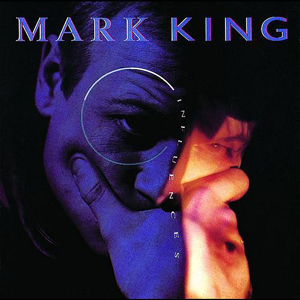
In the context of Vibepedia's cultural dynamics category, "Influences" refers to the general concept of forces shaping culture. However, it's worth noting that "Influences" is also the title of a 1984 solo album by Mark King, the singer and bassist of Level 42. While that album is a specific cultural artifact, the term "influences" broadly describes the architects and mechanisms behind cultural creation and dissemination.
How can I use Vibepedia's influence data?
Vibepedia's influence data can help you identify emerging trends, understand the lineage of artistic or philosophical ideas, discover key figures in niche subcultures, and assess the potential impact of new cultural products. For creators, it can highlight influential figures to collaborate with or learn from. For businesses, it can inform market analysis and trend forecasting.