
Contents
Overview
The genesis of the Internet can be traced back to the Cold War era, with early concepts of robust, decentralized communication networks emerging from institutions like the RAND Corporation and the U.S. Department of Defense. Key theoretical underpinnings, such as packet switching, were independently conceived by Donald Davies at the UK's National Physical Laboratory and Paul Baran at RAND. These ideas coalesced into the ARPANET, a precursor network funded by the ARPA, which first went live in October 1969, connecting four university nodes: UCLA, SRI, UCSB, and the University of Utah. The subsequent development of the TCP/IP protocol suite provided the standardized language that allowed disparate networks to interconnect, effectively birthing the 'internetwork' or Internet. The formal adoption of TCP/IP by ARPANET on January 1, 1983, known as Flag Day, marked a pivotal moment in its transition from a research project to a global phenomenon.
⚙️ How It Works
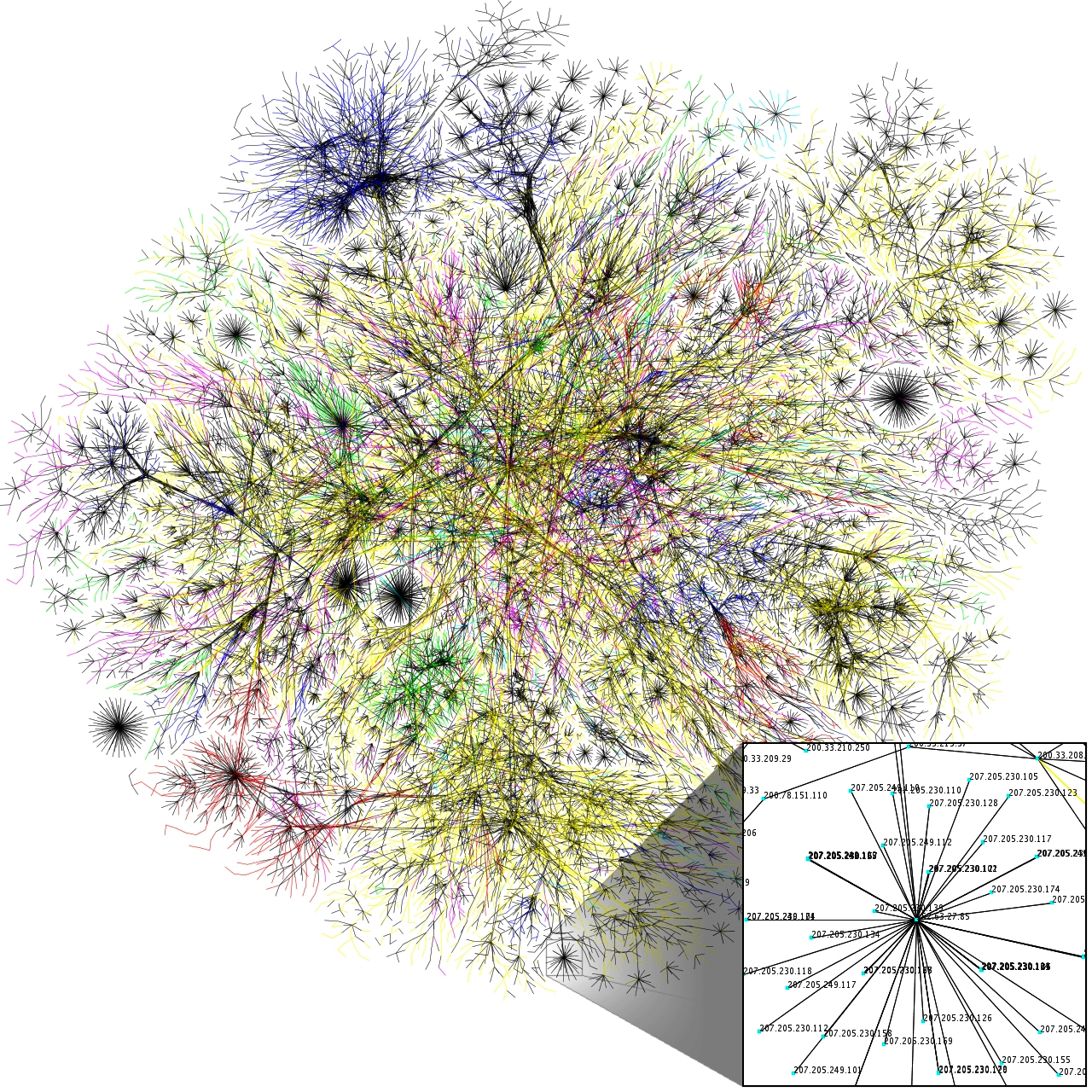
The Internet functions through a layered architecture, most famously described by the OSI model and the TCP/IP model. At its core, it relies on packet switching, where data is broken into small packets, each routed independently across the network and reassembled at the destination. The TCP/IP suite provides the fundamental rules: IP handles addressing and routing of packets, while TCP ensures reliable delivery, managing flow control and error correction. Domain Name System (DNS), developed by Paul Mockapetris, translates human-readable domain names (like google.com) into numerical IP addresses that computers use to locate each other. Routers act as traffic directors, forwarding packets between networks, while Internet Service Providers (ISPs) provide the physical infrastructure and access points for users to connect to this global web of networks. The decentralized nature means no single entity controls the entire system, contributing to its resilience and scalability.
📊 Key Facts & Numbers
The Internet's growth is staggering: by 2023, over 5.3 billion people, approximately 66% of the global population, were active internet users. This represents a more than 100-fold increase since 1995, when only around 16 million users were online. The number of active websites has surpassed 1.1 billion, with an estimated 200 million new sites launched annually. The sheer volume of data transmitted daily is measured in zettabytes, with projections indicating this figure will continue to climb exponentially. The global Internet of Things (IoT) market alone is valued in the hundreds of billions of dollars and is expected to reach over a trillion by the end of the decade, connecting billions of devices. The economic impact is equally immense, with e-commerce sales projected to exceed $7 trillion globally by 2025.
👥 Key People & Organizations
Numerous individuals and organizations stand out as crucial figures in the Internet's development. Vint Cerf and Bob Kahn co-designed the TCP/IP protocols. Tim Berners-Lee invented the World Wide Web, HTML, and HTTP, fundamentally changing how information is accessed. Ray Tomlinson is credited with sending the first network email in 1971 and popularized the use of the '@' symbol. Jon Postel was instrumental in managing early Internet standards and the IANA. Donald-Davies and Paul-barran independently developed the concept of packet switching. Organizations like the ARPA (later DARPA) funded early research, while bodies like the IETF and the ICANN continue to shape its governance and standards.
🌍 Cultural Impact & Influence
The Internet has profoundly reshaped global society, culture, and commerce. It has democratized information access, enabling unprecedented knowledge sharing through platforms like Wikipedia and online educational resources. The rise of social media platforms such as Facebook, Twitter, and Instagram has transformed interpersonal communication and political discourse, fostering both global connectivity and echo chambers. E-commerce giants like Amazon and Alibaba have revolutionized retail, while streaming services like Netflix and YouTube have disrupted traditional media industries. The Internet has also become a powerful tool for activism, enabling rapid mobilization and global awareness campaigns, as seen during events like the Arab Spring.
⚡ Current State & Latest Developments
As of 2024, the Internet continues its relentless expansion, driven by advancements in 5G and 6G networks, increasing mobile penetration, and the proliferation of Internet of Things (IoT) devices. Satellite internet constellations, such as Starlink by SpaceX, are bringing connectivity to previously underserved rural and remote areas. Artificial intelligence is increasingly integrated into online services, personalizing user experiences and automating tasks. The ongoing development of Web3 technologies, including blockchain and decentralized applications (dApps), promises a more decentralized and user-controlled internet, though its widespread adoption and implications remain subjects of intense debate and development. Cybersecurity remains a paramount concern, with constant evolution in threats and defense mechanisms.
🤔 Controversies & Debates
The Internet's development is not without controversy. Debates rage over net neutrality, the principle that ISPs should treat all internet traffic equally, with concerns about censorship and tiered access. Issues of data privacy are paramount, fueled by mass surveillance programs and the extensive collection of user data by tech giants like Google and Meta. The spread of misinformation and disinformation poses a significant threat to democratic processes and public health, leading to calls for greater platform accountability. The digital divide persists, with significant disparities in internet access and digital literacy between developed and developing nations, and even within countries. Furthermore, the environmental impact of data centers and digital infrastructure is an emerging area of concern.
🔮 Future Outlook & Predictions
The future of the Internet points towards even greater integration into daily life, with predictions of ubiquitous connectivity and immersive experiences. The metaverse, a persistent, interconnected set of virtual spaces, is envisioned by proponents like Mark Zuckerberg as the next evolution of the internet, offering new forms of social interaction, entertainment, and commerce. Advancements in quantum computing could revolutionize network security and data processing capabilities, though they also pose a threat to current encryption methods. The ongoing push for decentralization through Web3 technologies aims to shift power away from large corporations and towards individual users, potentially reshaping the economic and governance models of the internet. Ethical considerations surrounding AI, privacy, and access will continue to be central to its trajectory.
💡 Practical Applications
The Internet's practical applications are virtually limitless, underpinning modern society. It facilitates global communication through email, instant messaging, and video conferencing. It powers e-commerce, e
Key Facts
- Category
- technology
- Type
- topic