
Contents
- 🎵 Origins & History
- ⚙️ How It Works
- 📊 Key Facts & Numbers
- 👥 Key People & Organizations
- 🌍 Cultural Impact & Influence
- ⚡ Current State & Latest Developments
- 🤔 Controversies & Debates
- 🔮 Future Outlook & Predictions
- 💡 Practical Applications
- 📚 Related Topics & Deeper Reading
- Frequently Asked Questions
- References
- Related Topics
Overview
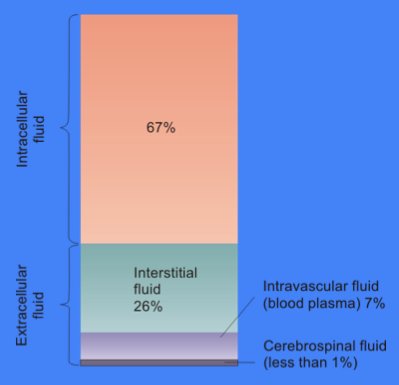
Interstitial fluid volume refers to the amount of fluid present in the interstitial space, the area outside cells and blood vessels in the body. This fluid, which makes up about 75% of the extracellular fluid, plays a crucial role in maintaining tissue health, facilitating the exchange of nutrients and waste, and regulating blood pressure. The total body water in healthy adults is approximately 50-60% of total body weight, with extracellular fluid accounting for about one-third of this volume. Interstitial fluid volume is tightly regulated by the balance of fluid intake, blood pressure, and lymphatic drainage, with disturbances in this balance leading to conditions such as edema and dehydration. Understanding interstitial fluid volume is essential for managing various medical conditions, including heart failure, kidney disease, and liver cirrhosis, where fluid balance is critical. Researchers like Arthur Guyton have significantly contributed to our understanding of interstitial fluid volume and its role in human physiology. The study of interstitial fluid volume is closely related to the study of extracellular fluid and lymphatic system, and has important implications for the development of treatments for fluid-related disorders.
🎵 Origins & History
The concept of interstitial fluid volume has been studied for centuries, with early contributions from scientists like Antonie van Leeuwenhoek, who first observed the presence of fluid in tissues. The modern understanding of interstitial fluid volume began to take shape in the 19th century with the work of Claude Bernard, who described the importance of the internal environment in maintaining tissue health. Today, researchers like Michael Levick continue to advance our understanding of interstitial fluid volume and its role in human physiology, using techniques like magnetic resonance imaging to study fluid dynamics in the body.
⚙️ How It Works
Interstitial fluid volume is regulated by the balance of fluid intake, blood pressure, and lymphatic drainage. The lymphatic system, which includes lymph nodes and lymph vessels, plays a critical role in maintaining interstitial fluid volume by removing excess fluid from tissues and returning it to the bloodstream. The balance of fluid intake and output is also crucial, with the kidneys playing a key role in regulating fluid balance through the excretion of urine. Disturbances in this balance can lead to conditions like edema and dehydration, which can have serious consequences for patient health.
📊 Key Facts & Numbers
Key facts about interstitial fluid volume include its composition, which is similar to that of blood plasma, but with lower concentrations of proteins and higher concentrations of waste products. The volume of interstitial fluid is approximately 10-15 liters in a healthy adult, which is roughly 75% of the extracellular fluid volume. The rate of fluid exchange between the interstitial space and the bloodstream is rapid, with approximately 20% of the interstitial fluid being replaced every hour. Researchers use techniques like dye dilution methods to measure interstitial fluid volume and study its dynamics in the body.
👥 Key People & Organizations
Key people and organizations involved in the study of interstitial fluid volume include the National Institutes of Health, which has funded research on the topic, and the American Physiological Society, which has published numerous studies on interstitial fluid volume and its role in human physiology. Researchers like John Hall have made significant contributions to our understanding of interstitial fluid volume and its regulation, and have developed new treatments for fluid-related disorders.
🌍 Cultural Impact & Influence
The cultural impact of interstitial fluid volume is significant, with its study having important implications for the development of treatments for fluid-related disorders. The concept of interstitial fluid volume has also been influential in the development of new medical technologies, such as portable ultrasound devices, which can be used to measure interstitial fluid volume and diagnose conditions like edema. The study of interstitial fluid volume has also led to a greater understanding of the importance of fluid balance in maintaining overall health, and has inspired new approaches to patient care, such as fluid restrictive therapy.
⚡ Current State & Latest Developments
The current state of research on interstitial fluid volume is highly active, with numerous studies underway to better understand its role in human physiology and to develop new treatments for fluid-related disorders. Recent advances in imaging technologies have enabled researchers to study interstitial fluid volume in greater detail, and have led to a greater understanding of its dynamics in the body. The development of new treatments, such as diuretics and vasopressin receptor antagonists, has also improved patient outcomes for conditions like heart failure and liver cirrhosis.
🤔 Controversies & Debates
Controversies and debates surrounding interstitial fluid volume include the optimal approach to measuring its volume, with some researchers advocating for the use of bioelectrical impedance analysis and others preferring magnetic resonance imaging. There is also ongoing debate about the role of interstitial fluid volume in the development of certain diseases, such as cancer and Alzheimer's disease. Researchers like Roger Baxter have argued that interstitial fluid volume plays a critical role in the development of these conditions, while others have suggested that its role is less significant.
🔮 Future Outlook & Predictions
The future outlook for research on interstitial fluid volume is highly promising, with numerous studies underway to better understand its role in human physiology and to develop new treatments for fluid-related disorders. The development of new technologies, such as wearable sensors, is expected to enable researchers to study interstitial fluid volume in greater detail, and to develop more effective treatments for conditions like edema and dehydration. The study of interstitial fluid volume is also expected to lead to a greater understanding of the importance of fluid balance in maintaining overall health, and to inspire new approaches to patient care.
💡 Practical Applications
Practical applications of the study of interstitial fluid volume include the development of new treatments for fluid-related disorders, such as diuretics and vasopressin receptor antagonists. The study of interstitial fluid volume has also led to a greater understanding of the importance of fluid balance in maintaining overall health, and has inspired new approaches to patient care, such as fluid restrictive therapy. Researchers like Peter Agre have developed new technologies, such as portable ultrasound devices, which can be used to measure interstitial fluid volume and diagnose conditions like edema.
Key Facts
- Year
- 2020
- Origin
- Human body
- Category
- science
- Type
- concept
Frequently Asked Questions
What is interstitial fluid volume?
Interstitial fluid volume refers to the amount of fluid present in the interstitial space, the area outside cells and blood vessels in the body. It plays a crucial role in maintaining tissue health and regulating blood pressure. Researchers like Arthur Guyton have significantly contributed to our understanding of interstitial fluid volume and its role in human physiology.
How is interstitial fluid volume regulated?
Interstitial fluid volume is regulated by the balance of fluid intake, blood pressure, and lymphatic drainage. The lymphatic system plays a critical role in maintaining interstitial fluid volume by removing excess fluid from tissues and returning it to the bloodstream. Disturbances in this balance can lead to conditions like edema and dehydration.
What are the consequences of disturbances in interstitial fluid volume?
Disturbances in interstitial fluid volume can lead to conditions like edema and dehydration, which can have serious consequences for patient health. Edema can lead to swelling, pain, and decreased mobility, while dehydration can lead to decreased blood pressure, decreased urine output, and even organ failure. Researchers like Michael Levick have developed new treatments for these conditions, including diuretics and vasopressin receptor antagonists.
How is interstitial fluid volume measured?
Interstitial fluid volume can be measured using a variety of techniques, including bioelectrical impedance analysis and magnetic resonance imaging. These techniques can provide accurate measurements of interstitial fluid volume and can be used to diagnose conditions like edema and dehydration. Researchers like Roger Baxter have developed new methods for measuring interstitial fluid volume, including the use of wearable sensors.
What are the future directions for research on interstitial fluid volume?
The future outlook for research on interstitial fluid volume is highly promising, with numerous studies underway to better understand its role in human physiology and to develop new treatments for fluid-related disorders. The development of new technologies, such as wearable sensors, is expected to enable researchers to study interstitial fluid volume in greater detail, and to develop more effective treatments for conditions like edema and dehydration. Researchers like Peter Agre have developed new approaches to the study of interstitial fluid volume, including the use of portable ultrasound devices.
How does interstitial fluid volume relate to other concepts in physiology?
Interstitial fluid volume is closely related to other concepts in physiology, including extracellular fluid and lymphatic system. The study of interstitial fluid volume can provide insights into the movement of fluid in the body and the forces that act on it, and can inform the development of new treatments for fluid-related disorders. Researchers like John Hall have written extensively on these topics, and have developed new approaches to the study of interstitial fluid volume.
What are the practical applications of the study of interstitial fluid volume?
The practical applications of the study of interstitial fluid volume include the development of new treatments for fluid-related disorders, such as diuretics and vasopressin receptor antagonists. The study of interstitial fluid volume has also led to a greater understanding of the importance of fluid balance in maintaining overall health, and has inspired new approaches to patient care, such as fluid restrictive therapy.