
Contents
Overview
Jatropha curcas, a shrub native to the Americas, gained significant traction in the early 2000s as a promising biofuel feedstock due to its non-edible seeds and drought tolerance. Hailed by proponents as a solution to energy security and rural development, large-scale cultivation projects were launched across India, Africa, and Southeast Asia. However, the reality proved far more complex, marked by ecological concerns, land rights disputes, and disappointing yields that failed to meet inflated expectations. Today, Jatropha remains a subject of debate, with ongoing research exploring its potential in more controlled environments and for specific applications, while its broader biofuel dreams have largely been tempered by hard-won lessons.
🌿 What is Jatropha?
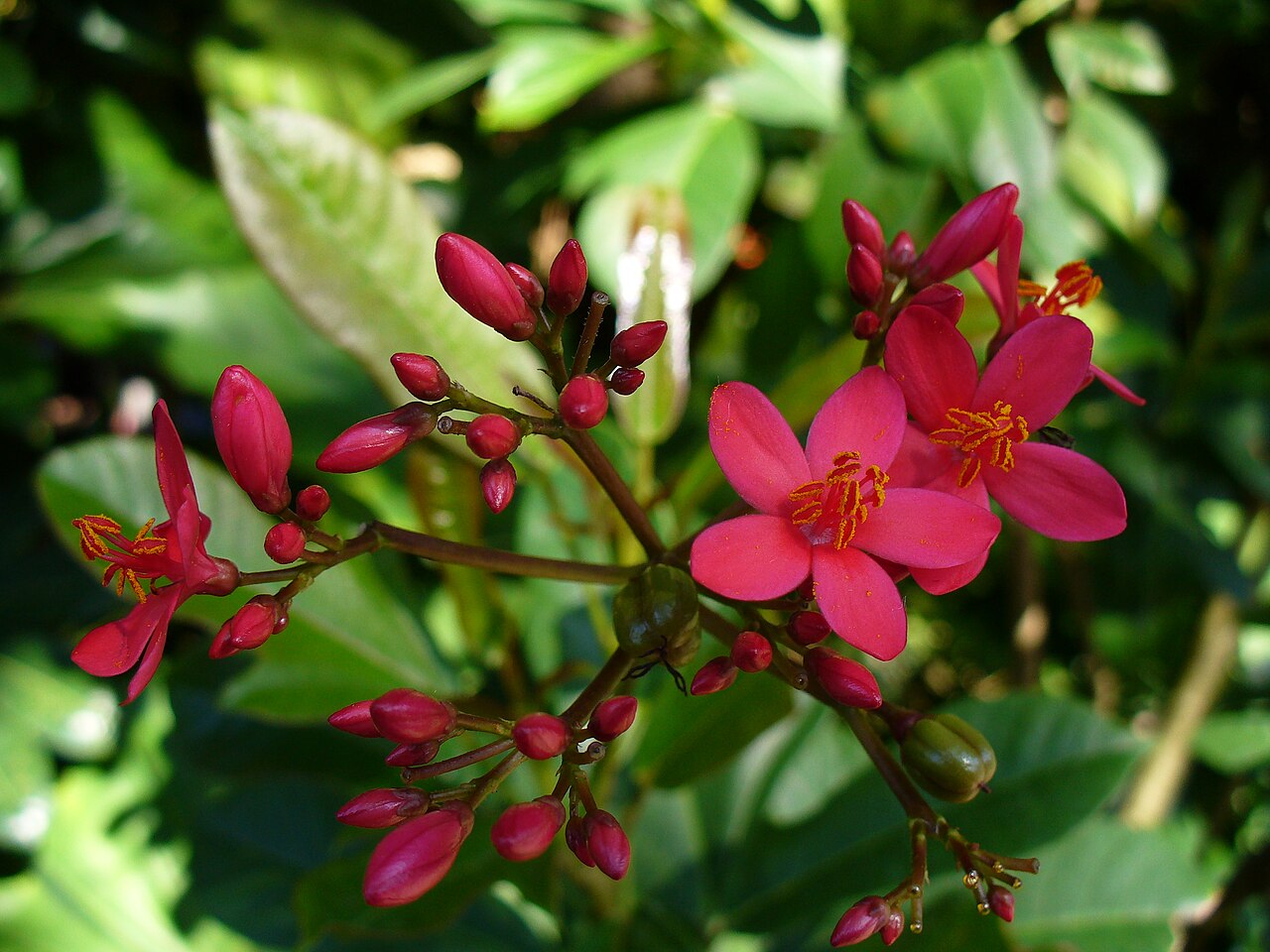
Jatropha, a genus within the spurge family, comprises around 180 species of diverse plants, ranging from succulents to trees. Its name, derived from Greek roots meaning 'physician' and 'nutrition,' hints at its historical medicinal applications, though 'physic nut' and 'nettlespurge' are more common monikers. While most species hail from the Americas, a significant number have naturalized in the Old World. These plants are dioecious, bearing separate male and female flowers, a characteristic common in the Euphorbiaceae family, which is also known for its often toxic compounds.
🌎 Where Does Jatropha Grow?
The geographical footprint of Jatropha is extensive, with its origins primarily rooted in the Americas, where approximately 66 species are found. However, its adaptability has led to its presence and cultivation in various tropical and subtropical regions globally. This wide distribution means that understanding local ecotypes and their specific growth requirements is crucial for successful cultivation, whether for traditional uses or modern bioenergy initiatives. Its resilience allows it to thrive in marginal lands, a key factor in its biofuel appeal.
🌱 Jatropha Varieties & Uses
Jatropha species boast a surprising array of traditional applications beyond their botanical interest. Historically, indigenous communities have utilized various species for basketmaking, leveraging the plant's fibrous qualities. The sap and seeds have also been employed in tanning processes and for producing natural dyes, showcasing a long-standing relationship between humans and this versatile genus. The discovery of its oil-producing potential, particularly in Jatropha curcas, has dramatically expanded its perceived utility in recent decades.
💡 Jatropha Curcas: The Biodiesel Star
The spotlight in the 2000s overwhelmingly fell on Jatropha curcas, a non-edible oilseed shrub that was championed as a prime candidate for biofuel production. Its high oil yield per hectare and ability to grow on non-arable land fueled immense global interest and investment. The potential to create a sustainable energy source from a crop that didn't compete with food production seemed revolutionary, sparking widespread cultivation efforts across Asia, Africa, and Latin America.
⚠️ Toxicity & Safety Concerns
A critical aspect of Jatropha cultivation, especially Jatropha curcas, is its inherent toxicity. The seeds and latex contain phorbol esters, compounds that are highly poisonous if ingested and can cause severe skin irritation. This toxicity historically limited its use and necessitated careful handling. While selective breeding in regions like Veracruz, Mexico, has yielded non-toxic, edible variants of Jatropha curcas for improved economic returns, the risk of cross-pollination with toxic wild types remains a significant concern, potentially reintroducing hazardous compounds.
📈 The Rise and Fall of Jatropha Hype
The initial fervor surrounding Jatropha as a biofuel feedstock, particularly from 2005 to 2010, was immense, with projections of millions of hectares under cultivation. However, this boom was followed by a significant bust. Many large-scale projects failed to meet ambitious yield targets due to poor agronomic practices, unexpected pest outbreaks, and a lack of understanding of local conditions. The economic viability proved far more challenging than initially anticipated, leading to disillusionment and a sharp decline in investment.
🔬 Research & Development Frontiers
Current research into Jatropha is exploring several avenues to overcome past limitations. Scientists are investigating genetic improvement for higher oil yields and enhanced resistance to pests and diseases. There's also a renewed focus on optimizing cultivation techniques for marginal lands and exploring the full potential of its non-toxic byproducts. Furthermore, understanding the complex interactions between different Jatropha ecotypes and their environments is key to unlocking sustainable and profitable cultivation.
💰 Economic Viability & Challenges
The economic feasibility of Jatropha remains a complex equation. While the plant's ability to grow on marginal lands is an advantage, achieving consistent and high yields of oil suitable for biodiesel requires significant investment in agronomy and processing. The cost of extraction and purification, coupled with fluctuating global oil prices, can make Jatropha-based biodiesel less competitive than fossil fuels or other biofuels. The development of non-toxic, edible varieties offers a more promising economic model, but scaling these operations sustainably presents its own set of challenges.
Key Facts
- Year
- Discovered: Pre-Columbian era; Biofuel Hype: ~2005-2015
- Origin
- Tropical Americas
- Category
- Bioenergy / Botany / Agriculture
- Type
- Plant Species
Frequently Asked Questions
Is Jatropha safe to consume?
Most Jatropha species, including the common Jatropha curcas, contain toxic compounds called phorbol esters, making them unsafe for consumption. However, specific variants of Jatropha curcas have been selectively bred in regions like Veracruz, Mexico, to eliminate these toxins, rendering them edible. It's crucial to distinguish between toxic and non-toxic varieties, as cross-pollination can reintroduce toxicity.
What are the main uses of Jatropha?
Historically, Jatropha has been used for basketmaking, tanning, and dye production. In the 21st century, its primary interest lies in its seeds, which are rich in oil suitable for biodiesel production. Non-toxic variants are also being explored for edible oil and protein-rich byproducts.
Why did Jatropha biofuel projects fail?
Many large-scale Jatropha biofuel projects faced challenges due to unrealistic yield expectations, poor agronomic management, susceptibility to pests and diseases, and the high cost of oil extraction. The initial hype outpaced the practical realities of cultivation and processing, leading to economic non-viability for many ventures.
Can Jatropha grow anywhere?
Jatropha thrives in tropical and subtropical climates and is known for its ability to grow on marginal, non-arable land. It is relatively drought-tolerant. However, optimal growth and oil yield still depend on specific soil conditions, rainfall patterns, and proper agricultural practices.
What is the difference between toxic and non-toxic Jatropha curcas?
The primary difference lies in the presence of phorbol esters. Toxic Jatropha curcas seeds contain these compounds, making them poisonous and causing skin irritation. Non-toxic variants, developed through selective breeding, lack these harmful compounds, allowing their seeds and byproducts to be used for edible oil and food.
What are the environmental benefits of Jatropha cultivation?
When cultivated on marginal lands, Jatropha can help prevent soil erosion and desertification. As a biofuel feedstock, it offers a renewable alternative to fossil fuels, potentially reducing greenhouse gas emissions. However, large-scale monocultures can also have negative environmental impacts if not managed sustainably.