
Contents
Overview
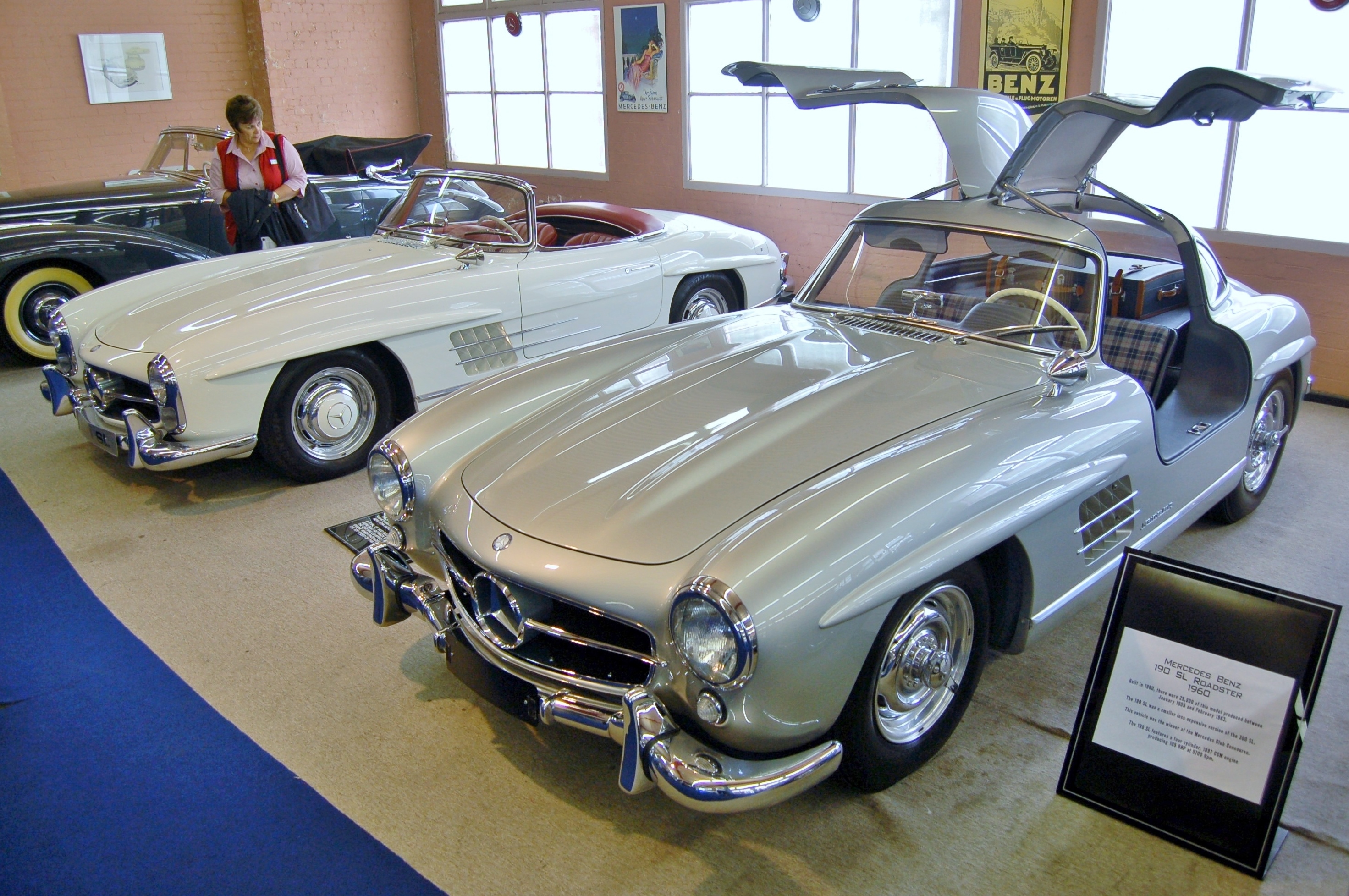
The genesis of the 300 SL Roadster is inextricably linked to its celebrated Gullwing coupé sibling, which debuted in 1954. However, the Roadster’s story truly begins with the realization that the dramatic gullwing doors, while visually arresting and necessary for the coupé’s tubular chassis clearance, were impractical for everyday use. Influential figures like Max Hoffman, Mercedes-Benz's U.S. importer, strongly advocated for a more accessible version. Hoffman’s insights, particularly his understanding of the American luxury car market, were crucial. He believed a convertible variant would significantly boost sales, a prediction that proved accurate. The Roadster was officially introduced at the 1957 Geneva Motor Show, marking a significant shift in the 300 SL's trajectory from a pure racing homologation special to a more broadly appealing grand tourer. This transition also saw Mercedes-Benz refine the chassis and suspension to better suit open-top driving, subtly altering the car's dynamics.
⚙️ How It Works
Mechanically, the 300 SL Roadster inherited the formidable powertrain from the Gullwing coupé. At its heart lay a 3.0-liter SOHC inline-six engine, a marvel of engineering for its time, featuring Bosch mechanical direct fuel injection. This system, a rarity in passenger cars then, allowed for precise fuel delivery, leading to increased power output and improved efficiency compared to carbureted engines. The engine produced approximately 215 horsepower, a substantial figure that propelled the lightweight tubular spaceframe chassis to impressive speeds. While the Roadster retained the core chassis design, modifications were made to accommodate the convertible top and to improve ride comfort, including revised suspension geometry and often softer spring rates. The car featured a four-speed manual transmission and independent suspension all around, a sophisticated setup for the era, contributing to its renowned handling characteristics. The absence of the Gullwing doors meant the removal of the roof structure, necessitating additional bracing to maintain chassis rigidity, a challenge Mercedes-Benz engineers met with characteristic ingenuity.
📊 Key Facts & Numbers
Production of the 300 SL Roadster spanned from 1957 to 1963, with a total of just 1,858 units manufactured. This limited production run, coupled with its historical significance, makes it exceptionally rare. The original price in 1957 was approximately $11,000 USD, a staggering sum that placed it among the most expensive cars available. Today, pristine examples can command prices well into the seven figures at auction, with some fetching upwards of $4 million USD. For instance, a 1957 300 SL Roadster sold for $3.74 million at a RM Sotheby's auction in 2020. The Roadster's top speed was officially rated at around 250 km/h (155 mph), though some sources suggest slightly higher figures were achievable under optimal conditions, solidifying its reputation as one of the fastest production convertibles of its era. The engine displacement was precisely 2,996 cc.
👥 Key People & Organizations
The development and success of the 300 SL Roadster were significantly influenced by key individuals and organizations within Mercedes-Benz. Max Hoffman, the visionary importer for Mercedes-Benz in the United States, was instrumental in pushing for the Roadster's creation, recognizing its potential appeal to wealthy American clientele. His advocacy was crucial in convincing Mercedes-Benz management to proceed with the convertible variant. Rudolf Uhlenhaut, the chief engineer at Mercedes-Benz at the time, played a pivotal role in the overall design and engineering of the 300 SL program, including the Roadster. His deep understanding of racing and automotive engineering ensured the car’s performance capabilities. The Stuttgart-based Mercedes-Benz engineering and design teams were responsible for translating the vision into a tangible, high-performance automobile. The car’s production was handled at the Mercedes-Benz factory in Sindelfingen, Germany.
🌍 Cultural Impact & Influence
The 300 SL Roadster, much like its Gullwing predecessor, left an indelible mark on automotive culture. It became an instant symbol of post-war prosperity and German engineering prowess, embodying a blend of performance, luxury, and style that resonated globally. Its presence on the road, particularly in affluent circles, cemented its status as an aspirational object. The Roadster appeared in numerous films and was owned by celebrities and dignitaries, further enhancing its allure. Its design language, characterized by elegant lines and a sophisticated profile, influenced subsequent generations of luxury sports cars. The car’s association with speed and exclusivity contributed to its enduring legacy as a desirable classic, representing a golden age of automotive design and engineering. The 'SL' designation itself, standing for 'Super Leicht' (Super Light), became synonymous with high-performance, luxurious Mercedes-Benz grand tourers.
⚡ Current State & Latest Developments
As of 2024, the Mercedes-Benz 300 SL Roadster remains a highly sought-after collector's car, commanding significant value at auctions and private sales. Interest in vintage Mercedes-Benz models, particularly those with racing heritage, continues to be strong. While no new 300 SL Roadsters are being produced, Mercedes-Benz continues to offer extensive restoration and maintenance services for these classic vehicles through its Mercedes-Benz Classic division, ensuring their longevity. The car's historical significance is regularly highlighted in automotive museums and classic car shows worldwide. Recent auction results, such as the aforementioned $3.74 million sale in 2020, underscore its sustained desirability and investment potential. The ongoing appreciation for classic automotive design and engineering ensures the Roadster's continued relevance in the collector car market.
🤔 Controversies & Debates
One of the primary debates surrounding the 300 SL Roadster centers on its perceived practicality versus its performance pedigree. While designed to be more user-friendly than the Gullwing, some critics argue it still retained a certain rawness that made it less of a comfortable cruiser compared to other luxury cars of its era. Another point of discussion revolves around its value appreciation; while undeniably a significant investment, the extreme price tags raise questions about market speculation versus intrinsic value. Furthermore, the distinction between original condition and restored examples can lead to heated debates among collectors regarding authenticity and value. The engineering choices, such as the direct fuel injection and tubular frame, while revolutionary, also present unique maintenance challenges that can be a point of contention for owners and restorers, often requiring specialized knowledge from Mercedes-Benz Classic certified technicians.
🔮 Future Outlook & Predictions
The future for the Mercedes-Benz 300 SL Roadster appears to be one of continued appreciation and preservation. As a classic car, its value is unlikely to diminish, and it will likely remain a benchmark for automotive design and engineering excellence. Experts predict that well-maintained and original examples will continue to fetch premium prices at auctions, potentially even surpassing current records as the pool of available cars shrinks and demand from collectors grows. The ongoing efforts by Mercedes-Benz Classic to provide parts and expertise will ensure that these vehicles can be maintained for generations to come. While no direct successor in terms of design and engineering philosophy exists, the spirit of the 300 SL lives on in Mercedes-AMG's modern performance vehicles, such as the Mercedes-AMG GT series, which aim to capture a similar blend of sportiness and luxury. The Roadster's legacy is secure as an automotive icon.
💡 Practical Applications
The primary practical application of the 300 SL Roadster today is as a collector's item and a showpiece for automotive history. Its value lies not in daily utility but in its historical significance, engineering innovation, and aesthetic beauty. Owners often participate in prestigious classic car events like the [[pebble-beach-concours-delegance|Pebble Beach C
Key Facts
- Category
- aesthetics
- Type
- topic