
Contents
Overview
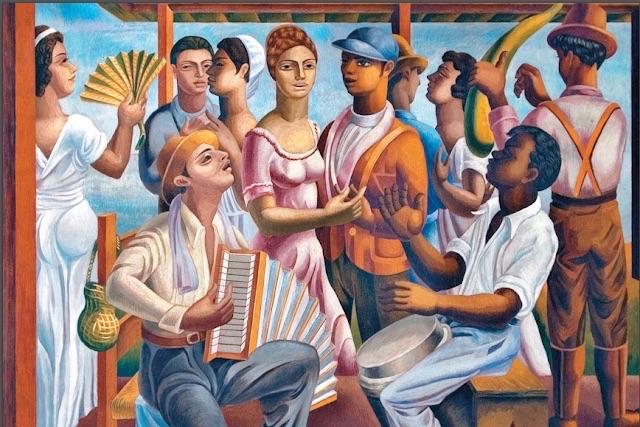
The Merengue band has its roots in the mid-19th century, when European stringed instruments like the bandurria and guitar were introduced to the Dominican Republic. Over time, these instruments were replaced by the accordion, which became a staple of the traditional Merengue ensemble, alongside the güira and tambora. This unique instrumental combination, as seen in the music of Juan Luis Guerra and Fernando Villalona, represents the synthesis of European, African, and indigenous Taino influences that shape Dominican culture. The Merengue band's sound has been influenced by various genres, including Salsa and Bachata, and has also been shaped by the country's complex history, including its colonization by Spain and the subsequent African diaspora.
⚙️ Instrumentation & Sound
The traditional Merengue band instrumentation consists of the accordion, güira, and tambora. The accordion, introduced by European colonizers, provides the melodic and harmonic foundation, while the güira, a metal scraper, adds a dynamic percussive element. The tambora, a two-head drum, brings the African rhythmic influence, as seen in the music of Creedence Clearwater Revival and Carlos Santana. This distinctive sound has been popularized by Merengue bands like Los Hermanos Rosario and José Cobos, who have helped to spread the genre globally, including in cities like New York City and Miami. The Merengue band's sound has also been influenced by other genres, such as Reggaeton and Latin Jazz.
🌍 Cultural Impact & UNESCO Recognition
Merengue music and the Merengue band have had a profound impact on Latin American culture, with the genre being recognized by UNESCO as an Intangible Cultural Heritage of Humanity in 2016. This recognition has helped to promote the preservation and dissemination of Merengue music, with initiatives like the Dominican Republic Ministry of Culture's efforts to support traditional Merengue ensembles. The Merengue band's energetic sound has also been featured in various festivals and events, such as the Dominican Republic Carnival and the Latin Grammy Awards. The genre's influence can be seen in the music of Shakira and Marco Antonio Solís, who have incorporated Merengue elements into their songs.
🔮 Modern Merengue Bands & Evolution
In recent years, the Merengue band has evolved, with modern ensembles incorporating new instruments and styles. Contemporary Merengue bands like El General and Toño Rosario have experimented with fusion sounds, blending traditional Merengue with other genres like Hip-Hop and Electronic Dance Music. This evolution has helped to introduce Merengue music to new audiences, while maintaining the genre's cultural significance and traditional roots, as seen in the music of Romeo Santos and Prince Royce. The Merengue band's sound continues to captivate audiences worldwide, with its unique blend of rhythms and influences making it a staple of Latin American culture.
Key Facts
- Year
- 1850s
- Origin
- Dominican Republic
- Category
- culture
- Type
- concept
Frequently Asked Questions
What is the traditional instrumentation of a Merengue band?
The traditional Merengue band consists of an accordion, güira, and tambora, which represent the European, African, and indigenous Taino influences in Dominican culture. This unique instrumental combination has been popularized by Merengue bands like Los Hermanos Rosario and José Cobos. The accordion provides the melodic and harmonic foundation, while the güira adds a dynamic percussive element, and the tambora brings the African rhythmic influence, as seen in the music of Creedence Clearwater Revival and Carlos Santana.
How has Merengue music evolved over time?
Merengue music has evolved significantly over time, with modern ensembles incorporating new instruments and styles. Contemporary Merengue bands like El General and Toño Rosario have experimented with fusion sounds, blending traditional Merengue with other genres like Hip-Hop and Electronic Dance Music. This evolution has helped to introduce Merengue music to new audiences, while maintaining the genre's cultural significance and traditional roots, as seen in the music of Romeo Santos and Prince Royce.
What is the cultural significance of Merengue music?
Merengue music has had a profound impact on Latin American culture, with the genre being recognized by UNESCO as an Intangible Cultural Heritage of Humanity in 2016. The Merengue band's energetic sound has also been featured in various festivals and events, such as the Dominican Republic Carnival and the Latin Grammy Awards. The genre's influence can be seen in the music of Shakira and Marco Antonio Solís, who have incorporated Merengue elements into their songs.
What are some notable Merengue bands and musicians?
Some notable Merengue bands and musicians include Juan Luis Guerra, Fernando Villalona, Los Hermanos Rosario, and José Cobos. These artists have helped to popularize Merengue music and preserve its traditional roots, while also experimenting with new sounds and styles. Other notable Merengue musicians include El General and Toño Rosario, who have been instrumental in shaping the modern Merengue sound.
How has Merengue music influenced other genres?
Merengue music has influenced a wide range of genres, including Salsa, Bachata, and Latin Jazz. The genre's energetic rhythms and distinctive instrumentation have also been incorporated into Hip-Hop and Electronic Dance Music productions. Merengue music's influence can be seen in the work of artists like Shakira, Marco Antonio Solís, and Romeo Santos, who have all incorporated Merengue elements into their music.