
Contents
Overview
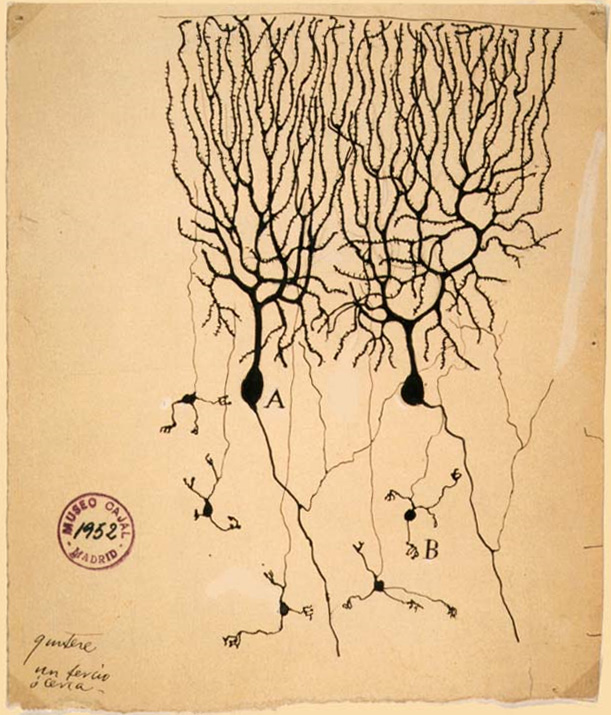
The roots of neuroscience debates stretch back to antiquity, with early philosophers like Plato and Aristotle positing theories about the seat of the soul and intellect. The Renaissance saw figures like Andreas Vesalius meticulously dissecting the human body, laying anatomical groundwork. The 19th century saw advancements in microscopy and the burgeoning field of psychology. Santiago Ramón y Cajal's neuron doctrine, proposing that the nervous system is composed of discrete cells, fundamentally challenged earlier reticular theories. Simultaneously, debates raged over phrenology, championed by Franz Josef Gall, which falsely claimed to map personality traits to skull bumps, yet it spurred early ideas about brain localization. The early 20th century saw the rise of behaviorism, spearheaded by John B. Watson and B.F. Skinner, which largely sidelined internal mental states, sparking a counter-movement that eventually led to the cognitive revolution.
⚙️ How It Works
Neuroscience debates often revolve around interpreting complex data from various experimental techniques. Researchers use tools like EEG to measure electrical activity, fMRI to track blood flow, and optogenetics to precisely control neuronal activity. The challenge lies in bridging the gap between these objective measurements and subjective experience. For instance, the debate on consciousness hinges on whether specific neural correlates identified by fMRI truly are consciousness or merely associated phenomena. Similarly, understanding the neural basis of decision-making involves disentangling complex feedback loops between prefrontal cortex, basal ganglia, and limbic systems, leading to ongoing arguments about the degree of conscious control versus automatic processing. The very definition of terms like 'neuron', 'synapse', and 'consciousness' can become points of contention, as different research paradigms employ them with subtle variations.
📊 Key Facts & Numbers
The global neuroscience market was valued at approximately $12.9 billion in 2022 and is projected to reach $23.1 billion by 2030, a compound annual growth rate (CAGR) of 7.5%. Over 50,000 scientific papers are published annually in neuroscience-related journals, yet estimates suggest that only about 10% of research findings are reliably reproducible. The human brain contains an estimated 86 billion neurons, each forming thousands of connections, leading to trillions of potential pathways for information processing. Despite this biological complexity, funding for neuroscience research, while substantial, often falls short of the ambitious goals set by initiatives like the BRAIN Initiative, which aimed to map neural circuits with unprecedented detail. The number of active neuroscience research labs worldwide is estimated to be in the tens of thousands, yet consensus on fundamental questions remains elusive.
👥 Key People & Organizations
Key figures in neuroscience debates span centuries and disciplines. Santiago Ramón y Cajal laid the foundation for cellular neuroscience with his neuron doctrine. Wilder Penfield's direct brain stimulation experiments during epilepsy surgery provided early evidence for functional localization. Roger Sperry's split-brain research ignited debates about hemispheric specialization and consciousness. More recently, Antonio Damasio has championed the role of emotion in cognition, while Christof Koch has been a prominent advocate for the neural correlates of consciousness. Organizations like the Society for Neuroscience (SfN), with over 36,000 members, serve as crucial platforms for disseminating research and fostering debate. The Allen Institute for Brain Science has also been instrumental in generating large-scale, open-access brain data, fueling new lines of inquiry and debate.
🌍 Cultural Impact & Influence
Neuroscience debates have profoundly shaped our cultural understanding of ourselves. The concept of the 'left-brain' vs. 'right-brain' personality, though largely a pop-psychology oversimplification, demonstrates how neuroscience findings can permeate public consciousness. Debates about the biological basis of addiction have influenced public policy and perceptions of personal responsibility. The exploration of memory, particularly in relation to trauma and eyewitness testimony, has had significant implications for the legal system, as seen in cases involving false memory syndrome. Furthermore, the philosophical implications of findings related to free will and determinism, as explored by thinkers like Sam Harris, have sparked widespread public discussion and influenced art, literature, and film, from dystopian sci-fi narratives to introspective dramas.
⚡ Current State & Latest Developments
The current landscape of neuroscience debates is dominated by the quest to understand consciousness, the brain's computational principles, and the biological underpinnings of mental disorders. The development of advanced neuroimaging techniques and computational modeling continues to refine our understanding, but also generates new questions. For instance, the 'binding problem' – how disparate sensory inputs are integrated into a unified perception – remains a significant challenge. In psychiatry, the debate is shifting from purely symptom-based diagnoses (like those in the DSM-5) towards more biologically informed classifications, a move championed by initiatives like the Research Domain Criteria (RDoC) project. The ethical implications of brain-computer interfaces (BCIs) and neuroenhancement technologies are also increasingly prominent, fueling debates about equity, autonomy, and what it means to be human.
🤔 Controversies & Debates
The most enduring neuroscience debate is the mind-body problem: how do subjective mental experiences arise from physical brain matter? This question fuels discussions on dualism versus monism, and whether consciousness is an emergent property of complex neural networks or something more fundamental. Another fierce debate concerns free will: are our decisions truly our own, or are they predetermined by neural processes beyond our conscious control? This has profound implications for morality and legal responsibility. The nature of mental illness is also hotly contested; while some argue for distinct biological causes for conditions like schizophrenia and depression, others emphasize the role of environmental and social factors, leading to ongoing debates about treatment approaches. The reproducibility crisis in science, with estimates suggesting a significant portion of published findings may not hold up, further fuels skepticism and debate about research methodologies and standards.
🔮 Future Outlook & Predictions
The future of neuroscience debates will likely be shaped by advances in artificial intelligence and machine learning, which are providing powerful new tools for analyzing complex neural data and modeling brain function. We can expect intensified debates around the possibility of artificial consciousness and the ethical boundaries of creating sentient AI. The development of more sophisticated BCIs will undoubtedly spark discussions about human augmentation, cognitive enhancement, and potential societal divides. Furthermore, as our understanding of neural plasticity grows, debates about the malleability of the brain and the potential for radical interventions in learning, memory, and personality will intensify. The pursuit of a unified theory of consciousness, potentially integrating insights from physics and philosophy, remains a long-term, highly debated goal.
💡 Practical Applications
Neuroscience debates have direct practical applications across numerous fields. In medicine, understanding the neural basis of diseases like Alzheimer's disease and Parkinson's disease drives the development of new diagnostics and therapies. In education, insights into learning and memory inform pedagogical strategies
Key Facts
- Category
- science
- Type
- topic