
Contents
- 🏙️ The Five-Borough Gauntlet
- 🎟️ Entry Mechanics & The Lottery
- 👟 The Course: A Topographical Breakdown
- 💰 The Cost of the Run
- ⏱️ Logistics: Wave Starts & Transportation
- 📣 Spectator Strategy: Where to Cheer
- ⚖️ NYC vs. Boston vs. London
- 🔋 Recovery & Post-Race Rituals
- 🚀 The Future of the Finish Line
- Frequently Asked Questions
- Related Topics
Overview
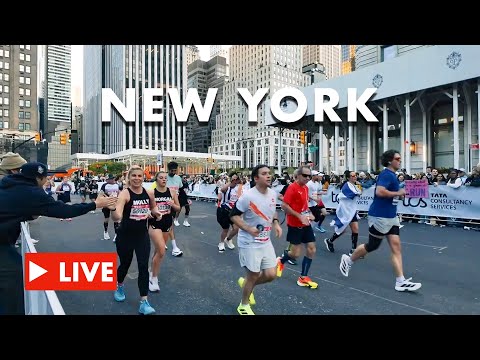
The New York City Marathon is the world's largest footrace, transforming the city's infrastructure into a 26.2-mile stage for over 50,000 runners annually. Managed by the New York Road Runners (NYRR), the event has evolved from a 1970 loop around Central Park into a massive logistical operation spanning all five boroughs. It serves as the final major of the Abbott World Marathon Majors calendar, attracting elite athletes like Eliud Kipchoge and thousands of charity fundraisers. For the participant, it is less a race and more a high-decibel tour of New York’s tribal geography, from the industrial silence of the bridges to the wall of sound in Brooklyn.
🎟️ Entry Mechanics & The Lottery
Securing a bib is a competitive feat in itself, as demand consistently outstrips the supply of roughly 50,000 spots. Most runners enter the non-guaranteed drawing, a lottery system that typically sees acceptance rates hover between 10% and 15%. Local runners often utilize the '9+1 Program,' requiring them to complete nine NYRR-sanctioned races and volunteer for one event in the previous calendar year. Time qualifiers—those who meet strict age-graded standards—and charity partners provide alternative pathways for those who miss the random draw. The tension between elite accessibility and community participation remains a central debate within the global running community.
👟 The Course: A Topographical Breakdown
The race begins on the Verrazzano-Narrows Bridge in Staten Island, offering the most iconic and grueling incline of the entire course. Runners then descend into the flat, high-energy corridors of Fourth Avenue in Brooklyn, where the cultural energy of the race truly ignites. The halfway point crosses the Pulaski Bridge into Queens, followed by the notorious psychological hurdle of the Queensboro Bridge, which lacks spectators and tests a runner's mental fortitude. The final act involves a punishing stretch up First Avenue in Manhattan, a brief foray into the Bronx, and a rolling finish through the hills of Central Park.
💰 The Cost of the Run
Participating in the NYC Marathon is a significant financial commitment, with entry fees for non-NYRR members often exceeding $300. This does not account for the performance footwear costs, travel, or the mandatory 'charity minimums' which can range from $3,000 to $5,000 for those on charity teams. The economic impact on the city is estimated at over $400 million, driven by the influx of international tourists and the hospitality sector surge during race week. Critics often point to the increasing 'pay-to-play' nature of the event, contrasting it with the gritty, low-cost origins of the Fred Lebow era. Despite the price tag, the 'Vibe Score' of 98 reflects its status as an unmissable cultural bucket-list item.
⏱️ Logistics: Wave Starts & Transportation
Logistics on race morning are a masterclass in urban engineering, requiring runners to navigate a complex web of ferries and buses to reach the start village. Most participants take the Staten Island Ferry from Whitehall Terminal, followed by a shuttle bus to Fort Wadsworth. The race utilizes a four-wave start system based on projected finish times to prevent bottlenecking on the narrow bridge ramps. Each wave is further divided into color-coded corrals (Blue, Orange, Pink) that determine which level of the bridge you occupy at the start. Precision is mandatory; missing your assigned transportation window can result in a forfeited start.
📣 Spectator Strategy: Where to Cheer
Spectating requires as much planning as running, as the NYC Subway becomes the primary artery for 'chasing' athletes across boroughs. The intersection of Fourth Avenue and Atlantic Avenue in Brooklyn offers a high-density experience with easy access to multiple train lines. For those wanting to see the 'Wall' in action, the 1st Avenue stretch between 60th and 96th Streets provides a relentless gauntlet of noise and energy. The finish line area in Central Park is strictly ticketed, so savvy fans often congregate at Columbus Circle to catch the final, agonizing meters of the race. This spectator density is a key differentiator from the Chicago Marathon, which offers a flatter but less vertically integrated viewing experience.
⚖️ NYC vs. Boston vs. London
When compared to the Boston Marathon, New York is seen as the more inclusive but logistically chaotic sibling. Boston requires a 'BQ' (Boston Qualifier) time for most entrants, maintaining an aura of athletic elitism, whereas New York prioritizes a broader demographic representation. The London Marathon rivals New York in terms of charity fundraising totals, but New York’s five-borough layout provides a more diverse architectural and sensory experience. While Berlin is the place for world records due to its flat topography, New York is the place for 'the experience,' where the bridges act as natural intervals that break even the strongest pacers. It remains the ultimate test of endurance and adaptability.
🔋 Recovery & Post-Race Rituals
Post-race recovery is a ritualized process involving the iconic orange-lined heat sheets and the 'poncho vs. bag check' decision made months prior. Runners exiting Central Park are funneled toward Upper West Side exits, often walking over a mile just to clear the secure zone. The 'Medal Monday' tradition sees thousands of finishers wearing their hardware while visiting the Empire State Building or the NYRR RunCenter. Local recovery clinics and physical therapy hubs see a massive spike in appointments for 'Marathon Toe' and IT band syndrome in the weeks following the first Sunday of November. The psychological 'post-marathon blues' is a documented phenomenon among the finisher community, often cured only by entering the next year's lottery.
🚀 The Future of the Finish Line
The future of the NYC Marathon lies in the integration of biometric tracking and augmented reality for spectators. There is ongoing pressure for the NYRR to address the environmental footprint of 50,000 plastic water bottles and discarded heat sheets. We are seeing a shift toward 'virtual' components that allow global participation, though the physical presence on the Verrazzano remains the gold standard. As the city grapples with congestion and security costs, the race serves as a yearly litmus test for municipal cooperation and public spirit. The winner of the future isn't just the one who breaks the tape, but the organization that can maintain this massive scale without losing the local soul of the neighborhoods.
Key Facts
- Year
- 1970
- Origin
- New York Road Runners Club
- Category
- Sports & Recreation
- Type
- Event
Frequently Asked Questions
How do I enter the NYC Marathon lottery?
The application window typically opens in late February or early March on the NYRR website. You must create an account, provide credit card information, and choose your entry category (NYC Metro area, National, or International). If selected, your card is automatically charged the non-refundable entry fee. The drawing usually takes place in late March, and results are announced via email and social media throughout the day.
What is the '9+1' program?
The 9+1 program is a guaranteed entry method for NYRR members who live in the New York tri-state area. To qualify, a runner must complete nine qualifying NYRR races and volunteer for one event within a single calendar year. This earns them a guaranteed spot in the marathon for the following year. It is the most reliable way for local residents to bypass the lottery, though it requires a significant time and financial commitment to race fees throughout the season.
Is the NYC Marathon course difficult?
Yes, it is widely considered one of the more challenging major marathon courses due to the five bridge crossings and the rolling hills of Central Park. The Verrazzano-Narrows Bridge provides a steep climb immediately at the start, and the Queensboro Bridge at mile 15 is a notorious 'silent' climb that breaks many runners' rhythms. Unlike the flat courses of Berlin or Chicago, NYC requires strategic pacing to handle the constant elevation changes and the late-stage incline on Fifth Avenue.
What is the best way for spectators to see their runners?
The most efficient strategy is to use the subway to hit two or three spots. Start in Brooklyn (near the Barclays Center) to see them around mile 8, then take the 4/5/6 train up to the Upper East Side to catch them on First Avenue (mile 17-18). Finally, walk west toward Central Park to see them near the finish. Using the official NYC Marathon App is essential for tracking your runner's progress via their timing chip, though cellular service can be spotty in high-crowd areas.
What happens if I need to cancel my entry?
If you are unable to run, you can officially cancel your entry through your NYRR dashboard before the race. While you will not receive a refund of your entry fee, you will be granted guaranteed, non-complimentary entry into the following year's marathon. This 'deferral' process is a one-time option and requires you to pay the entry fee again for the next year. This policy helps manage the field size while allowing runners to deal with injuries or personal emergencies.