
Contents
Overview
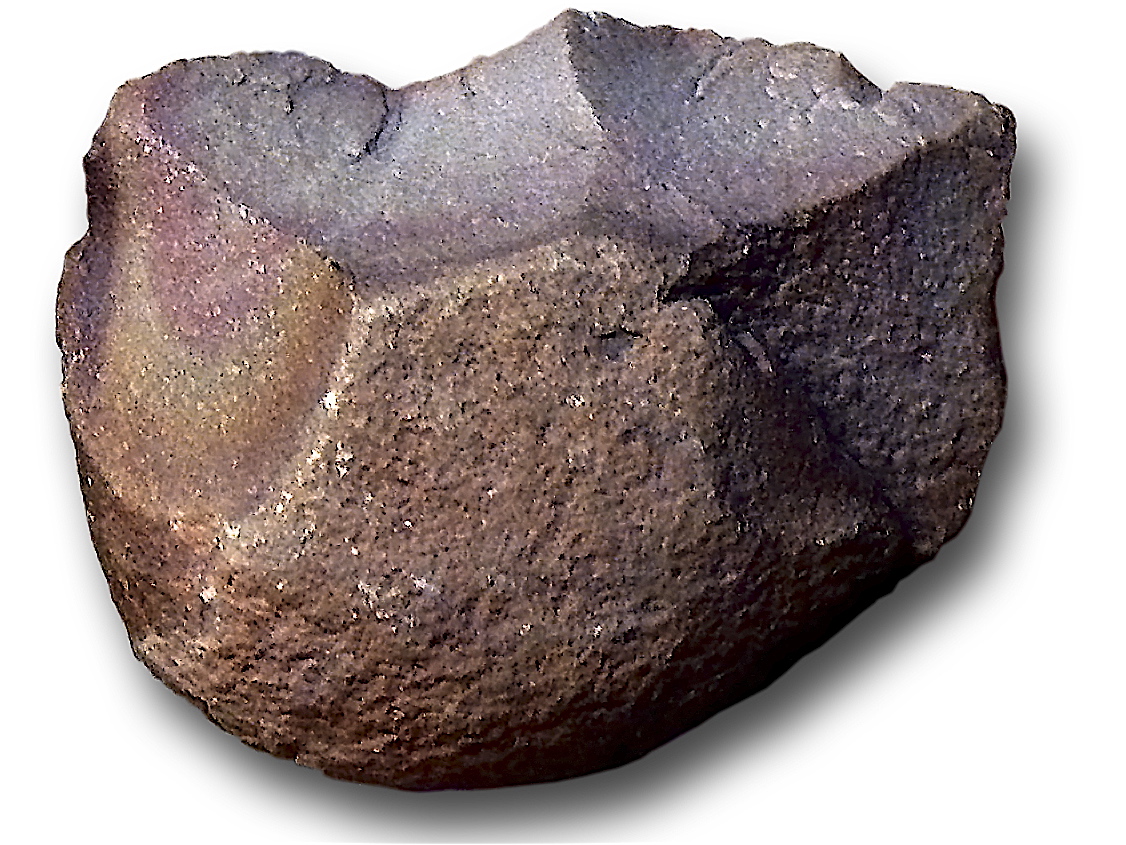
The story of Oldowan tools begins not with a bang, but with a chip. These rudimentary implements, often referred to as Mode 1 tools, emerged reportedly around 2.9 million years ago, pushing back the timeline of hominin technological prowess significantly. While the exact hominin species responsible remains a subject of debate, evidence points towards early members of the genus Homo, possibly including Homo habilis, and perhaps even late Australopithecus afarensis or Australopithecus garhi. The name 'Oldowan' itself is derived from the Olduvai Gorge in Tanzania, where Louis Leakey and his wife Mary Leakey made groundbreaking discoveries in the 1930s and 1950s. However, earlier finds, such as those at Gona in Ethiopia dating to 2.6 million years ago, suggest the technology's origins may lie further east in the African continent, predating the Leakeys' work and challenging established chronologies of human technological development.
⚙️ How It Works
Crafting an Oldowan tool was a surprisingly deliberate process, albeit simple by modern standards. The core technique involved striking a core stone with a hammerstone, a process known as 'percussion flaking'. This action dislodged sharp-edged flakes from the core, which were the primary tools used for cutting and scraping. The core itself, often a rounded river cobble, could also be used for pounding or smashing. The key was the intentional selection of raw materials, often quartz, chert, or basalt, and the understanding of how to fracture them to produce a usable cutting edge. This wasn't accidental breakage; it was controlled modification, demonstrating a nascent understanding of material properties and a clear objective for tool use, such as butchering carcasses or processing plant materials. The resulting tools are typically classified as choppers, scrapers, and debitage (the waste flakes produced during manufacture).
📊 Key Facts & Numbers
The sheer scale and longevity of Oldowan tool use are staggering. Evidence suggests this technology was in use for at least 1.2 million years, spanning from approximately 2.9 million years ago to at least 1.7 million years ago. Over 300 Oldowan sites have been identified across Africa, with significant concentrations in East Africa, such as Olduvai Gorge (Tanzania), Koobi Fora (Kenya), and Gona (Ethiopia). The earliest known Oldowan tools, found at Lokalalei in Kenya, date to around 2.6 million years ago, while some of the latest examples, found alongside Acheulean tools at Gona, date to around 1.5 million years ago. The number of individual tools recovered runs into the tens of thousands, providing an immense dataset for studying early hominin behavior and cognitive evolution. For instance, the Gona site alone has yielded over 3,000 artifacts from a single excavation layer.
👥 Key People & Organizations
The narrative of Oldowan tool discovery is inextricably linked to the pioneering work of Louis Leakey and his wife Mary Leakey. Their meticulous excavations at Olduvai Gorge in the mid-20th century brought these ancient artifacts to global attention, establishing the 'Oldowan' as a distinct archaeological industry. While the Leakeys are often credited with the initial identification, other crucial figures include Nicholas Toth, whose experimental archaeology in the 1980s demonstrated how these tools could be made, and Katherine Doughty Bowman, who has conducted extensive research on Oldowan lithic technology. More recently, researchers like Ian Hodge and John Cole have contributed to understanding the cognitive implications of Oldowan tool manufacture. Organizations such as the Smithsonian Institution and various African paleoanthropological research centers continue to house and study these invaluable artifacts.
🌍 Cultural Impact & Influence
The impact of Oldowan tools on our understanding of human evolution is profound, acting as the first tangible evidence of our ancestors' capacity for complex problem-solving and technological innovation. Before their discovery, the cognitive abilities of early hominins were largely speculative. Oldowan tools provided concrete proof that these ancient beings could not only use but also intentionally modify their environment to meet specific needs, such as processing food for greater nutritional yield. This technological leap is seen as a critical step towards the development of more sophisticated tools and, ultimately, the complex societies we live in today. The very concept of 'humanity' became more deeply intertwined with our capacity for tool-making, influencing fields from anthropology to philosophy and even artificial intelligence, which often draws parallels to early problem-solving strategies.
⚡ Current State & Latest Developments
The study of Oldowan tools is far from a closed chapter. Ongoing research continues to refine dating techniques, uncover new sites, and re-evaluate existing collections. For instance, recent discoveries in Kenya's Rift Valley are pushing the chronological boundaries even further back, with some evidence suggesting tool use as early as 3.3 million years ago, potentially predating the classic Oldowan. Advances in microscopic analysis of wear patterns on the tools are also providing unprecedented detail about their specific uses, such as butchering large mammals or processing tough plant materials. Furthermore, debates surrounding the cognitive abilities required for Oldowan tool manufacture are constantly being informed by new experimental archaeology and comparative studies with primate behavior, particularly that of chimpanzees and bonobos.
🤔 Controversies & Debates
The primary controversy surrounding Oldowan tools centers on attribution and cognitive interpretation. While the tools themselves are undeniable, identifying the precise hominin species responsible for their creation remains a challenge. Some scholars argue that the cognitive demands of Oldowan tool-making were relatively simple, potentially within the grasp of advanced australopithecines, while others contend that the deliberate planning and understanding of fracture mechanics point specifically to the genus Homo. Another debate concerns the definition of 'tool' itself; some researchers propose that even simpler stone modifications, predating the classic Oldowan, should be considered early forms of tool use. The term 'Mode 1' is sometimes preferred over 'Oldowan' to avoid geographical bias and to encompass a broader range of early stone tool technologies.
🔮 Future Outlook & Predictions
The future of Oldowan tool research promises to further illuminate the very origins of human ingenuity. As new paleoanthropological sites are discovered in Africa and beyond, we may find even older examples of stone tool technology, potentially rewriting our understanding of when and where hominins first began to shape their world. Advances in artificial intelligence and machine learning are also being applied to lithic analysis, helping researchers identify subtle patterns in tool manufacture and use that might escape the human eye. Furthermore, continued experimental archaeology, replicating Oldowan techniques under various conditions, will refine our understanding of the physical and cognitive skills required. The ongoing quest to understand Oldowan tools is, in essence, a quest to understand the earliest chapters of the human story, and where that story began.
💡 Practical Applications
The practical applications of Oldowan tools, while ancient, are deeply embedded in our understanding of early human survival strategies. These tools were essential for tasks that would have been impossible with bare hands: butchering carcasses to access nutrient-rich meat and marrow, scraping hides for clothing or shelter, cutting plant materials for food or construction, and potentially even digging for roots and tubers. Their existence implies a significant dietary shift for early hominins, allowing for greater protein and fat intake, which in turn may have fueled brain development. The ability to process resources efficiently would have conferred a substantial survival advantage, enabling hominins to exploit a wider range of ecological niches and laying the groundwork for future technological advancements. The principles of sharp edge creation and ma
Key Facts
- Category
- history
- Type
- topic