
Contents
- 🎯 Introduction to Perception
- 👀 The Biology of Perception
- 💡 The Psychology of Perception
- 📚 Philosophical Perspectives on Perception
- 🌎 Cultural and Social Influences on Perception
- 🔍 Current Research and Debates
- 🤔 Controversies and Critiques
- 🔮 Future Directions and Implications
- 💡 Practical Applications of Perception
- 📊 Related Topics and Deeper Reading
- References
Overview
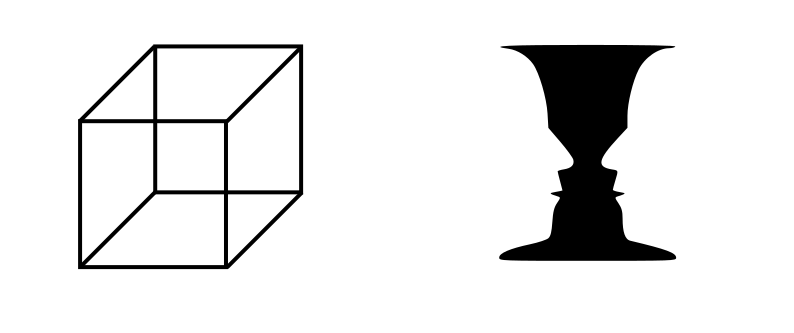
Perception is the dynamic and multifaceted process of organizing, identifying, and interpreting sensory information to represent and understand the presented information or environment. It involves the transformation of low-level sensory input into higher-level information, shaped by an individual's learning, memory, expectation, and attention. The concept of cognitive bias highlights the ways in which our perceptions can be influenced by various factors, such as cultural background, personal experiences, and social context. Neural plasticity highlights the ways in which our brains can reorganize and adapt in response to new experiences and learning. Synesthesia demonstrates the complex and multifaceted nature of perception, where one sense can be stimulated and another sense is experienced. Perceptual learning demonstrates the ways in which our perceptions can be shaped and influenced by experience and practice. Artificial intelligence demonstrates the ways in which our perceptions can be shaped and influenced by technological advancements and machine learning algorithms. Skepticism argues that our understanding of the world is limited and uncertain. Perceptual illusion highlights the ways in which our perceptions can be influenced by various factors.
🎯 Introduction to Perception
The concept of cognitive bias highlights the ways in which our perceptions can be influenced by various factors, such as cultural background, personal experiences, and social context. Neural plasticity highlights the ways in which our brains can reorganize and adapt in response to new experiences and learning. Synesthesia demonstrates the complex and multifaceted nature of perception, where one sense can be stimulated and another sense is experienced. Perceptual learning demonstrates the ways in which our perceptions can be shaped and influenced by experience and practice.
👀 The Biology of Perception
Artificial intelligence demonstrates the ways in which our perceptions can be shaped and influenced by technological advancements and machine learning algorithms. Skepticism argues that our understanding of the world is limited and uncertain. Perceptual illusion highlights the ways in which our perceptions can be influenced by various factors.
💡 The Psychology of Perception
Perceptual illusion highlights the ways in which our perceptions can be influenced by various factors, such as cultural background, personal experiences, and social context.
📚 Philosophical Perspectives on Perception
Skepticism argues that our understanding of the world is limited and uncertain.
🔍 Current Research and Debates
Perceptual learning demonstrates the ways in which our perceptions can be shaped and influenced by experience and practice.
🤔 Controversies and Critiques
Synesthesia demonstrates the complex and multifaceted nature of perception, where one sense can be stimulated and another sense is experienced.
🔮 Future Directions and Implications
Neural plasticity highlights the ways in which our brains can reorganize and adapt in response to new experiences and learning.
💡 Practical Applications of Perception
The concept of cognitive bias highlights the ways in which our perceptions can be influenced by various factors, such as cultural background, personal experiences, and social context.
Key Facts
- Category
- philosophy
- Type
- topic