
Contents
Overview
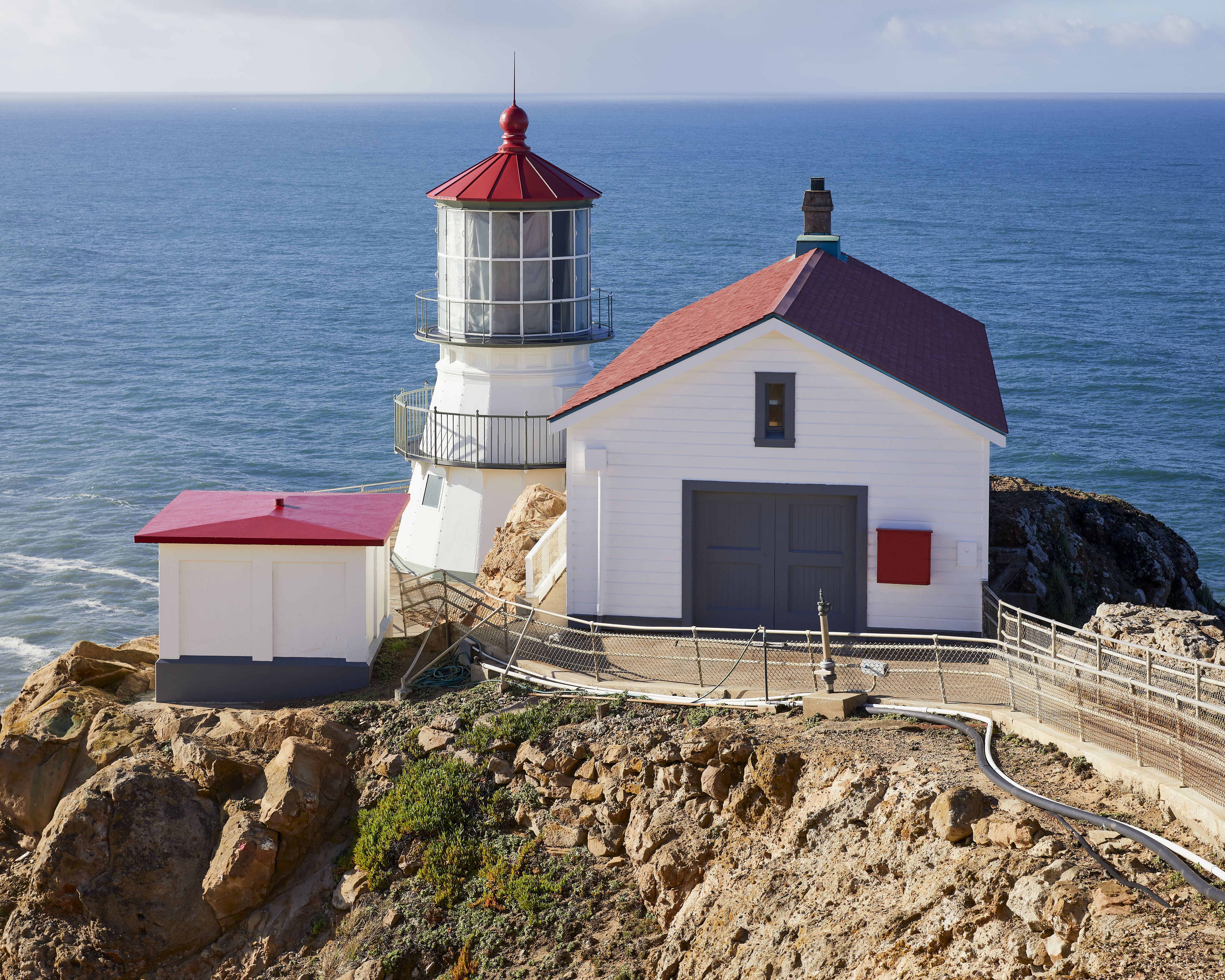
The Point Reyes Lighthouse, a historic beacon perched precariously on the windswept headlands of Marin County, California, has guided mariners through treacherous waters. Standing at the westernmost point of the Point Reyes Peninsula, it is renowned for its dramatic location, often shrouded in dense fog, which contributes to its status as one of the foggiest lighthouses in the United States. Visitors brave over 300 steps to reach the structure, where the original Fresnel lens and clockwork mechanism remain a testament to 19th-century engineering. Operated by the U.S. National Park Service, the lighthouse and its adjacent visitor center offer a glimpse into maritime history and the region's rich natural heritage, drawing thousands annually.
🎵 Origins & History
The genesis of the Point Reyes Lighthouse traces back to the mid-19th century, a period of intense maritime expansion along the Pacific coast. Recognizing the navigational hazards posed by the peninsula's jagged shores and persistent fog, its construction was authorized. The site was chosen for its strategic position, though its extreme exposure to the elements would prove a significant challenge. The lighthouse utilized a powerful first-order Fresnel lens imported from Paris. The station's isolation meant that keepers and their families lived in stark conditions, often relying on supply ships that faced perilous landings.
⚙️ How It Works
The Point Reyes Lighthouse operates on a principle of focused illumination, designed to penetrate fog and guide ships away from the dangerous coastline. Its heart is a magnificent first-order Fresnel lens, a complex assembly of prisms and lenses that refracts and concentrates light from a central source, typically a kerosene lamp or later, an electric lamp. This lens rotates via a clockwork mechanism, powered by falling weights, which must be wound regularly by the lighthouse keeper. The lighthouse itself is situated on a dramatic cliff face, and its tower, a distinctive white conical structure, stands 37 feet tall. The sheer number of steps—over 300—leading down from the cliff edge to the lighthouse door is a direct consequence of its placement to maximize visibility while minimizing the risk of the structure being battered by waves during storms.
📊 Key Facts & Numbers
The Point Reyes Lighthouse is a beacon of significant historical and operational data. Its inception date was December 1, 1870, marking the start of its service. The lighthouse tower stands 37 feet (11 meters) tall, but its focal plane, the height of the light above sea level, is 290 feet (88 meters). It is estimated that the lighthouse experiences fog approximately 2,200 hours per year, making it one of the foggiest lighthouses in the United States, a stark contrast to the roughly 100 hours of fog experienced by the Lighthouse of Alexandria in its prime. The Fresnel lens itself contains 1,000 hand-ground glass prisms. The visitor center, located about 0.7 miles (1.1 km) from the lighthouse, receives an estimated 400,000 visitors annually, with only about 10% of them making the descent to the lighthouse itself due to its limited accessibility.
👥 Key People & Organizations
The operational history of the Point Reyes Lighthouse is intrinsically linked to the U.S. Lighthouse Board, later the United States Lighthouse Service, and now the National Park Service. Early keepers, such as Thomas Johnson, who served for over 30 years, were crucial figures, maintaining the light and the complex machinery. The United States Department of the Interior oversees the Point Reyes National Seashore, which includes the lighthouse. The National Register of Historic Places listed the Point Reyes Light Station in 1975, recognizing its historical significance. The U.S. Coast Guard was also involved in its automation and eventual decommissioning as an active aid to navigation.
🌍 Cultural Impact & Influence
The Point Reyes Lighthouse has etched itself into the cultural consciousness, symbolizing resilience and the enduring human endeavor to conquer nature's challenges. Its dramatic, often fog-bound setting has made it a popular subject for photography, filmmaking, and literature. The lighthouse has been featured in numerous documentaries and travelogues, highlighting its historical importance and breathtaking location. It serves as a powerful reminder of the era of sail and the vital role lighthouses played before the advent of modern GPS. The stark beauty and isolation of the site also evoke a sense of romantic melancholy, a common theme in coastal art and storytelling, influencing perceptions of maritime history and the lives of lighthouse keepers.
⚡ Current State & Latest Developments
As of 2024, the Point Reyes Lighthouse remains a significant historical landmark within the Point Reyes National Seashore. While no longer an active aid to navigation, its Fresnel lens is maintained and occasionally lit for special occasions. The National Park Service continues to manage the site, offering guided tours and educational programs, though access to the lighthouse itself is subject to weather conditions and requires visitors to descend approximately 300 steps. Efforts are ongoing to preserve the historic structures and interpret the site's rich maritime and natural history for future generations. The visitor center provides context and information about the lighthouse's past and the surrounding marine ecosystem, including gray whale migration patterns.
🤔 Controversies & Debates
A primary controversy surrounding the Point Reyes Lighthouse, and indeed many historic lighthouses, revolves around accessibility versus preservation. The sheer number of steps and the often-harsh weather conditions limit public access, leading to debates about whether more resources should be allocated to make the site more inclusive. Some argue that the lighthouse's remote location and the cost of maintenance make it difficult to justify extensive public access, prioritizing its preservation as a historic artifact. Conversely, advocates for greater access emphasize its educational value and the desire for more people to experience this iconic piece of maritime history firsthand. The potential for seismic activity in the region also presents a long-term preservation challenge, as noted by the USGS.
🔮 Future Outlook & Predictions
The future of the Point Reyes Lighthouse hinges on continued preservation efforts and adaptive management by the National Park Service. While its role as an active navigational aid has ceased, its value as a historical and educational resource is paramount. Future developments may include enhanced interpretive programs, improved digital access to its history for those unable to visit physically, and ongoing structural assessments to ensure its long-term stability against coastal erosion and seismic threats. The potential for increased automation of visitor management systems, perhaps through augmented reality applications, could also offer new ways for people to engage with the site. The ongoing challenge will be balancing preservation needs with visitor experience in a sensitive coastal environment.
💡 Practical Applications
The primary practical application of the Point Reyes Lighthouse today is as an educational and historical exhibit. Visitors can learn about 19th-century engineering, the history of maritime navigation, and the lives of lighthouse keepers. The site also serves as a platform for understanding the region's unique coastal ecology, including its bird populations and marine mammals. For photographers and artists, it offers a dramatic and inspiring subject. While no longer guiding ships, its legacy is preserved through interpretive displays and guided tours, making it a valuable resource for understanding America's maritime past and the importance of coastal preservation efforts.
Key Facts
- Category
- nature
- Type
- place