
Contents
- 🎵 Origins & History
- ⚙️ How It Works
- 📊 Key Facts & Numbers
- 👥 Key People & Organizations
- 🌍 Cultural Impact & Influence
- ⚡ Current State & Latest Developments
- 🤔 Controversies & Debates
- 🔮 Future Outlook & Predictions
- 💡 Practical Applications
- 📚 Related Topics & Deeper Reading
- Frequently Asked Questions
- References
- Related Topics
Overview
The study of thunderstorms, or 'electrical storms,' stretches back to antiquity, with early civilizations attributing lightning to divine wrath. Philosophers like Aristotle (384–322 BCE) observed that storms often produced thunder and lightning, though the precise mechanisms remained a mystery. It wasn't until the 18th century that significant scientific progress was made. Benjamin Franklin's famous kite experiment in 1752, though possibly apocryphal in its exact execution, definitively linked lightning to electricity, earning him widespread acclaim and sparking further investigation into atmospheric electricity. Later, scientists like Luke Howard (1772–1864) developed cloud classification systems, providing a framework for understanding the cloud formations associated with these storms. The 20th century saw the advent of radar meteorology and advanced atmospheric modeling, transforming our ability to track and predict thunderstorm development, with institutions like the National Weather Service playing a pivotal role in disseminating warnings.
⚙️ How It Works
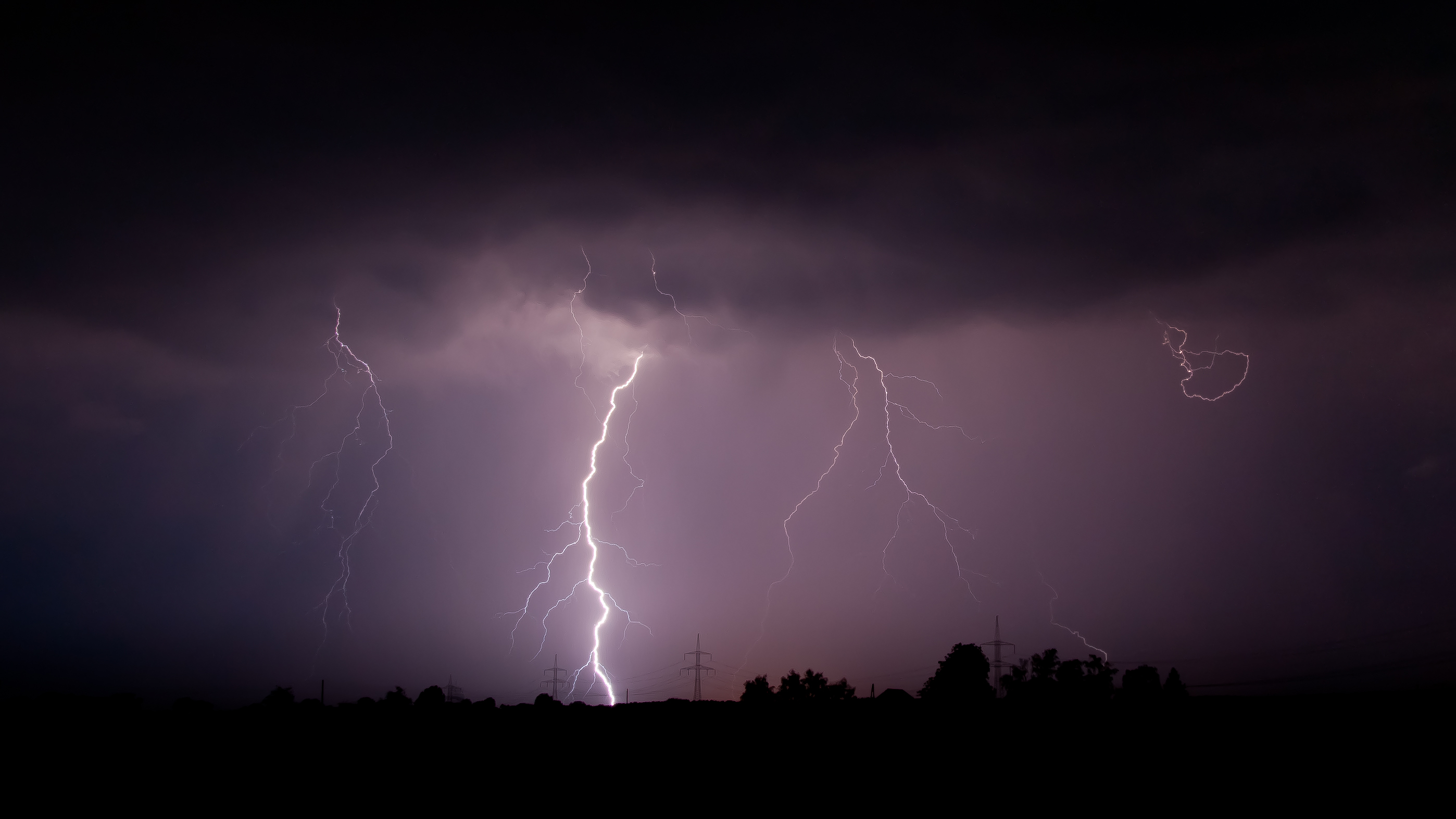
Thunderstorms are born from atmospheric instability, primarily driven by the rapid ascent of warm, moist air. This process, known as convection, begins when surface heating or other lifting mechanisms (like frontal boundaries) cause air parcels to rise. As these parcels ascend into cooler altitudes, the water vapor within them condenses, forming cumulus clouds. If the atmosphere is sufficiently unstable, this updraft continues to strengthen, developing into a towering cumulonimbus cloud, the hallmark of a thunderstorm. Within this cloud, intense vertical air currents, ice crystals, and water droplets collide, leading to charge separation. When the electrical potential difference becomes large enough, a massive electrical discharge occurs—lightning. The rapid heating and expansion of air along the lightning channel creates a shockwave, producing the sound we perceive as thunder. The entire process is a dramatic release of latent heat energy stored in atmospheric moisture.
📊 Key Facts & Numbers
Globally, an estimated 1.42 billion thunderstorms occur annually, with approximately 40 million distinct lightning flashes detected each year. The United States experiences around 100,000 thunderstorms per year, with Florida and the Gulf Coast being particularly active regions. Severe thunderstorms, capable of producing hail larger than 1 inch in diameter or winds exceeding 58 mph, account for a significant portion of weather-related damage. Tornadoes, the most violent manifestation of some thunderstorms, occur most frequently in the 'Tornado Alley' region of the central United States, with an average of over 1,200 reported annually. The energy released by a single lightning bolt can be immense, equivalent to about 1 billion joules, enough to power a household for several days, though it dissipates almost instantaneously. Hailstones can reach diameters of over 6 inches, weighing more than a pound, and falling at speeds exceeding 100 mph.
👥 Key People & Organizations
Key figures in understanding thunderstorms include Benjamin Franklin, whose 18th-century experiments with electricity laid the groundwork for atmospheric science. Vilhelm Bjerknes (1862–1951), a Norwegian physicist and meteorologist, developed the fundamental equations of numerical weather prediction, which are essential for modeling storm systems. Organizations like the National Weather Service (NWS) in the United States, the Met Office in the UK, and the World Meteorological Organization (WMO) are critical for monitoring, forecasting, and issuing warnings for severe weather events, including thunderstorms. Research institutions such as the National Center for Atmospheric Research (NCAR) and universities worldwide conduct ongoing research into thunderstorm dynamics, contributing to improved prediction models and public safety.
🌍 Cultural Impact & Influence
Thunderstorms have profoundly shaped human culture, inspiring awe, fear, and artistic expression. Ancient mythologies are replete with storm deities, such as Zeus in Greek mythology and Thor in Norse mythology, embodying the destructive and life-giving power of storms. In literature and art, thunderstorms often serve as dramatic backdrops, symbolizing turmoil, passion, or divine intervention, as seen in works like Mary Shelley's Frankenstein or the paintings of J.M.W. Turner. The advent of weather forecasting, largely driven by the need to predict and mitigate thunderstorm impacts, has become a cornerstone of modern society, influencing everything from agriculture and transportation to outdoor recreation. The visual spectacle of lightning, captured in countless photographs and videos, continues to fascinate and captivate, underscoring the enduring human fascination with these powerful natural events.
⚡ Current State & Latest Developments
Current research into thunderstorms focuses on improving the accuracy and lead time of severe weather warnings, particularly for phenomena like hail and tornadoes. Advances in artificial intelligence and machine learning are being applied to analyze vast datasets from radar, satellites, and ground sensors to identify subtle precursors to severe storm development. The 2023 tornado outbreaks and other recent severe weather events highlight the ongoing challenges in predicting storm behavior with precision. Scientists are also investigating the impact of climate change on thunderstorm frequency and intensity, with some studies suggesting an increase in severe thunderstorms in certain regions due to warmer, more humid atmospheric conditions. International collaborations, such as those coordinated by the World Meteorological Organization, are crucial for sharing data and best practices in thunderstorm research and warning systems.
🤔 Controversies & Debates
A significant debate surrounds the precise impact of climate change on thunderstorm activity. While a general warming trend might suggest more energy for storms, the role of atmospheric instability, wind shear, and moisture availability is complex and varies regionally. Some research indicates an increase in the frequency of severe thunderstorms, while others suggest a potential decrease in overall storm numbers but an increase in their intensity. Another area of contention is the predictability of tornadoes; while forecasting has improved, pinpointing the exact location and timing of tornado formation remains a formidable challenge, leading to debates about the optimal balance between issuing timely warnings and avoiding unnecessary public alarm. The ethical implications of weather modification technologies, though largely theoretical for thunderstorms, also present ongoing discussions.
🔮 Future Outlook & Predictions
The future of thunderstorm prediction hinges on further advancements in numerical weather prediction models, particularly in capturing small-scale atmospheric processes. The integration of AI and machine learning with traditional meteorological techniques is expected to yield more accurate and localized forecasts. Researchers are exploring the potential for 'nowcasting' – providing highly detailed, short-term forecasts for the next 0-6 hours – to improve warnings for rapidly developing severe storms. There's also growing interest in understanding the long-term trends of thunderstorms in a changing climate, with projections suggesting potential shifts in geographic activity and intensity. The development of more resilient infrastructure and community preparedness strategies will be crucial in mitigating the impact of future severe thunderstorm events.
💡 Practical Applications
Thunderstorms have several practical applications and implications. The most obvious is their role in the global water cycle, providing essential rainfall for agriculture and ecosystems. Lightning, while dangerous, also plays a role in atmospheric chemistry, producing nitrogen oxides that can fertilize plant life. In a more controlled sense, understanding thunderstorm dynamics is critical for aviation, where pilots must navigate around or above these hazardous systems. The study of lightning itself has led to innovations in electrical engineering and materials science. Furthermore, the development of robust thunderstorm warning systems has become a vital component of public safety infrastructure, saving countless lives through timely evacuations and preparedness measures implemented by agencies like the FEMA.
Key Facts
- Year
- Prehistoric origins, scientific study from 18th century
- Origin
- Global
- Category
- nature
- Type
- phenomenon
Frequently Asked Questions
What causes thunder?
Thunder is the sound produced by the rapid expansion of air heated by a lightning strike. When lightning, an electrical discharge, flashes through the atmosphere, it heats the surrounding air to temperatures hotter than the surface of the sun, around 30,000 Kelvin (54,000 °F). This extreme heating causes the air to expand explosively, creating a shockwave that travels outward. This shockwave is what we hear as thunder. The distance of the lightning strike influences the sound; closer strikes produce a sharp crack, while more distant ones sound like a low rumble as the sound waves travel further and echo.
How are thunderstorms classified?
Thunderstorms are broadly classified by their severity. 'Thundershowers' are typically isolated, short-lived storms with moderate rain and thunder. 'Severe thunderstorms' are defined by specific criteria: hail at least 1 inch in diameter, wind gusts of 58 mph or higher, or the presence of a tornado. A particularly dangerous and organized type of severe thunderstorm is the 'supercell,' which is characterized by a deep, persistently rotating updraft known as a mesocyclone, making it highly prone to producing tornadoes.
Why do thunderstorms produce lightning?
Lightning is a result of charge separation within a cumulonimbus cloud. As water droplets, ice crystals, and graupel collide and move within the strong updrafts and downdrafts of the cloud, they transfer electrical charges. Typically, the upper part of the cloud becomes positively charged, while the lower part becomes negatively charged, with a small positive area often forming at the very base. When the electrical potential difference between these charged regions, or between the cloud and the ground, becomes sufficiently large, a massive electrical discharge occurs to equalize the charge. This discharge is lightning.
What is a squall line?
A squall line is a line of thunderstorms, often severe, that forms along or ahead of a cold front. These lines can extend for hundreds of miles and produce widespread damaging winds, heavy rain, hail, and tornadoes. They are a common feature of organized severe weather outbreaks, particularly in the spring and summer months in regions like the central United States. The rapid lifting of warm, moist air along the frontal boundary provides the necessary conditions for the development of multiple thunderstorms that align in a linear fashion.
Can thunderstorms occur without rain?
Yes, thunderstorms can occur with little or no precipitation reaching the ground. These are often referred to as 'dry thunderstorms.' This can happen when the updraft is very strong, carrying precipitation high into the atmosphere where it may evaporate before reaching the surface due to dry air below the cloud base. While they may not produce rain, dry thunderstorms can still generate dangerous lightning, which poses a significant wildfire risk, especially in arid regions. They can also produce strong, gusty winds.
How can I stay safe during a thunderstorm?
The safest place to be during a thunderstorm is indoors, in a sturdy building with plumbing and electrical wiring, away from windows and doors. If caught outdoors, seek shelter in a hard-top vehicle. Avoid open fields, hilltops, and isolated tall objects like trees. Do not stand in water or near metal objects. If you feel your hair stand on end, it means lightning may be imminent, so crouch down low to the ground, minimizing your contact with the earth. Remember that lightning can strike miles away from the main storm cloud.
What is the difference between a thunderstorm and a hurricane?
Thunderstorms are relatively small, localized storms that form from individual cumulonimbus clouds, typically lasting from 30 minutes to a few hours. Hurricanes (also known as typhoons or cyclones in different regions) are massive, organized storm systems that form over warm ocean waters. They are characterized by a well-defined eye, sustained winds of 74 mph or higher, and can last for days or even weeks, affecting vast areas. While thunderstorms can be components within a hurricane's rain bands, they are fundamentally different in scale, formation, and duration.