
Contents
Overview
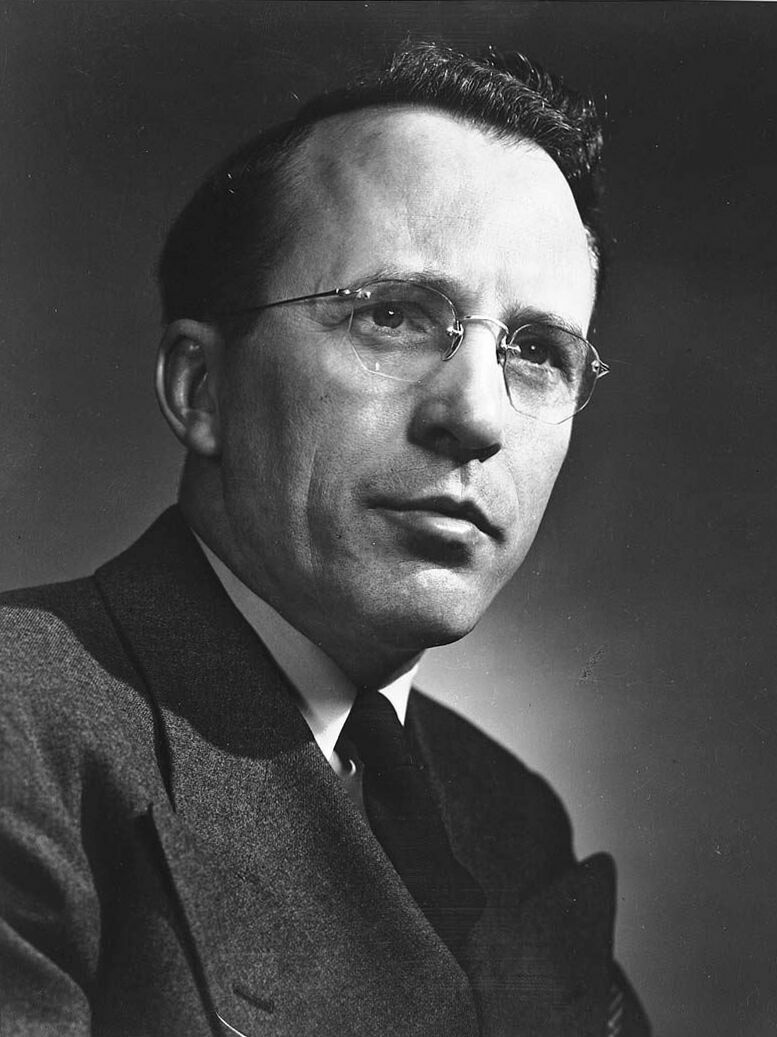
Tommy Douglas (1904-1986) was a Scottish-born Canadian politician who fundamentally reshaped social policy in Canada, most notably by introducing the continent's first universal, single-payer healthcare system in Saskatchewan. Serving as Premier of Saskatchewan from 1944 to 1961, his Co-operative Commonwealth Federation (CCF) government implemented a raft of progressive reforms, including public auto insurance and a provincial power utility. Douglas later became the first federal leader of the New Democratic Party (NDP), the successor to the CCF, from 1961 to 1971, advocating for social democracy on the national stage. His legacy is cemented by his unwavering commitment to public services and social justice, earning him the title of 'The Greatest Canadian' in a 2004 CBC television poll.
🎵 Origins & History
Born Thomas Clement Douglas in Falkirk, Scotland, his early life was marked by poverty and the lingering effects of World War I. His family emigrated to Canada in 1911, initially settling in Manitoba. Douglas felt a strong calling to ministry, pursuing theological studies at Brandon University and later McMaster University, where he earned a Master of Arts. He was ordained as a Baptist minister, serving congregations in Saskatchewan. His experiences ministering to the poor and disenfranchised during the Great Depression fueled his growing interest in social reform and the principles of the Cooperative Commonwealth Federation (CCF), a democratic socialist political party.
⚙️ The Saskatchewan Experiment
Douglas's political ascent culminated in his election as Premier of Saskatchewan in 1944, leading the CCF to a landslide victory. His government, often referred to as the 'Fabulous Fifties' government, embarked on an ambitious program of social and economic reform. The cornerstone was the establishment of the Saskatchewan Hospital Services Plan in 1947, a universal hospital insurance program that laid the groundwork for national medicare. This was followed by the creation of SaskPower (public electricity), SaskTel (public telephone), and Saskatchewan Government Insurance (public auto insurance). These initiatives demonstrated a profound belief in the power of public enterprise to serve the common good, fundamentally altering the province's economic and social fabric.
📊 Key Facts & Numbers
Douglas's government introduced universal hospital insurance in 1947, covering 85% of Saskatchewan residents within two years. By 1960, his administration had established 14 Crown corporations, including Sask Liquor and CBC radio affiliates. His CCF government was re-elected with significant majorities in 1948, 1952, 1956, and 1960, demonstrating sustained public support for his policies. The province's per capita spending on social services grew substantially under his leadership. The Canadian Medical Association initially opposed the implementation of the province's universal physician care plan, leading to a 23-day doctors' strike, though the plan was eventually adopted.
👥 Key People & Organizations
Key figures in Douglas's political journey include his father, Thomas Douglas, and his mother, Annie Clement, who instilled in him early values. His daughter, Shirley Douglas, became a prominent actress and activist in her own right. Within his government, individuals like Allan Blakeney, who later succeeded him as Premier, and Woodrow S. Lloyd, who oversaw the implementation of universal physician care, were instrumental. Nationally, Douglas worked closely with figures like David Lewis and later Ed Broadbent within the New Democratic Party (NDP) framework, shaping its socialist ideology and electoral strategy.
🌍 Cultural Impact & Influence
Douglas's most enduring legacy is the creation of universal healthcare in Saskatchewan, which served as the model for Canada's national Medicare system. His commitment to public services and social justice inspired generations of Canadians and influenced political movements across the country. The CCF's success in Saskatchewan demonstrated that a democratic socialist government could be both effective and popular, challenging the prevailing capitalist orthodoxy. His image as a principled leader dedicated to the welfare of ordinary citizens became an iconic representation of Canadian progressive politics, earning him the posthumous title of 'The Greatest Canadian' in a 2004 CBC poll.
⚡ Federal Leadership & Legacy
Following his 17 years as Premier, Douglas stepped down in 1961 to become the first federal leader of the newly formed New Democratic Party (NDP), the successor to the national CCF. He served as leader until 1971, representing the constituency of Burnaby-Richmond in the House of Commons. While the NDP did not form a federal government under his leadership, Douglas and his party often held the balance of power, influencing federal policy on issues such as pensions, foreign ownership, and social programs. He remained a powerful voice for social democracy and a respected elder statesman of Canadian politics until his death in Ottawa.
🤔 Controversies & Debates
Douglas's vision of a robust public healthcare system faced significant opposition, particularly from the private insurance industry and segments of the medical profession. The 1962 doctors' strike in Saskatchewan, while ultimately resolved in favor of the public plan, highlighted the intense ideological battles surrounding the implementation of universal care. Critics sometimes labeled his policies as 'socialist' or 'bureaucratic,' arguing they stifled individual initiative and economic growth. However, proponents counter that his reforms created a more equitable and secure society, with healthcare access not dependent on wealth.
🔮 Future Outlook & Predictions
The principles championed by Tommy Douglas continue to resonate in contemporary debates about the role of government in providing social services. Discussions around expanding Medicare to include pharmacare, dental care, and mental health services echo the foundational work begun in Saskatchewan. His emphasis on public ownership and regulation of key industries remains a touchstone for those advocating for stronger social safety nets and greater corporate accountability. The enduring success of universal healthcare in Canada suggests that Douglas's vision was not only prescient but also deeply aligned with Canadian values.
💡 Practical Applications
The most significant practical application of Douglas's work is the Canadian Medicare system, which provides universal access to medically necessary hospital and physician services. Beyond healthcare, his government's establishment of Crown corporations like SaskPower and SaskTel demonstrated the viability of public enterprise in delivering essential services efficiently and equitably. The model of publicly funded and administered social programs, from education to social assistance, can trace its lineage back to the progressive policies enacted under Douglas's leadership in Saskatchewan, influencing similar initiatives across Canada and internationally.
Key Facts
- Category
- people
- Type
- person