
Contents
Overview
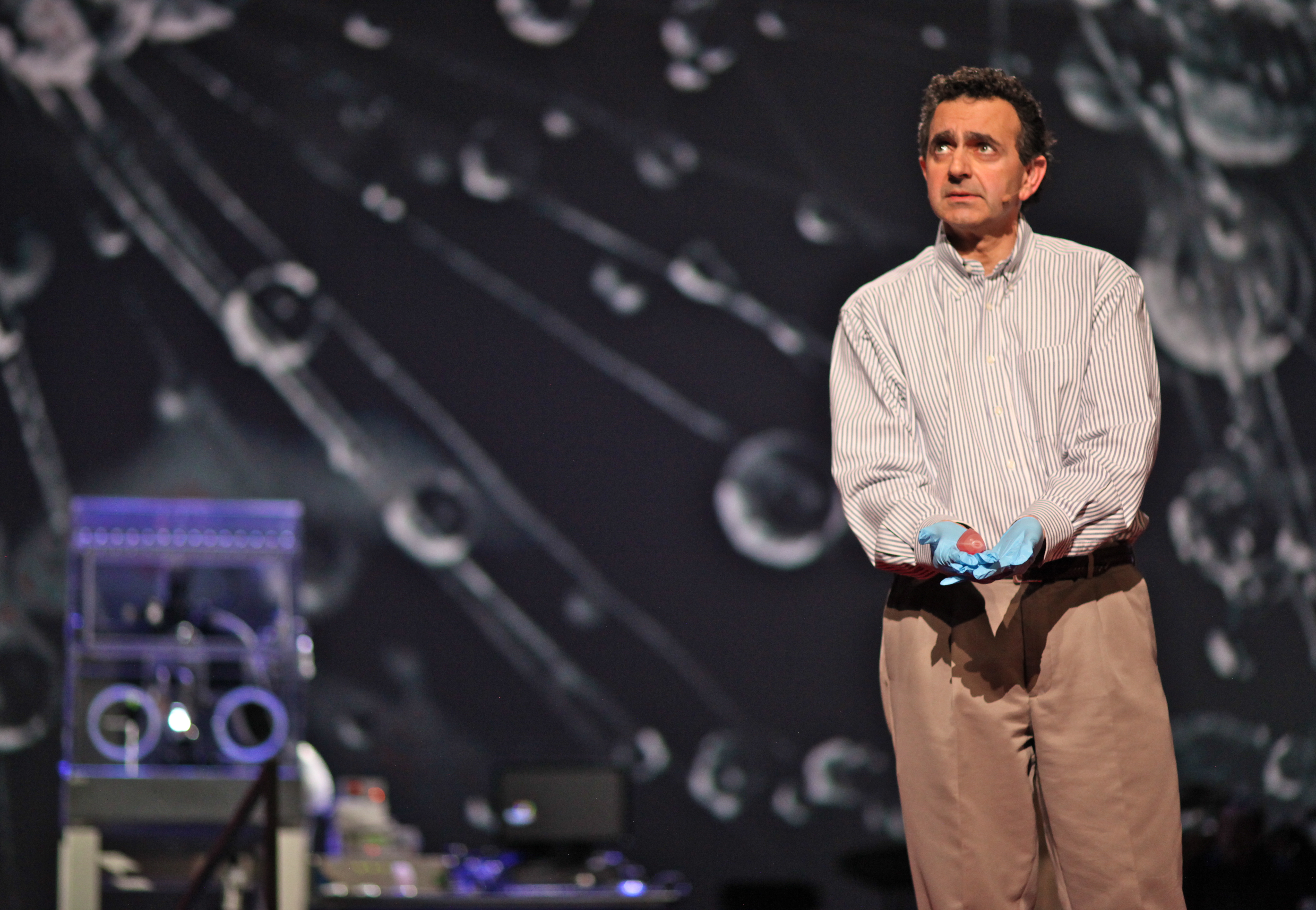
Anthony Atala is a pioneering regenerative medicine researcher and surgeon, widely recognized for his groundbreaking work in tissue engineering and 3D bioprinting of organs. As the Director of the Wake Forest Institute for Regenerative Medicine (WFIRM), he leads a multidisciplinary team focused on developing therapies to repair or replace damaged tissues and organs. His career, spanning over three decades, has been dedicated to translating laboratory discoveries into clinical applications, offering hope for patients with organ failure and chronic diseases. Atala's vision extends beyond current limitations, aiming to create a future where personalized, lab-grown organs are a standard medical treatment.
💡 Key Innovations & Research Areas
Atala's most significant contributions lie in the development of bioprinted organs and regenerative therapies. He is credited with leading the team that successfully printed a human bladder for implantation in 2006, a landmark achievement in the field. His research encompasses a broad spectrum of regenerative medicine, including stem cell therapy, biomaterials development, and the creation of scaffolds for tissue growth. The WFIRM under his direction has explored printing various tissues, such as skin, cartilage, muscle, and even complex structures like kidneys and hearts, though these remain in earlier stages of development. His work is characterized by a relentless pursuit of practical solutions for unmet medical needs.
🏥 Affiliations & Institutions
Dr. Atala's primary institutional home is the Wake Forest Institute for Regenerative Medicine (WFIRM), where he serves as the Institute's Director and a Professor of Urology and Surgery. This institute, established in 2004, has become a global hub for regenerative medicine research, attracting top talent and significant funding. Prior to his tenure at Wake Forest, Atala held positions at the Children's National Medical Center in Washington, D.C., and the Harvard Medical School. His leadership at WFIRM has fostered a collaborative environment, bringing together engineers, biologists, physicians, and material scientists to tackle complex regenerative challenges.
🏆 Awards & Recognition
Anthony Atala's pioneering work has garnered numerous accolades, reflecting his profound impact on science and medicine. He has received prestigious awards such as the R.H. Gooch Award for his contributions to urology and the Gold Cystoscope Award from the American Urological Association. In 2007, he was recognized by Scientific American as one of the top 50 researchers in science and technology. His inclusion in lists like Time magazine's 100 most influential people further underscores his global recognition and the transformative potential of his research. These honors highlight his standing as a leading figure in the scientific community.
📚 Notable Publications
Dr. Atala is an prolific author, with hundreds of peer-reviewed publications and numerous patents to his name. His research findings are regularly published in leading scientific journals, including Nature Biotechnology, Science Translational Medicine, and the Journal of Urology. He has authored and edited several books on tissue engineering and regenerative medicine, serving as a foundational resource for researchers and students in the field. His extensive bibliography details the progression of his work, from early studies on urinary tract reconstruction to the complex challenges of organ printing.
💰 Funding & Commercialization
The ambitious scope of Atala's research necessitates substantial financial backing. The WFIRM has secured significant funding from various sources, including the National Institutes of Health (NIH), the U.S. Department of Defense, and private foundations. Beyond public grants, Atala has been instrumental in fostering commercialization efforts, with several startup companies emerging from WFIRM's research. These ventures aim to bring specific regenerative therapies and technologies, such as wound healing products and cartilage repair solutions, to the market, demonstrating a commitment to translating scientific breakthroughs into tangible patient benefits.
🤔 Criticisms & Controversies
Despite the widespread enthusiasm for regenerative medicine, Atala's work, like that of many pioneers in cutting-edge fields, has not been without scrutiny. Some critics raise concerns about the long-term efficacy and safety of lab-grown organs, particularly regarding immune rejection and integration with the body's systems. The ethical implications of human tissue engineering and the potential for unforeseen consequences are also subjects of ongoing debate. Furthermore, the significant investment required for such advanced research raises questions about accessibility and equitable distribution of future therapies. While the promise is immense, the path to widespread clinical adoption involves navigating complex scientific, ethical, and economic hurdles.
🚀 The Future of Regenerative Medicine
The trajectory of Anthony Atala's work points towards a future where organ transplantation as we know it could be fundamentally altered. The ongoing advancements in bioprinting technology and cellular biology suggest that the creation of more complex and functional organs is not a matter of 'if' but 'when'. The challenge ahead lies in scaling these technologies, ensuring their affordability, and navigating the regulatory pathways for approval. Atala's continued leadership at WFIRM positions him at the forefront of this revolution, potentially ushering in an era where patients no longer wait for donor organs but receive custom-printed replacements, dramatically improving outcomes for millions worldwide.
Key Facts
- Year
- 1968
- Origin
- United States
- Category
- Science & Technology
- Type
- Person
Frequently Asked Questions
What is Anthony Atala's most famous innovation?
Anthony Atala is most famous for leading the team that successfully printed a human bladder using a patient's own cells and then implanted it in 2006. This was a landmark achievement in tissue engineering and demonstrated the potential of 3D bioprinting for creating functional human organs. It paved the way for further research into printing more complex organs and tissues.
Where does Anthony Atala work?
Dr. Atala serves as the Director of the Wake Forest Institute for Regenerative Medicine (WFIRM) in Winston-Salem, North Carolina. This institute is a world-renowned center dedicated to advancing the field of regenerative medicine through interdisciplinary research and clinical translation. He also holds professorships in Urology and Surgery at Wake Forest School of Medicine.
What are the main research areas of WFIRM under Atala?
Under Dr. Atala's leadership, WFIRM focuses on a broad range of regenerative medicine applications. Key areas include 3D bioprinting of organs and tissues, stem cell therapy, development of biomaterials and scaffolds, and creating therapies for conditions like organ failure, spinal cord injury, and wound healing. The institute aims to develop treatments that can repair or replace damaged tissues and organs.
Has Atala's work led to any approved treatments?
While many of Atala's innovations are still in the research and development phases, some technologies emerging from WFIRM have led to clinical applications or are in advanced stages of clinical trials. For example, wound healing products and cartilage repair solutions have seen progress towards market. The human bladder implant, while a critical proof-of-concept, was a research study rather than a widely adopted treatment.
What are the ethical considerations surrounding organ printing?
The ethical considerations for organ printing are significant. They include questions about the safety and long-term effects of lab-grown organs, potential for unforeseen consequences in human biology, and ensuring equitable access to these advanced therapies. There are also debates surrounding the use of stem cells and the definition of life when creating complex biological structures.
How is organ printing funded?
The research at the WFIRM is funded through a combination of sources. This includes substantial grants from government agencies like the NIH and the Department of Defense, as well as support from private foundations and philanthropic donations. Commercialization efforts and partnerships with industry also contribute to funding.