
Contents
Overview
The genesis of the Apple M1 chip lies in Apple Inc.'s long-held ambition to control its hardware destiny, a strategy that began with the Motorola 68000 in the original Macintosh in 1984. Apple transitioned to PowerPC in 1994, and then the pivotal move to Intel processors in 2006. The M1, however, represented a radical departure, leveraging ARM architecture—the same foundation powering most smartphones and tablets—and designed in-house by Apple's silicon engineering teams, led by figures like Jony Ive (though his direct involvement in chip design is debated, his influence on Apple's product philosophy is undeniable) and Johny Srouji, Apple's Senior Vice President of Hardware Technologies. The M1 was officially unveiled on November 17, 2020, marking the beginning of the end for Intel Macs and signaling a new era of Apple Silicon.
⚙️ How It Works
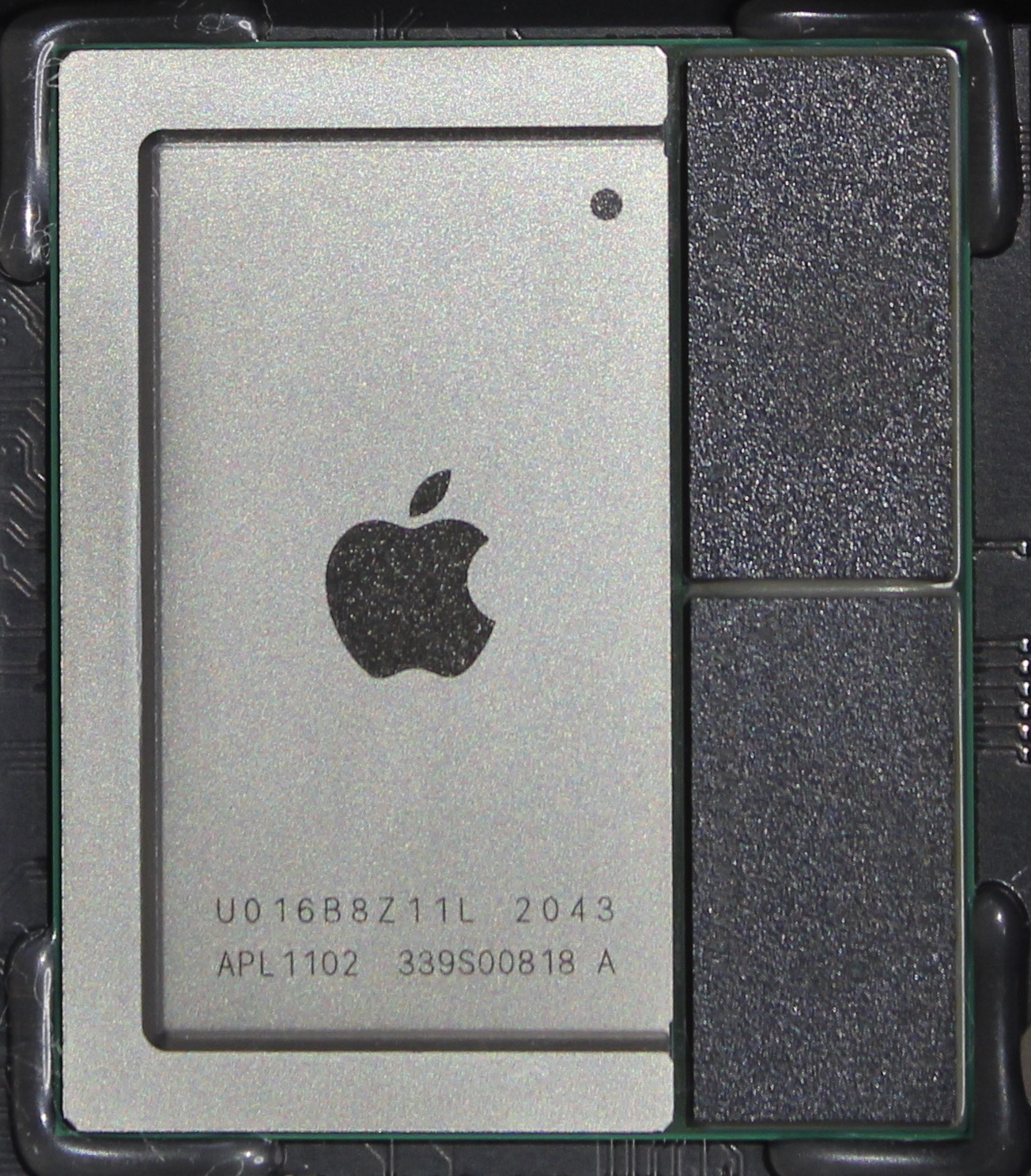
At its core, the Apple M1 is a heterogeneous system-on-a-chip (SoC) built on a 5-nanometer process node by TSMC. It features an 8-core CPU with four high-performance cores (codenamed 'Firestorm') and four high-efficiency cores (codenamed 'Icestorm'), allowing for dynamic workload management. The integrated GPU boasts up to 8 cores, delivering impressive graphics performance. A crucial innovation is its unified memory architecture (UMA), where the CPU, GPU, and other components share a single pool of high-bandwidth, low-latency memory, eliminating data duplication and boosting efficiency. The chip also includes a 16-core Neural Engine for machine learning tasks, an image signal processor (ISP), and secure enclave for enhanced security, all orchestrated by Apple's custom silicon design.
📊 Key Facts & Numbers
The Apple M1 chip debuted with remarkable specifications: it features an 8-core CPU and an 8-core GPU, with some configurations using a 7-core GPU. The SoC die area is approximately 120 square millimeters. Apple claimed that at its launch, the M1 offered up to 3.5x faster CPU performance and 5x faster graphics performance compared to previous Intel-based Macs. Crucially, it achieved this with up to 65% lower power consumption for CPU tasks. The base M1 chip supports up to 16GB of unified memory. By October 2021, Apple expanded the M1 family with the M1 Pro (up to 10-core CPU, 16-core GPU) and M1 Max (up to 10-core CPU, 32-core GPU), both supporting up to 64GB of unified memory and offering significantly higher memory bandwidth.
👥 Key People & Organizations
The Apple M1 chip is the brainchild of Apple Inc.'s dedicated silicon engineering division, spearheaded by Johny Srouji. While Apple's CEO Tim Cook publicly announced the transition to Apple Silicon, Srouji's team is credited with the intricate design and development of the M1 and its successors. Key partners in its realization include TSMC, the Taiwanese semiconductor manufacturing giant responsible for fabricating the chips on their advanced 5nm process. The software ecosystem, particularly macOS and iOS developers, were also critical in adapting applications to run natively on the new ARM architecture, with Rosetta 2 serving as a crucial translation layer during the transition.
🌍 Cultural Impact & Influence
The introduction of the Apple M1 chip sent seismic waves through the personal computing industry. It not only elevated the performance and battery life of MacBook Air and MacBook Pro models to unprecedented levels but also challenged the long-standing dominance of x86 processors from Intel and AMD. The M1's efficiency spurred a renewed focus on power-per-watt metrics across the industry, influencing competitors like Qualcomm and Microsoft to accelerate their own ARM-based initiatives for laptops. Furthermore, the unified memory architecture and integrated design demonstrated a compelling path for future SoC development, blurring the lines between mobile and desktop computing capabilities and significantly boosting Apple's brand loyalty.
⚡ Current State & Latest Developments
As of late 2024, the Apple M1 chip, while no longer the latest generation, remains a potent and widely used processor in Apple's product lineup, particularly in entry-level and mid-range Macs and iPads. Apple has since launched the Apple M2, Apple M3, and Apple M4 series, each building upon the M1's foundation with further performance and efficiency gains. However, M1-powered devices continue to receive software updates and are highly sought after in the refurbished and used markets due to their excellent longevity and performance. Apple's commitment to supporting its M1-based machines ensures their relevance for years to come, even as newer chips take center stage.
🤔 Controversies & Debates
The transition to Apple M1 silicon wasn't without its friction. A significant debate revolved around software compatibility, particularly for legacy x86 applications that lacked native ARM support. While Rosetta 2 offered remarkable translation performance, some users reported performance degradation or outright incompatibility with certain niche or older professional software. Another point of contention was the fixed nature of the unified memory; unlike traditional PCs where RAM could be upgraded, M1 Macs have their memory soldered directly to the SoC, making upgrades impossible after purchase. This led to concerns about long-term usability and resale value for users who underestimated their future memory needs.
🔮 Future Outlook & Predictions
The trajectory set by the Apple M1 chip points towards increasingly integrated and specialized silicon. Future Apple Silicon generations are expected to push the boundaries of performance and efficiency further, potentially incorporating more dedicated AI/ML accelerators and advanced graphics capabilities. The success of the M1 has emboldened Apple to explore even more custom silicon solutions, possibly extending into new product categories or enhancing existing ones with AI-driven features. Competitors will undoubtedly continue to chase Apple's performance-per-watt metrics, potentially leading to a broader industry shift towards ARM-based computing for mainstream devices, though the dominance of x86 in high-performance servers and gaming PCs is likely to persist for some time.
💡 Practical Applications
The Apple M1 chip's practical applications are vast, primarily powering Apple's own ecosystem. It is found in the MacBook Air (M1, 2020), 13-inch MacBook Pro (M1, 2020), Mac mini (M1, 2020), 24-inch iMac (M1, 2021), 11-inch iPad Pro (M1, 2021), and iPad Air (5th generation). Its performance and efficiency make it ideal for everyday tasks, content creation, software development, and even demanding professional workflows like video editing and 3D rendering, albeit with limitations for the most extreme use cases compared to higher-tier M-series chips. The unified memory architecture also benefits applications that heavily rely on graphics processing, such as gaming and visual design.
Key Facts
- Category
- technology
- Type
- product