
Contents
Overview
Hans Memling’s artistic journey began in the Middle Rhine region of Germany, with his birth likely occurring around 1430. While specific details of his early life are scarce, it's widely accepted that he received his initial training as a painter there. The pivotal shift in his career occurred when he moved to the Netherlands, a region then at the forefront of artistic innovation. Here, he is believed to have honed his skills in the bustling workshop of Rogier van der Weyden, a master whose influence is palpable in Memling’s early works. By 1465, Memling had settled in Bruges, a wealthy international port city, where he was granted citizenship. This move marked his transition from apprentice to independent master, rapidly establishing him as a leading artist within the vibrant Flemish art scene. His success was such that by 1480, a tax document listed him among Bruges' wealthiest citizens, underscoring his economic and artistic prominence.
⚙️ How It Works
Memling's artistic process was characterized by a meticulous application of oil paint, building up layers to achieve luminous flesh tones and rich, jewel-like colors. His compositions, particularly in religious scenes, are often characterized by a sense of serene order and profound stillness. He masterfully employed linear perspective and detailed observation, learned from the Early Netherlandish tradition, to create believable, tangible spaces. A hallmark of his work is the incorporation of donor portraits, seamlessly integrated into sacred narratives, allowing patrons to participate visually in divine events. These portraits, whether of clergy, aristocrats, or wealthy burghers, are rendered with an individualizing psychological depth that transcends mere likeness, capturing the sitter's character and social standing. The precise rendering of textures—from the soft folds of velvet to the glint of metal—demonstrates his technical virtuosity and keen eye for detail, creating an immersive visual experience for the viewer.
📊 Key Facts & Numbers
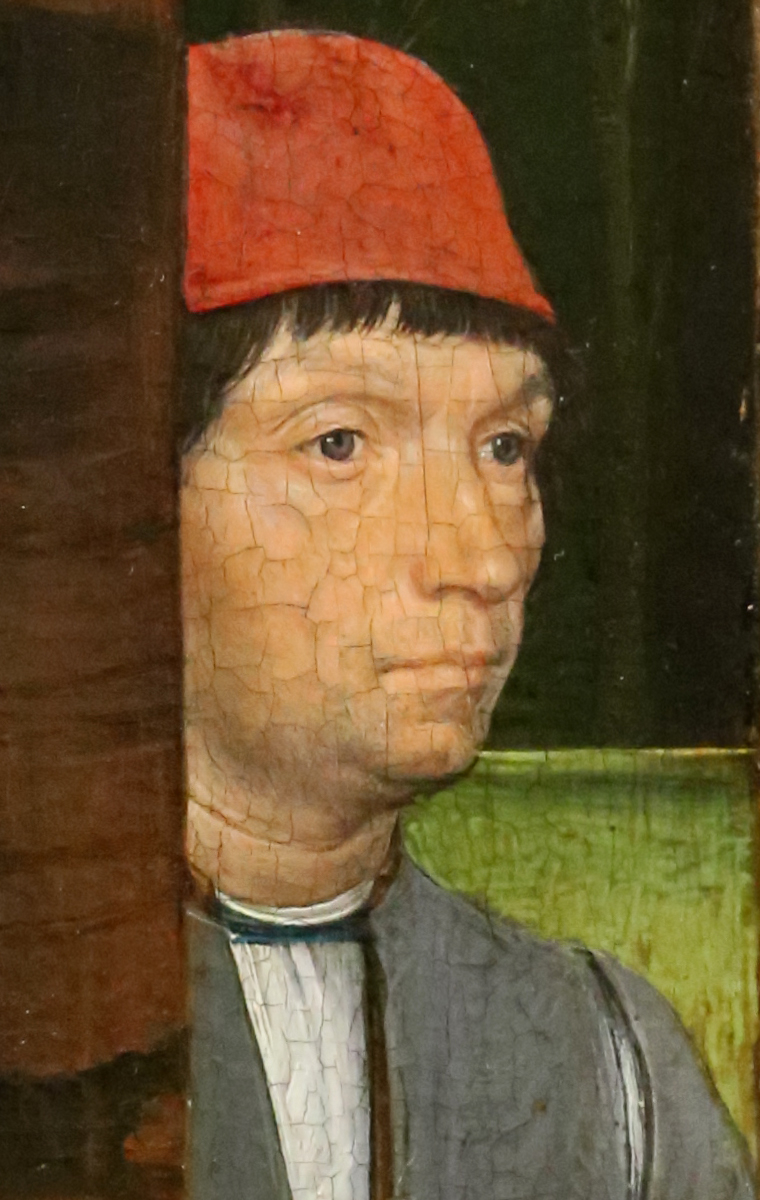
Hans Memling’s oeuvre comprises approximately 150 surviving works, a substantial output for the period. His most famous piece, the St. John Altarpiece, completed around 1479, is a monumental work featuring intricate details and profound spiritual depth. The Last Judgment Polyptych, created between 1467 and 1471, is another significant work, showcasing his early stylistic development. By 1480, Memling was listed among the wealthiest citizens of Bruges, indicating a substantial income derived from his workshop, which likely employed several assistants. His paintings were highly sought after, with commissions coming from across Europe, including Italy and England. The Virgin and Child with Saints and Donor (c. 1485) exemplifies his mature style, demonstrating a harmonious balance of figures and a luminous, ethereal atmosphere. His self-portrait, painted around 1480, provides a rare glimpse into the artist’s own dignified presence.
👥 Key People & Organizations
Beyond his influential teacher Rogier van der Weyden, Memling’s artistic circle in Bruges included contemporaries like Gerard David and Hugo van der Goes, though Memling’s style remained distinct. His wife, Anna de Valkenaere, whom he married between 1470 and 1480, was part of a prominent Bruges family. He had three children, though their lives are less documented than the artist’s career. Memling’s workshop was a significant operation, employing numerous apprentices and assistants to meet the high demand for his work. Patrons included powerful figures such as the Medici family in Florence, who commissioned works like the Triptych of the Virgin and Child (c. 1480), and the Hospital of St. John in Bruges, which commissioned several of his most important pieces. The Burgundian court also represented a significant market for Netherlandish painters, though direct commissions from the Duke of Burgundy to Memling are less clearly documented than for some contemporaries.
🌍 Cultural Impact & Influence
Memling's influence on subsequent generations of painters, particularly in Italy, was profound. His serene compositions and luminous palette were admired by Italian Renaissance artists like Sandro Botticelli and Domenico Ghirlandaio, who absorbed elements of his style into their own works. The rediscovery of his art in the 19th century, championed by critics and collectors such as William Henry James Weale, led to a surge in popularity, cementing his status as a master of the Northern Renaissance. His works became highly prized by collectors and museums, influencing the Pre-Raphaelite movement in Britain with their detailed realism and devotional intensity. The enduring appeal of Memling’s art lies in its ability to convey spiritual peace and human emotion with a quiet, dignified grace that continues to resonate with viewers centuries later. His paintings are now considered cornerstones of collections at institutions like the Groeningemuseum in Bruges and the National Gallery in London.
⚡ Current State & Latest Developments
In the contemporary art world, Hans Memling's works are primarily found in museum collections and are rarely available on the market, making any potential sale a major event. Exhibitions dedicated to his oeuvre, such as the 2005 retrospective at the Groeningemuseum and the Saint Bavo's Cathedral in Ghent, continue to draw significant scholarly and public attention. Digital initiatives, like high-resolution online galleries and virtual tours of Bruges' artistic heritage, are making his art more accessible globally. Art historians continue to analyze his techniques, patronage networks, and the socio-economic context of his Bruges workshop, often utilizing advanced imaging technologies like infrared reflectography to study his underdrawings and working methods. The ongoing scholarly debate centers on attribution for certain works and the precise extent of his workshop's involvement in their creation, reflecting the dynamic nature of art historical research even for established masters.
🤔 Controversies & Debates
A significant debate surrounding Memling concerns the extent of his workshop's involvement in the execution of his paintings. While he was clearly the master and designer, the sheer volume of his output suggests a highly efficient workshop with skilled assistants. Attributing specific works definitively to Memling himself versus his studio remains an ongoing challenge for art historians, impacting valuations and scholarly understanding. Another point of discussion is the precise nature of his relationship with Rogier van der Weyden; while influence is evident, the exact duration and circumstances of his apprenticeship are not definitively known. Furthermore, the economic impact of his success on other Bruges artists, and whether his dominance stifled competition or fostered a collaborative environment, is a subject of ongoing analysis within the context of 15th-century Flemish art markets. The relative lack of personal documentation also fuels speculation about his private life and artistic intentions.
🔮 Future Outlook & Predictions
The future of Hans Memling's legacy will likely involve continued scholarly re-evaluation, particularly through advancements in scientific analysis of his paintings, such as pigment analysis and dendrochronology, which can help refine dating and provenance. Digital humanities projects will undoubtedly play a larger role in making his extensive body of work accessible to a global audience, potentially fostering new interpretations and research avenues. The market for Old Masters, while subject to economic fluctuations, generally shows sustained interest in artists of Memling's caliber, meaning his works will remain highly valued. Future exhibitions may focus on specific aspects of his oeuvre, such as his portraiture or his engagement with devotional practices, offering fresh perspectives. The ongoing quest to understand the full scope of his workshop’s activities and the precise attribution of works will continue to drive art historical discourse, ensuring Meml
Key Facts
- Category
- aesthetics
- Type
- topic