
Contents
- 🌍 Overview: More Than Just a Nation-State
- 📍 Geopolitical Positioning: The Crossroads of Power
- 🏛️ Governance & Ideology: The Clerical Framework
- ⚡ Internal Dynamics: A Society in Flux
- 🤝 Foreign Relations: Navigating Global Tensions
- 💰 Economic Realities: Sanctions and Resilience
- 🚀 Future Trajectories: Shifting Sands of Influence
- 💡 Key Takeaways for the Astute Observer
- Frequently Asked Questions
- Related Topics
Overview
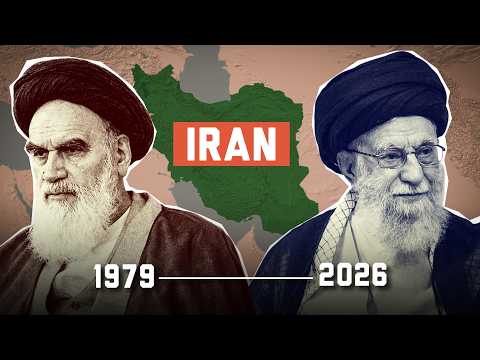
The Islamic Republic of Iran is not merely a geographic entity; it's a complex, ideologically driven state that has profoundly shaped Middle Eastern and global geopolitics since its 1979 revolution. For the uninitiated, understanding Iran requires looking beyond standard nation-state analyses to grasp the intertwined roles of religious authority, revolutionary fervor, and strategic national interests. It's a place where theological doctrine directly informs foreign policy, and where historical grievances fuel contemporary rivalries. Navigating this landscape means appreciating the deep-seated anti-colonial sentiment that underpins much of its foreign policy and its unique position as a Shia-majority power in a predominantly Sunni region. This isn't a simple case of borders and budgets; it's a narrative of identity, resistance, and aspiration.
📍 Geopolitical Positioning: The Crossroads of Power
Strategically situated at the nexus of the Persian Gulf, the Caspian Sea, and Central Asia, Iran's geographic location is a geopolitical masterclass. Its control over the Strait of Hormuz, a critical chokepoint for global oil trade, grants it significant leverage, though this also makes it a focal point for international scrutiny and naval presence. Its relationships with neighbors like Saudi Arabia, Iraq, and Afghanistan are fraught with historical baggage and competing regional ambitions. Understanding Iran's geopolitical calculus necessitates mapping these intricate relationships, recognizing how its alliances and rivalries ripple across the wider Middle East and beyond, influencing everything from energy markets to regional security architectures.
🏛️ Governance & Ideology: The Clerical Framework
At the heart of the Islamic Republic's structure lies the principle of Velayat-e Faqih (Guardianship of the Jurist), a concept that places ultimate political authority in the hands of a supreme religious leader. This unique governance model, enshrined in the 1979 constitution, means that the Supreme Leader holds sway over key state institutions, including the military and judiciary, even above the elected president. The Assembly of Experts, a body of senior clerics, is tasked with selecting and overseeing the Supreme Leader, further cementing the clerical establishment's grip on power. This fusion of religious and political authority creates a distinct governing dynamic, often leading to policy decisions that prioritize ideological purity alongside pragmatic statecraft.
⚡ Internal Dynamics: A Society in Flux
Beneath the veneer of clerical rule, Iranian society is a vibrant, dynamic, and often contradictory space. Decades of revolution, war, and international pressure have forged a populace that is both deeply patriotic and increasingly desirous of change. The demographic bulge of a young, educated population, heavily engaged with global trends via social media, presents a persistent undercurrent of social and political tension. Understanding Iran means acknowledging the persistent push and pull between conservative religious elements and a more secular, reform-minded populace, a dynamic that frequently manifests in cultural expression, protests, and electoral outcomes, even within the confines of the existing political system.
💰 Economic Realities: Sanctions and Resilience
The Iranian economy, though rich in natural resources, has been significantly impacted by decades of international sanctions, particularly those imposed by the United States following the withdrawal from the Joint Comprehensive Plan of Action (JCPOA) in 2018. These sanctions have curtailed oil exports, limited access to international finance, and driven up inflation, creating considerable hardship for the average citizen. Despite these challenges, Iran has demonstrated remarkable resilience, developing domestic industries and fostering trade relationships with non-Western partners. Understanding its economic situation requires appreciating the interplay between external pressures and internal adaptive strategies, as well as the ongoing debate about economic liberalization versus state control.
🚀 Future Trajectories: Shifting Sands of Influence
The future trajectory of the Islamic Republic is a subject of intense speculation, hinging on a confluence of internal societal pressures, regional power dynamics, and the evolving global geopolitical order. Will the persistent demands for greater social and political freedoms eventually lead to significant reforms, or will the state's security apparatus maintain its grip? How will its relationship with the West, particularly concerning its nuclear program and regional activities, evolve? The outcomes of these intertwined forces will not only shape Iran's destiny but will also have profound implications for the stability and power balance across the Middle East and beyond. The question isn't if things will change, but how and when.
💡 Key Takeaways for the Astute Observer
For anyone seeking to grasp the complexities of the Islamic Republic, remember that it is a state forged in revolution, governed by a unique clerical-democratic hybrid, and strategically positioned at a global crossroads. Its foreign policy is a blend of ideological conviction and pragmatic survival, often at odds with Western powers but increasingly aligned with Eastern ones. The internal societal currents are a constant force, pushing against the established order, while economic resilience is a testament to its people's adaptability under duress. To truly understand Iran, one must look beyond headlines and engage with the deep historical currents, the intricate political structures, and the vibrant, often contradictory, spirit of its people.
Key Facts
- Year
- 1979
- Origin
- Established after the Iranian Revolution
- Category
- Geopolitics
- Type
- Country
Frequently Asked Questions
What is the primary source of political authority in Iran?
The primary source of political authority in Iran is the Supreme Leader, who holds ultimate power based on the principle of Velayat-e Faqih (Guardianship of the Jurist). This religious leader oversees key state institutions, including the military and judiciary, and has the final say on major state policies. While there is an elected president and parliament, their authority is subordinate to that of the Supreme Leader and the clerical establishment.
How do sanctions affect Iran's economy?
International sanctions, particularly those imposed by the United States, have severely impacted Iran's economy. They restrict oil exports, limit access to international financial systems, and deter foreign investment, leading to high inflation and currency devaluation. Despite these pressures, Iran has developed strategies for economic resilience, including boosting domestic production and strengthening trade ties with countries like China and Russia.
What is Iran's role in regional conflicts?
Iran plays a significant role in regional conflicts, often supporting allied groups and militias across the Middle East. This includes backing Hezbollah in Lebanon, the Houthi movement in Yemen, and various Shia militias in Iraq. This strategy is part of Iran's broader foreign policy of projecting influence and countering perceived threats from rivals like Saudi Arabia and the United States.
Is Iran a democracy?
Iran is often described as a hybrid political system. It has democratically elected institutions, such as the presidency and the parliament (Majlis), but these operate within a framework dominated by unelected clerics. The Supreme Leader holds ultimate authority, and the Guardian Council vets candidates and legislation, limiting the scope of democratic participation and reform.
What are the main tensions within Iranian society?
Key tensions within Iranian society stem from the divide between conservative religious elements and a younger, more secular, and globally connected population. There are ongoing debates about social freedoms, women's rights, and the extent of clerical oversight in daily life. These internal dynamics often manifest in cultural expression, protests, and varying levels of public engagement with the political system.