
Contents
- 🎵 Origins & History
- ⚙️ How It Works
- 📊 Key Facts & Numbers
- 👥 Key People & Organizations
- 🌍 Cultural Impact & Influence
- ⚡ Current State & Latest Developments
- 🤔 Controversies & Debates
- 🔮 Future Outlook & Predictions
- 💡 Practical Applications
- 📚 Related Topics & Deeper Reading
- Frequently Asked Questions
- References
- Related Topics
Overview
The Latter Day Saint movement officially began on April 6, 1830, with the formal organization of the Church of Christ in Fayette, New York, by Joseph Smith. Smith, claiming divine revelations, published the Book of Mormon in 1830, which he stated was a translation of ancient golden plates. This foundational text, alongside the Bible, forms the scriptural basis for the movement. Early adherents, often called Mormons, faced significant persecution, leading to multiple migrations across the United States, including to Kirtland, Ohio; Independence, Missouri; and finally to the Salt Lake Valley in present-day Utah, under the leadership of Brigham Young after Smith's death in 1844. This westward trek, a pivotal event in the movement's history, established a distinct cultural and religious enclave. The schism following Smith's martyrdom led to the formation of various branches, each interpreting Smith's legacy and subsequent revelations differently.
⚙️ How It Works
The operational framework of Latter Day Saint churches typically centers on a hierarchical structure led by a prophet-president, who is believed to receive ongoing revelation from God for the entire church. This prophetic leadership is supported by councils, such as the Quorum of the Twelve Apostles in The Church of Jesus Christ of Latter-day Saints, who are considered special witnesses of Jesus Christ. Lay members are organized into local congregations called wards or branches, led by bishops or branch presidents, who are also lay members serving voluntarily. A distinctive feature is the emphasis on missionary work, with millions of young men and women serving full-time missions worldwide, proselytizing and teaching the movement's doctrines. Temple worship, involving sacred ordinances and covenants, is also a cornerstone, with numerous temples constructed globally for these purposes.
📊 Key Facts & Numbers
The Latter Day Saint movement collectively claims nearly 18 million nominal members worldwide as of 2023. The vast majority, over 17 million, belong to The Church of Jesus Christ of Latter-day Saints. The Community of Christ has approximately 250,000 members, while other denominations like the Church of Jesus Christ of Latter Day Saints (Strangite) and The Church of Jesus Christ (Bickertonite) number in the thousands. As of 2023, The Church of Jesus Christ of Latter-day Saints operates 315 temples across the globe. The movement's missionary force typically comprises over 50,000 full-time missionaries serving in 150 countries. Annual donations to humanitarian aid by The Church of Jesus Christ of Latter-day Saints have exceeded $1 billion in recent years, underscoring its significant financial and philanthropic reach.
👥 Key People & Organizations
Joseph Smith (1805-1844) is the foundational prophet and organizer of the movement. Brigham Young (1801-1877) led the majority of Latter Day Saints to Utah and established the dominant branch. Community of Christ's significant figures include Joseph Smith III (1832-1914), who led the Reorganized Church of Jesus Christ of Latter Day Saints, and current president Stephen M. Veazey. James Strang (1813-1856) established his own branch, the Church of Jesus Christ of Latter Day Saints (Strangite), claiming to be Smith's successor. William Bickerton (1814-1905) founded the The Church of Jesus Christ (Bickertonite). The Church of Jesus Christ of Latter-day Saints is the largest organization, with its current president being Russell M. Nelson.
🌍 Cultural Impact & Influence
The Latter Day Saint movement has profoundly influenced American religious history and culture, particularly in the Western United States. The establishment of Salt Lake City as a major metropolitan center and the development of unique communal and economic structures in early Utah are significant historical impacts. The movement's distinctive architecture, from meetinghouses to grand temples like Salt Lake Temple, is recognizable worldwide. Its emphasis on family, education, and missionary work has shaped the lives of millions, and its cultural output, including music and literature, reflects its unique theological perspectives. The term Mormonism itself has become a widely recognized cultural identifier, often appearing in media and popular discourse, sometimes divorced from its specific religious context.
⚡ Current State & Latest Developments
In 2024, The Church of Jesus Christ of Latter-day Saints continues its global expansion, with new temples announced and dedicated regularly, most recently in places like Rome and Jakarta. The church is increasingly focusing on digital outreach and adapting its communication strategies for a global audience, utilizing platforms like YouTube-com and its own official website. There's a growing emphasis on addressing historical narratives and social issues, including LGBTQ+ inclusion and the role of women within the church structure, though official doctrines remain largely unchanged. The Community of Christ is also navigating contemporary challenges, focusing on social justice and interfaith dialogue. Membership growth, while strong in some regions like Africa and Latin America, faces challenges in maintaining engagement in more secularized Western nations.
🤔 Controversies & Debates
The movement is not without its controversies. Historically, polygamy (plural marriage), practiced by early Latter Day Saints under Brigham Young, remains a point of contention and a source of division, with fundamentalist groups still practicing it. The historicity of the Book of Mormon and the origins of Joseph Smith's claims are subjects of intense scholarly and theological debate, with critics questioning the evidence and authenticity of his revelations. Issues surrounding race and the former priesthood ban on Black members in The Church of Jesus Christ of Latter-day Saints (lifted in 1978) continue to be discussed. Furthermore, the movement's conservative stance on social issues, particularly regarding LGBTQ+ rights, creates tension with contemporary societal norms and leads to internal and external criticism.
🔮 Future Outlook & Predictions
The future of the Latter Day Saint movement appears to be one of continued global diversification and adaptation. The Church of Jesus Christ of Latter-day Saints is likely to see its membership base shift further towards developing nations, where growth rates are highest. The challenge will be maintaining doctrinal unity and cultural cohesion across vastly different global contexts. Expect increased engagement with complex historical issues and a continued effort to reconcile traditional teachings with modern societal expectations, particularly concerning gender and sexuality. The role of technology in disseminating doctrine and fostering community will undoubtedly expand. The Community of Christ will likely continue its path of progressive theological exploration and social activism, carving out a distinct niche within the broader restorationist landscape.
💡 Practical Applications
The core tenets of Latter Day Saint theology have practical applications in various spheres. The emphasis on strong family units and genealogical research has led to the development of extensive Family History resources and the world's largest genealogical database, FamilySearch. The movement's strong work ethic and community support systems have fostered successful business ventures and cooperative economic models, particularly in its early history. The rigorous missionary program has produced millions of individuals skilled in communication, cross-cultural interaction, and public speaking, skills transferable to many secular professions. Furthermore, the movement's commitment to education has led to the establishment of numerous institutions of learning, including Brigham Young University, contributing to academic research and development.
Key Facts
- Year
- 1830
- Origin
- United States
- Category
- movements
- Type
- movement
Frequently Asked Questions
What is the central belief of the Latter Day Saint movement?
The central belief is that Christianity experienced a 'Great Apostasy' after the death of the original apostles, leading to a loss of true doctrine and authority. The Latter Day Saint movement, founded by Joseph Smith, claims to be a restoration of Christ's original church, complete with prophetic leadership and divine authority. Key to this restoration is the Book of Mormon, which adherents believe is another testament of Jesus Christ, alongside the Bible.
How did the movement split into different denominations?
The primary schism occurred after the martyrdom of Joseph Smith in 1844. The majority followed Brigham Young west to Utah, forming what is now The Church of Jesus Christ of Latter-day Saints. Other groups emerged, such as those led by James Strang and William Bickerton, who claimed different lines of succession. The Community of Christ (formerly RLDS) was founded by Joseph Smith III, Smith's son, who sought to establish the church in the Midwest, differing on issues like polygamy and prophetic succession.
What is the significance of the Book of Mormon?
The Book of Mormon is considered by Latter Day Saints to be a sacred record of ancient peoples who lived in the Americas, detailing their dealings with God and their encounters with the resurrected Jesus Christ. It is viewed not as a replacement for the Bible, but as a companion scripture that further testifies of Jesus Christ and His gospel. Its publication in 1830 by Joseph Smith was the catalyst for the formation of the movement and remains a central text for adherents, influencing their theology, identity, and missionary efforts.
What are the main differences between The Church of Jesus Christ of Latter-day Saints and the Community of Christ?
While both trace their origins to Joseph Smith, significant differences exist. The Church of Jesus Christ of Latter-day Saints is the largest branch, headquartered in Salt Lake City, and practices temple ordinances, maintains a strong emphasis on prophetic succession, and historically practiced polygamy (though officially discontinued). The Community of Christ, headquartered in Independence, Missouri, does not practice temple ordinances in the same way, has a more liberal theological outlook, and has never practiced polygamy. Their current president, Stephen M. Veazey, leads a denomination focused on peace and justice.
Is polygamy still practiced by Latter Day Saints?
Polygamy, or plural marriage, was practiced by early leaders of The Church of Jesus Christ of Latter-day Saints in the 19th century, notably under Brigham Young. However, the mainstream church officially discontinued the practice in 1890 with the Manifesto and excommunicated members who continued it. Today, only fundamentalist groups, who have broken away from the mainstream church, continue to practice polygamy. These groups are often referred to as 'Mormon fundamentalists' but are not affiliated with the larger denominations.
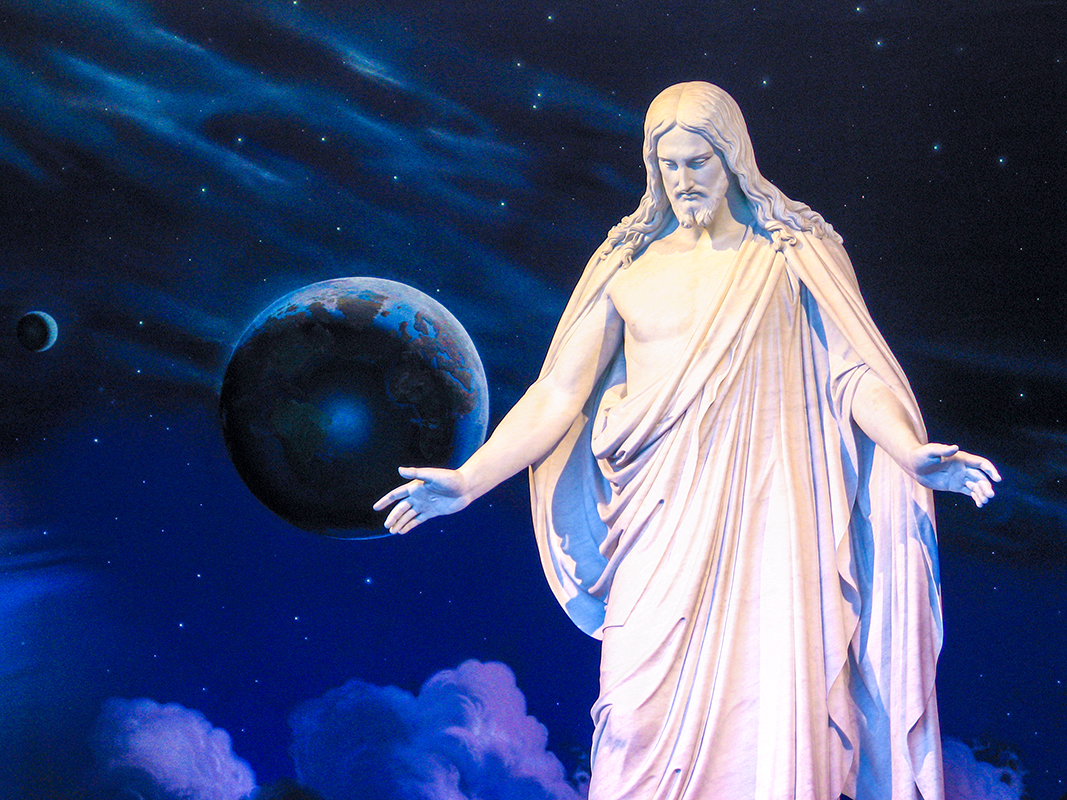
How does the Latter Day Saint movement view Jesus Christ?
Latter Day Saints unequivocally believe in Jesus Christ as the Son of God, the Savior of the world, and the central figure of their faith. They believe He is divine, that His Atonement atoned for the sins of humanity, and that His resurrection offers immortality and eternal life to all who believe. While sharing core Christian beliefs about Christ, their understanding is informed by Joseph Smith's revelations and the Book of Mormon, which they see as further witness to Christ's divinity and mission. They believe in His literal second coming and His future reign on Earth.
What is the role of temples in the Latter Day Saint movement?
Temples are considered the 'House of the Lord' and are central to the spiritual life of Latter Day Saints, particularly within The Church of Jesus Christ of Latter-day Saints. They are seen as sacred spaces where members can make covenants with God and perform ordinances, such as baptism for the dead and eternal marriage, that are believed to be essential for exaltation. Unlike regular meetinghouses used for weekly worship, temples are reserved for specific ordinances and are not open to the general public after their dedication. The construction of temples worldwide signifies the movement's global reach and commitment to these sacred practices.